
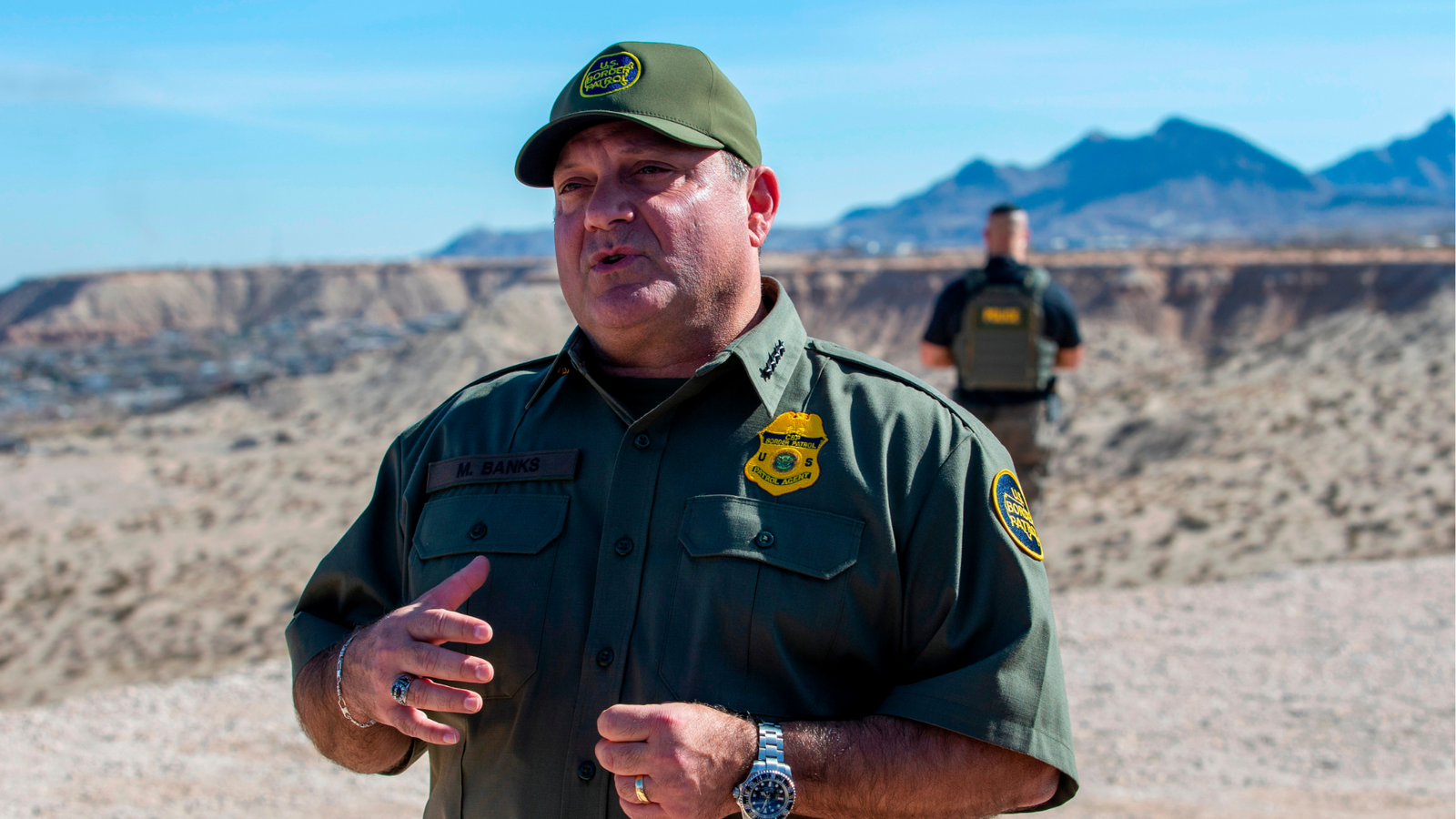
The **border patrol chief resignation** of Michael Banks marks one of the most significant leadership shake-ups within the Department of Homeland Security in recent memory. Banks, who led the U.S. Border Patrol during a transformative period for American immigration enforcement, announced on Thursday that he is stepping down from his post. His departure signals a broader recalibration within the federal government’s immigration apparatus under President Donald Trump’s second administration and comes at a moment when multiple agencies are undergoing simultaneous transitions at the top.
Banks confirmed his decision in a Fox News interview, with the Department of Homeland Security later corroborating the announcement. While the White House remained silent in the immediate aftermath, the news reverberated through policy circles in Washington and beyond.
Michael Banks: A Career Spanning Decades of Border Enforcement
Banks brought nearly four decades of experience to his role as head of the Border Patrol. His career arc included a long tenure within the agency, a return engagement after working as border czar for Texas Governor Greg Abbott, and ultimately a return to lead the very agency he had once served in more junior capacities.
During his time advising Governor Abbott, Banks became a central figure in Texas’s multibillion-dollar border security initiative. That state-led effort, launched during a period when illegal border crossings reached record highs, frequently placed Texas in direct confrontation with the Biden administration over jurisdiction and enforcement authority. The experience elevated Banks’ profile in conservative policy circles and positioned him as a hardline voice on border security.
When he returned to lead the Border Patrol last year, Banks inherited an agency that had been at the center of national debate over immigration policy. Despite his extensive background, he notably kept a lower public profile than some of his contemporaries, including Gregory Bovino, the now-retired field commander who became a recognizable face of immigration operations in American cities.
Banks’ Own Reflections on His Tenure
In his Fox News interview, Banks struck a reflective tone about his accomplishments. He stated plainly, “It’s just time,” adding, “I feel like I got the ship back on course from the least secure disastrous chaotic border to the most secure border this country has ever seen.” After 37 years of service, Banks indicated he was ready to step away and focus on his family.
U.S. Customs and Border Protection Commissioner Rodney Scott issued a statement thanking Banks “for his service during one of the most challenging periods for border security.” Scott, who served as Banks’ direct supervisor, has functioned as a more visible public representative of the agency, owing in part to his close relationship with Trump border czar Tom Homan.
The State of the Border Under Banks’ Leadership
One of the most striking data points underlying Banks’ resignation is the dramatic decline in illegal border crossings during his tenure. According to federal statistics, arrests for illegal crossings have plunged to their lowest levels since the mid-1960s , a remarkable shift that began during the latter portion of the Biden administration and accelerated under Trump’s renewed enforcement push.
Banks notably did not appear publicly at the recent Border Security Expo held in Phoenix, an annual conference where senior officials typically brief contractors and stakeholders on the evolving state of border operations. His absence fueled speculation about an impending departure, which was confirmed just days later.
Broader DHS Leadership Changes Reshape Immigration Enforcement
A New Secretary at the Helm
The DHS leadership changes extend well beyond the Border Patrol. Banks’ resignation comes just two months after Markwayne Mullin, the former Republican senator from Oklahoma, was sworn in as Secretary of Homeland Security. The department oversees both Customs and Border Protection (CBP) and U.S. Immigration and Customs Enforcement (ICE), placing Mullin at the center of the administration’s immigration strategy.
ICE Director Transition Looms
In a parallel move, ICE is also navigating its own leadership transition. Todd Lyons, the acting director of ICE, is scheduled to depart later this month. His replacement, David Venturella, brings a unique background that includes years of work for private contractors before his return to government service. The simultaneous transitions at both major immigration enforcement agencies underscore how comprehensively the administration is reshaping the federal immigration infrastructure.
Federal Immigration Operations in American Cities
The scope of federal immigration enforcement has expanded dramatically under the current administration. Customs and Border Protection, traditionally focused on ports of entry and border regions, has increasingly been deployed for immigration operations deep within the interior of the United States , particularly in cities governed by Democratic leaders.
These high-profile operations have triggered sharp spikes in arrests and ignited fierce political backlash. Critics point to two fatal shootings earlier this year in Minneapolis, where U.S. citizens were killed by federal immigration officers during enforcement actions. Those incidents intensified scrutiny of the tactics employed by federal agents and fueled calls for greater accountability.
Banks’ agency played a central role in these operations, though he personally maintained a more reserved public presence compared to field commanders like Bovino. The tension between aggressive enforcement goals and concerns about civil liberties and community trust has become a defining feature of the administration’s immigration approach.
Implications of the Border Patrol Chief Resignation
The departure of Michael Banks raises several important questions about the future direction of federal immigration enforcement. While illegal border crossings have reached historic lows, the administration’s focus appears to be shifting toward interior enforcement, workplace raids, and targeted operations in sanctuary cities.
What Comes Next for the Border Patrol?
As of this writing, no successor has been named to lead the Border Patrol. The vacancy comes at a particularly sensitive moment, with the agency actively engaged in both border security and interior enforcement missions. Whoever steps into the role will inherit an organization with deeply polarized perceptions , celebrated by supporters as essential to national security and criticized by opponents for aggressive tactics and high-profile incidents.
The Broader Policy Recalibration
Observers suggest the simultaneous leadership changes at the Border Patrol and ICE reflect a strategic recalibration by the White House. With Mullin now steering DHS and Homan serving as border czar, the administration appears to be consolidating control over immigration enforcement while preparing for potential policy shifts as midterm political pressures mount.
Some analysts view Banks’ exit as part of a natural transition following the achievement of key border security benchmarks. Others interpret it as a sign of internal disagreement over the scope and tactics of enforcement operations, particularly those conducted in urban areas far from the actual border.
The Role of Customs and Border Protection in Modern Immigration Policy
Established in 2003 following the creation of the Department of Homeland Security, CBP combines the responsibilities of customs enforcement, immigration inspection, and agricultural regulation. The agency’s mission has evolved considerably over the past two decades, expanding from its traditional focus on border security to include a growing role in interior enforcement.
Today, CBP is one of the largest federal law enforcement organizations in the United States, with tens of thousands of employees stationed at ports of entry, along the border, and increasingly in inland cities. The agency’s dual role , protecting the nation’s frontiers while enforcing immigration laws nationwide , has made it a focal point of both policy debates and political controversy.
Looking Ahead
The border patrol chief resignation of Michael Banks represents more than just a single personnel change. It signals a pivotal moment for the federal government’s immigration enforcement apparatus as it navigates a period of intense political pressure, shifting operational priorities, and evolving legal challenges.
With new leadership incoming at both ICE and the Border Patrol, and a freshly confirmed secretary directing DHS strategy, the coming months are likely to bring significant developments in how the United States approaches border security and interior immigration enforcement. The administration’s stated goal of achieving the “most secure border ever” will be tested against the practical realities of staffing, legal constraints, public sentiment, and the complex dynamics of migration in the Western Hemisphere.
For now, Banks leaves behind a complicated legacy , one defined by historic reductions in illegal crossings but also by contentious enforcement tactics that have drawn both praise and condemnation. As he put it himself, after 37 years, it was simply time to focus on family and life beyond the badge. The agency he led, however, will continue operating under new stewardship, with its mission more politically charged than ever before.