
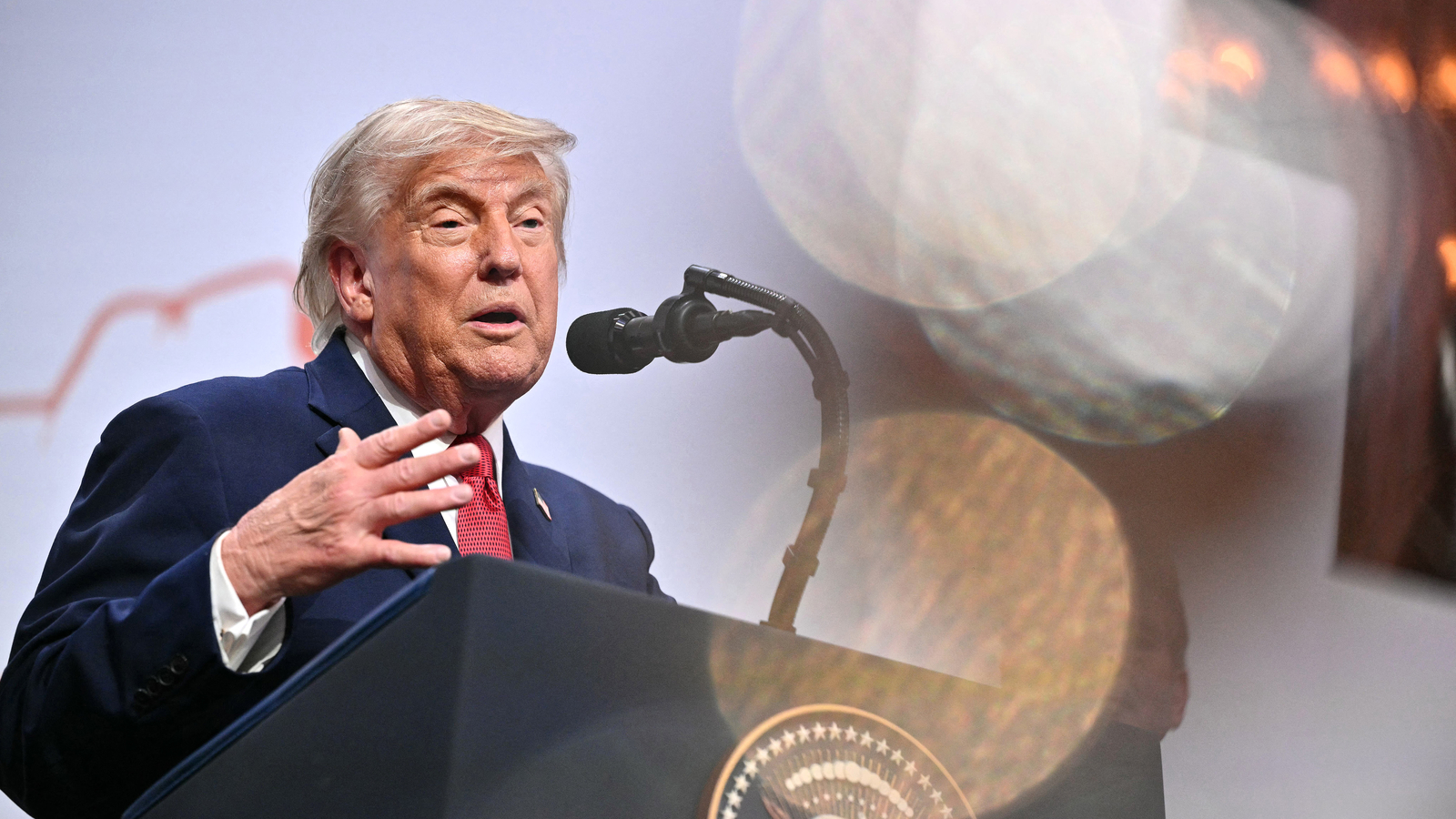
In a dramatic turn of events that has reshaped Middle East geopolitics, the United States has formally lifted its maritime blockade of Iran, allowing oil tankers to move freely through the Strait of Hormuz for the first time in months. This pivotal moment came as a tentative us-iran deal took immediate effect, extending a fragile ceasefire between the two longtime adversaries and launching a critical 60-day negotiating period aimed at resolving deeper disputes over Iran’s nuclear program.
The development marks one of the most significant diplomatic shifts in recent memory, with both Washington and Tehran taking steps,however cautious,toward direct engagement. Vice President JD Vance, who has emerged as a key defender of the agreement, announced that he may postpone a planned trip to Switzerland where a ceremonial signing was to take place, citing the uncertain timeline now shaping the agreement’s rollout.
The Blockade Lifts: A Critical Maritime Corridor Reopens
For the first time in over three months, commercial vessels are transiting through the strategic Strait of Hormuz without interference. According to maritime data from Lloyd’s List Intelligence, major shipping operators,Grimaldi Group, Cosco, Knutsen, and NYK,have begun moving their ships through the waterway after their vessels were effectively marooned there since February.
Two Iranian-flagged crude oil tankers owned by the National Iranian Tanker Company also entered the strait, signaling a substantial easing of tensions. The combined cargo capacity of vessels that crossed the U.S. military blockade without being stopped reached an impressive 3.8 million barrels of Iranian crude oil. Meanwhile, Vice President Vance confirmed that more than 12.5 million barrels moved through the strait in a single night,an encouraging sign for global energy markets that had been rattled by wartime disruptions.
U.S. Central Command acknowledged that American warships would remain positioned in the area to ensure all aspects of the agreement remain in force, but the immediate practical effect has been a normalization of one of the world’s most vital shipping lanes.
Tehran’s Calculated Shift: Direct Talks Endorsed
In a surprising and historic development, Iranian Supreme Leader Ayatollah Mojtaba Khamenei publicly endorsed the prospect of direct negotiations with American officials. State media in Iran delivered the statement, which represented the supreme leader’s first official reaction to the agreement.
“It is obvious that the face-to-face negotiations that will be held in the future will not mean accepting the enemy’s opinion,” Khamenei stated, framing the talks as a strategic move rather than a concession.
This endorsement marks a notable evolution in Iran’s diplomatic posture. Hardliners, particularly Khamenei’s late father, had long opposed direct engagement with Washington, especially following the U.S. withdrawal from the 2015 nuclear deal. The current supreme leader has remained out of public view since being wounded in an early strike at the beginning of the war, making this written endorsement all the more noteworthy.
IAEA Inspectors Gain Access: Verification Path Emerges
Trump’s special envoy Steve Witkoff disclosed to congressional leaders and national security committee members that Iran has committed to inviting inspectors from the International Atomic Energy Agency (IAEA) to examine its nuclear facilities. In a private briefing on Thursday, Witkoff revealed that a side letter,not included in the main agreement,was drafted between Tehran and the IAEA, formally extending the inspection invitation.
According to sources familiar with the closed-door conversation, the letter addressed to IAEA Director-General Rafael Mariano Grossi would enable the agency to bring U.S. nuclear inspectors into Iran for the first time in years. This represents a crucial step toward any meaningful verification of Iran’s nuclear activities,though many questions about the scope, timeline, and access rights remain unresolved.
Witkoff emphasized that the broader us-iran deal did not include hidden side agreements, attempting to push back against accusations from congressional critics and Israel that the administration may be offering too many concessions without adequate safeguards.
Timeline Uncertainty Clouds the Agreement
Despite the positive momentum, the path forward remains murky. Vice President Vance’s potential postponement of his Switzerland trip injected new doubt into an agreement that President Trump signed while dining with French President Emmanuel Macron at the Palace of Versailles.
Pakistani Prime Minister Shehbaz Sharif also postponed his planned visit to Switzerland’s resort region near Lucerne. Islamabad officials had been prepared to host the ceremonial signing, but with both nations having already signed, the urgency evaporated. The cascade of postponed visits has created an awkward perception that even the deal’s architects are unsure how to present it to their respective constituencies.
Vance’s Defense and an Unexpected Warning to Israel
During a White House briefing with reporters, Vance defended the agreement vigorously, pushing back against critics who argue it concedes too much to Tehran. He insisted the accord would force Iran to fundamentally “change their behavior,” though he provided few specifics on what metrics would be used to measure such transformation.
Perhaps the most striking moment came when Vance delivered a blunt message to Israel, which has pressed the United States for a harder stance against Iran and launched repeated attacks on Iranian-backed Hezbollah forces in Lebanon throughout the conflict,including strikes that complicated the final peace negotiations.
Trump “is the only head of state in the entire world who is sympathetic to the nation of Israel at this moment in time,” Vance declared, adding pointedly that he also happens to lead “the world’s superpower.” The statement underscored the administration’s growing frustration with Israeli actions that have complicated the diplomatic track.
On the messaging question, Vance rejected accusations of a chaotic rollout, stating flatly, “I don’t think our public messaging has been chaotic.”
Strait of Hormuz: Reopening but Challenges Remain
While the uppermost news conveys normalization, significant practical hurdles persist. Phillip Belcher, marine director of Intertanko,a trade group representing global independent tanker owners,warned that the strait’s main central route remains closed due to an estimated 80 mines that require clearance.
For now, vessels are navigating through two alternative routes:
- The northern passage, which runs through Iranian waters
- The southern passage, which traverses Omani waters
Neither alternative can match the central corridor’s capacity. Lloyd’s List estimates that 550 merchant ships will need to exit the Persian Gulf, and fully reopening the strait could take weeks or months. Iranian state media noted that while shipping had “normalized” at the country’s southern ports, the waterway remains supervised by the Iranian military and still requires transiting vessels to coordinate with authorities.
What the Agreement Actually Contains
The us-iran deal calls for a permanent end to hostilities and activates a 60-day negotiating clock during which both sides must pursue broader agreements on outstanding issues. The core terms include several immediate concessions to Tehran in exchange for security guarantees and future commitments.
Key Provisions
- Nuclear Stockpile Restrictions: Iran’s stockpile of highly enriched uranium,believed to be buried under rubble from earlier strikes,must be diluted at minimum under international supervision.
- Non-Proliferation Commitment: Iran shall not procure or develop nuclear weapons, though this is a commitment Tehran has previously made and broken under various interpretations.
- Sanctions Relief: U.S.-backed sanctions are being waived, immediately permitting Iran to sell its oil freely on world markets,a major concession from Washington.
- Future Negotiations: Both parties commit to negotiating over Iran’s nuclear program, though specifics remain unspecified.
The European Position
Notably absent from the immediate relief: European Union sanctions. EU foreign policy chief Kaja Kallas confirmed Thursday that the 27-nation bloc would maintain its separate sanctions on Iran over the nuclear program, human rights violations, and the closing of the strait,creating a fragmented sanctions environment that may complicate Iran’s economic recovery.
The 60-Day Clock: What Comes Next
President Trump signed the pact to prevent what he described as an “economic catastrophe” in the United States. Throughout the conflict, oil prices had skyrocketed, financial markets grew skittish, and inflation pressures intensified. Trump repeatedly stated his determination not to be compared to Herbert Hoover, whose policies are widely blamed for deepening the Great Depression.
The Trump administration has left the door open to resuming military operations if negotiations fail, a threat that hangs over every conversation in the coming weeks. With 12.5 million barrels already flowing through the strait and major shipowners returning to the route, the immediate pressure has eased,but the deeper diplomatic challenges remain unsolved.
Conclusion
The lifting of the U.S. blockade and the resumption of shipping through the Strait of Hormuz represent tangible wins for the tentative us-iran deal, even as critics question whether Iran has offered enough in return for such substantial sanctions relief. Khamenei’s endorsement of direct talks signals a generational shift in Iranian diplomacy, while IAEA inspectors preparing to visit nuclear sites could provide the verification mechanism that makes any final agreement enforceable.
Yet with uncertain timelines, postponed ceremonies, Israeli dissatisfaction, and European sanctions still firmly in place, the next sixty days will prove whether this fragile arrangement can mature into a lasting peace,or whether it collapses under the weight of its own unresolved contradictions. The world’s energy markets, regional allies, and nuclear nonproliferation efforts all hang in the balance as diplomats prepare for the most consequential round of negotiations the Middle East has seen in years.