
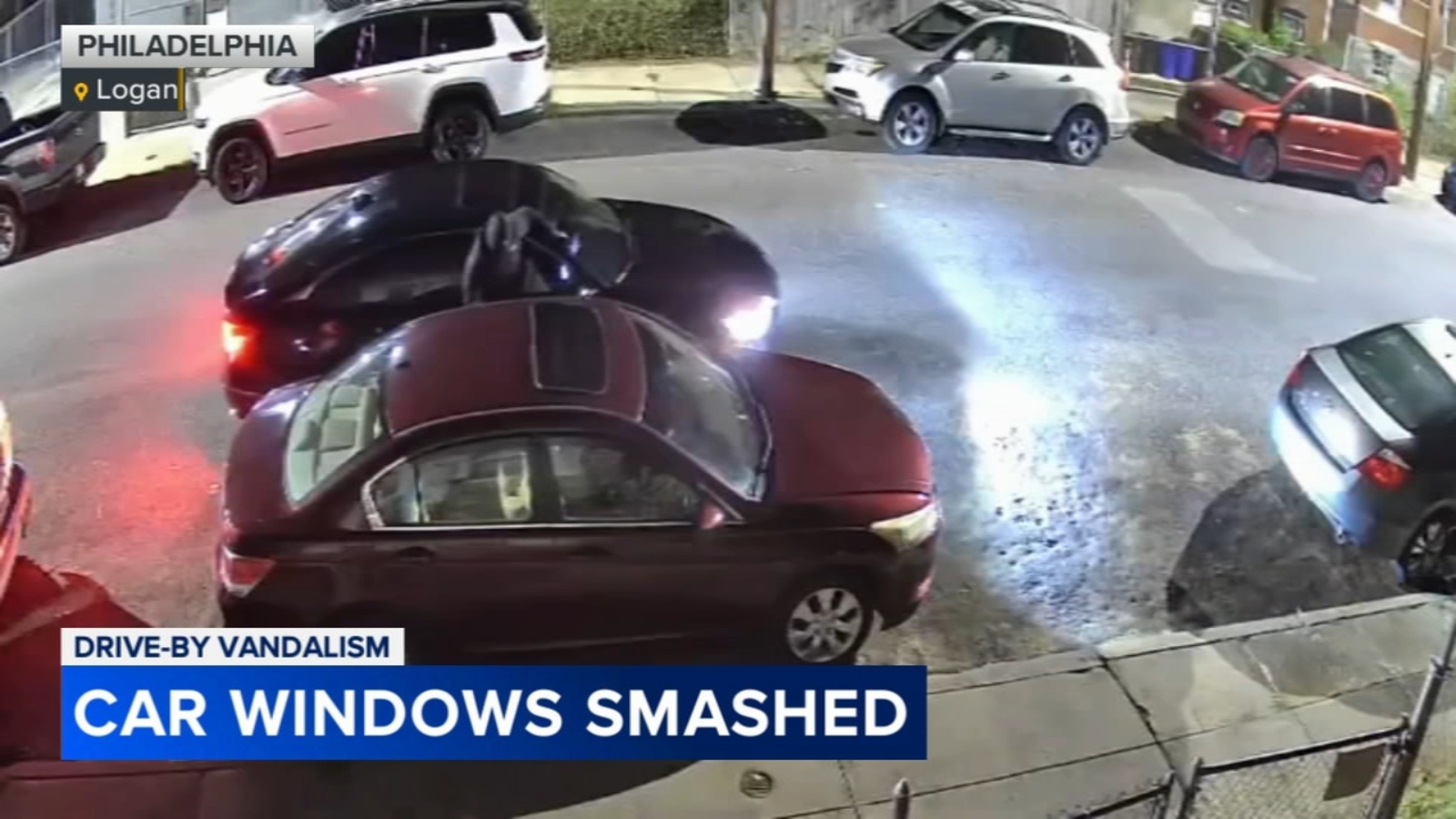
Car vandalism in Philadelphia hit a particularly troubling note this week when residents of the Logan neighborhood woke up to shattered glass and damaged vehicles along a single block. According to local authorities, sixteen parked cars had their windows broken in a coordinated incident that unfolded in the early morning hours. The brazen nature of the attack, caught on home and city surveillance cameras, has left the community searching for answers and grappling with unexpected repair costs.
This latest episode of property destruction highlights ongoing concerns about vehicle crime in Philadelphia neighborhoods, where residents often find themselves dealing with consequences they neither anticipated nor can easily absorb. Below is a comprehensive look at what happened, how the community is responding, and what officials are doing to track down those responsible.
What Happened on the 4800 Block of North 12th Street
The vandalism occurred at approximately 4:15 a.m. on a Tuesday morning along the 4800 block of North 12th Street. Residents who had simply parked their cars overnight awoke to find their windows smashed and glass scattered along the curb. The incident was not isolated to a few vehicles , it stretched across the entire east side of the block, suggesting the perpetrators drove slowly down the street, systematically targeting every car in their path.
One local homeowner described the damage as extensive. Chase Ly, whose family owns two of the affected vehicles, said his home security camera captured the entire incident. He recalled feeling shock when he reviewed the footage and saw how methodically the damage was carried out.
“It made no sense because it was literally on a random Tuesday morning. No one does that.”
Ly stressed that the attack appeared completely random in its target selection. There was no apparent pattern based on the make, model, or color of the vehicles. Every car parked along the east side of the street became a victim.
Surveillance Footage Reveals a Coordinated Effort
Police investigators say they have reviewed multiple angles of surveillance video, and the footage tells a clear story. A vehicle , believed to be a black Honda sedan , is seen slowly cruising down the block. A male passenger reportedly leans out of the window as the car moves at low speed, striking each parked vehicle’s glass in turn.
This kind of slow-moving, deliberate act points to more than a spontaneous impulse. The methodical nature of the destruction suggests the suspects may have planned the route in advance or at least recognized an opportunity and acted with purpose. Either way, the resulting harm was both widespread and indiscriminate.
City Cameras Followed the Suspect Vehicle
Beyond private home security cameras, Philadelphia’s network of municipal surveillance cameras played a role in tracking the suspects’ vehicle. According to police, city cameras followed the black Honda sedan for roughly half a mile before the vehicle disappeared from view. The last confirmed sighting placed the car in the 5000 block of Camac Street, providing investigators with a geographic trail to work from.
This kind of camera coverage has become increasingly important for solving car vandalism in Philadelphia cases. While residential cameras capture individual incidents, the broader city infrastructure can trace a suspect vehicle’s path across multiple blocks, giving police a clearer picture of where the suspects came from and where they went.
The Emotional Toll on Logan Residents
For the people who live in the affected area, this incident is more than a news story , it is a deeply personal blow. Logan resident Juanita Maxwell spoke openly about her frustration and disbelief at the attackers’ behavior.
“No normal-thinking person gets up and says okay, let’s smash some windows. Who thinks like that?”
Rhonda Wiggins, whose vehicle was not among those damaged, still felt the shock of seeing her neighborhood transformed overnight. She described rushing downstairs at first light and being stunned by what she found , broken glass glinting on the pavement and a row of cars each bearing the same unmistakable mark of violence.
“I know I came running downstairs and I was in shock. There’s no reason for nobody to do this.”
The emotional impact of such crimes often lingers longer than the physical damage. Residents may find themselves questioning their sense of safety, distrusting even familiar surroundings, and wondering when the next incident might occur. For some, the answer has been to invest in additional security measures or rethink where and how they park their vehicles.
The Financial Burden of Vandalism Repairs
Beyond the emotional weight of the crime, the practical cost of vehicle vandalism can be significant. Replacing a single car window typically costs anywhere from $200 to $500, depending on the vehicle’s make and model. Residents quoted in the aftermath of this incident estimated repair bills in the $300 to $400 range per vehicle.
For a working family managing tight budgets, that single expense , multiplied across sixteen vehicles , represents thousands of dollars in unexpected costs. Insurance may cover some of the damage, but deductibles, premium increases, and the inconvenience of being without a vehicle during repairs add layers of stress that most residents did not anticipate when they simply parked their cars the night before.
Maxwell captured the frustration shared by many in the neighborhood when she noted that area residents work hard for what they own, and being forced to spend hundreds of dollars on repairs because of someone else’s destructive impulses feels like a deeply unfair burden.
“People around here work hard for what they have. You’ve got to pay $300-$400 for a window because somebody just felt like being destructive.”
What Police Are Doing to Identify the Suspects
Philadelphia Police have begun actively reviewing all available video evidence, including the home security camera footage from affected residents and the city camera footage that tracked the suspect vehicle. Investigators are treating the surveillance video as central evidence in the case.
According to official reports, the suspect vehicle is described as a black Honda sedan, with at least one male occupant responsible for the window-smashing. Authorities are working to identify both the driver and the passenger, and they are asking anyone with information to come forward.
How Residents Can Help the Investigation
Anyone with information related to the vandalism is encouraged to contact Philadelphia Police through the confidential tip line at 215-686-TIPS. Tips can be submitted anonymously, allowing witnesses or those with knowledge to assist the investigation without fear of retaliation. Even small details , a partial license plate number, a sighting of a similar vehicle at a particular time, or street-level camera footage from nearby properties , can help investigators build a stronger case.
The community’s cooperation, combined with the existing video evidence, gives the investigation a reasonable chance of identifying those responsible. Police have expressed optimism that the combination of private and public camera footage will eventually lead to arrests.
The Broader Context of Philadelphia Vehicle Crime
This incident fits into a wider pattern of vehicle-related crimes that affect urban communities across the country. While Philadelphia has worked to reduce overall crime in recent years, vandalism remains a persistent challenge, particularly in densely populated residential neighborhoods where vehicles are routinely parked along public streets overnight.
Experts often point to several factors that contribute to incidents of this nature:
- Opportunity and exposure: Street-parked vehicles are highly visible targets, easy to access, and rarely monitored in real time.
- Group dynamics: Acts of vandalism are sometimes carried out by multiple individuals, which can amplify both the scope of damage and the difficulty of catching those involved.
- Limited consequences: Even when caught, vandalism charges often result in modest penalties, which can reduce deterrence.
- Economic stress: Some studies suggest that vandalism and property crime can increase during periods of economic hardship, though motivations are complex and varied.
For residents, awareness of these broader trends is less important than the immediate reality of feeling safe in their own neighborhood. Events like the Logan vandalism reinforce how quickly an ordinary morning can turn into an expensive, unsettling experience.
Steps Residents Can Take to Protect Their Vehicles
While no measure offers complete protection against vandalism, residents in Philadelphia and similar urban areas can take practical steps to reduce their risk:
- Install or upgrade security cameras: Visible home security cameras can deter opportunistic vandalism and provide critical evidence when incidents do occur.
- Park in well-lit areas: Whenever possible, choose parking spots near streetlights or under porch lighting.
- Use motion-activated lighting: Sudden illumination can startle potential vandals and draw attention to suspicious activity.
- Consider garage parking when available: Off-street parking significantly reduces exposure to street-level vandalism.
- Document your vehicle’s condition: Photographs and documentation can help with insurance claims and police reports.
- Report suspicious activity promptly: Calling 911 for active vandalism in progress gives officers the best chance of catching suspects in the act.
None of these steps guarantees safety, but together they form a layered defense that can discourage would-be vandals and improve the chances of resolution if an incident occurs.
Community Response and Moving Forward
The aftermath of the Logan vandalism has brought neighbors together in ways both small and significant. Residents have shared information, compared notes on the timeline of events, and offered support to those whose vehicles were damaged. The incident has also sparked conversations about neighborhood watch programs, increased lighting requests, and ongoing dialogue with local police about how to prevent similar events in the future.
Maxwell, reflecting the mood of many in her community, expressed hope that those responsible would eventually change their ways , and in the meantime, find the wisdom to recognize the harm they have caused.
“I just pray that the Lord will put some sense into their heads.”
Until arrests are made and justice is served, the residents of the 4800 block of North 12th Street are left to clean up the glass, file their insurance claims, and adjust to a neighborhood that feels a little less secure than it did before. Their experience serves as a reminder that car vandalism in Philadelphia is not a faceless statistic , it is a deeply human event with real consequences for real families.
If you have any information related to this incident, please contact Philadelphia Police at 215-686-TIPS. Your tip could be the key to bringing closure to a community that deserves to feel safe on its own streets.