
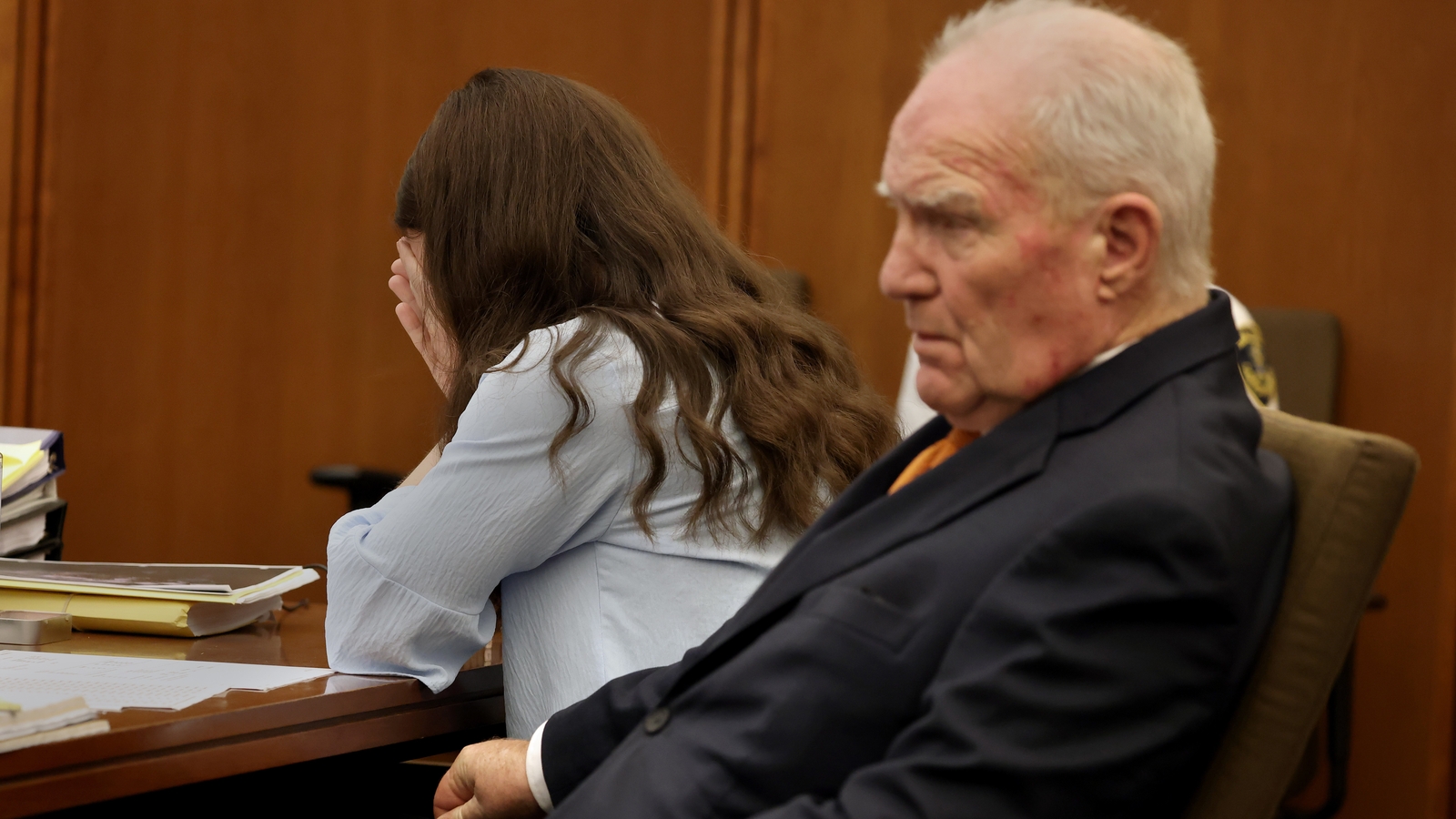
The lindsay clancy trial has gripped the nation as disturbing new details emerged from the witness stand this week. First responders took the stand in a Plymouth, Massachusetts courtroom, providing jurors with a visceral, firsthand account of the chaos and heartbreak they encountered on the night Lindsay Clancy allegedly killed her three young children and attempted to take her own life. The testimony marks one of the most harrowing chapters in this deeply emotional case, which has raised urgent questions about postpartum psychosis, mental health treatment, and criminal responsibility.
The Night Everything Changed: First Responders Take the Stand
On Thursday, two police officers and several emergency personnel delivered gut-wrenching testimony about arriving at the Clancy family home in Duxbury, a coastal Massachusetts town south of Boston. Officers Stephen Hall and Brian Josephine each described being dispatched separately to the residence in January 2023, where they encountered a scene that would stay with them forever.
Hall testified that he and his partner arrived to find Patrick Clancy, Lindsay’s then-husband, screaming desperately for help from behind the home. His wife was drifting in and out of consciousness in the snow, having jumped from the second-floor window of their house. But the true horror was waiting in the basement.
“I can’t wake them up , I can’t get them up!” Patrick Clancy frantically told the officers, according to their testimony. Within minutes of rendering aid to his injured wife, the first responders were racing downstairs after Patrick Clancy screamed that all three of their children were dead.
A Basement Scene Beyond Comprehension
What the officers and firefighters found in that basement defied the worst nightmares of any parent or responder. Three young children , 3-year-old Dawson, 5-year-old Cora, and 8-month-old Callan , lay motionless. Only the infant, Callan, had a faint pulse.
Officer Josephine, drawing on his training and experience from previous traumatic incidents, told the jury, “Based on my training experience from previous incidents, I knew it wasn’t going to be good.” The officers immediately began rendering aid, joined by arriving firefighters and paramedics.
PJ Hussey, a fire department supervisor, shared a particularly haunting detail. He arrived in time to glimpse through a basement window as Patrick Clancy unwrapped an exercise band from his child’s neck , a desperate attempt by a father to save a life that was already slipping away. Duxbury firefighter and paramedic Jennifer Stratton testified that the infant never regained a pulse.
“It turned very chaotic very quickly,” Hussey recalled, as more ambulances rushed to the home. The sheer scale of the emergency response spoke to the unimaginable scope of what had unfolded inside that seemingly ordinary family home.
The Central Question: Postpartum Psychosis or Criminal Intent?
At the heart of the lindsay clancy trial is a question that has divided legal experts, mental health professionals, and the public alike: Was Lindsay Clancy a victim of her own deteriorating mental health, or a calculated killer?
Her defense attorneys do not dispute that she strangled her three children using exercise bands. Instead, they are mounting an insanity defense, arguing that she was experiencing severe postpartum psychosis , a rare but well-documented mental illness associated with the hormonal shifts, sleep deprivation, and psychological stress that follow childbirth. This defense strategy has placed postpartum psychosis at the center of national conversation about how the legal system handles mental illness.
Prosecutors, however, tell a different story. They contend that Lindsay Clancy, who previously worked as a labor and delivery nurse at Massachusetts General Hospital, acted with intention and should be held fully criminally responsible for the deaths of her children.
A Tragic Chain of Mental Health Struggles
Testimony earlier in the week painted a devastating picture of Lindsay Clancy’s declining mental health in the months leading up to the tragedy. Patrick Clancy took the stand to describe how his wife had confided in him about intrusive thoughts , horrifying fantasies about harming their children and ending her own life.
She sought specialized care from experts in postpartum mood disorders and was prescribed multiple psychiatric medications. When those treatments failed to provide relief, she was admitted to a psychiatric hospital. Tragically, she killed the children just 19 days after being discharged.
In opening arguments, Clancy’s attorney revealed that she had been diagnosed with bipolar disorder and that antidepressants prescribed after the birth of her third child had worsened her condition. Clancy and her ex-husband have since filed lawsuits alleging that her medical providers failed to properly diagnose, treat, and monitor her condition , a claim that adds another layer of complexity to this already heart-wrenching case.
Patrick Clancy’s Heartbreaking 911 Call
Before the first responders testified, jurors spent two harrowing days listening to Patrick Clancy’s anguished 911 call. He was still on the phone with the dispatcher when he made the unimaginable discovery , the bodies of his three children, mere minutes after returning home from an errand his wife had asked him to run.
Patrick Clancy testified that his injured wife had told him the children were in the basement but had not indicated they were dead. The 911 call captured every raw, agonizing moment of his descent into a parent’s worst nightmare.
In earlier interviews, Patrick Clancy said he has forgiven his ex-wife, viewing her as someone who was gravely ill rather than inherently evil. The trial itself marked the first time he had seen Lindsay Clancy since the killings , a detail that underscores the profound emotional weight of these proceedings.
The Stakes: Life in Prison or Psychiatric Commitment
The jury now faces an agonizing decision with enormous legal and emotional consequences. If Lindsay Clancy is convicted of murder, she faces life in prison without the possibility of parole. She remains paralyzed from the waist down following her suicide attempt that night, adding another tragic dimension to her circumstances.
If the jury finds her not guilty by reason of lack of criminal responsibility , essentially accepting the insanity defense , she would be committed to a state mental health facility rather than a traditional prison.
The defense has shared a chilling detail about Lindsay Clancy’s state of mind that night. According to her attorney, she described hearing a voice that told her, “This is your last chance. Kill the children so you can kill yourself.” Whether this voice represented a genuine psychotic break or something else entirely remains a matter for the jury to determine.
Broader Implications for Mental Health Awareness
Beyond the courtroom drama, the lindsay clancy trial has sparked important conversations about how society recognizes and responds to postpartum mental illness. Postpartum psychosis affects a small percentage of new mothers but carries an extremely high risk of harm to both the mother and her children when left untreated.
Mental health advocates have pointed to this case as a stark reminder of the importance of:
- Early intervention for postpartum mood disorders
- Comprehensive screening during and after pregnancy
- Family education about warning signs
- Access to specialized psychiatric care for new mothers
- Continued monitoring after psychiatric hospitalization
The lawsuits filed by Clancy and her ex-husband against her medical providers suggest that her family believes the system failed her at a critical moment. Whether the courts agree may have far-reaching implications for how mental health care is delivered to postpartum women across the country.
Community and Public Response
The case has drawn intense media coverage and public attention, with many following every lindsay clancy trial update as the proceedings unfold. The small community of Duxbury has been shaken to its core, struggling to reconcile the horrific events with the family they thought they knew.
As observers await the jury’s eventual lindsay clancy verdict, the emotional toll on everyone involved , from the first responders who testified to Patrick Clancy, who relived the worst night of his life on the witness stand , remains immeasurable.
For those struggling with similar mental health challenges, help is available. If you or someone you know is experiencing a mental health crisis, please call or text 988 to reach a trained crisis counselor free of charge, 24 hours a day, seven days a week. Additional resources can be found at 988lifeline.org.
Conclusion: A Case That Demands Reflection
The testimony from first responders has added an irreplaceable layer of human reality to the lindsay clancy trial, transforming a legal proceeding into a profound meditation on mental illness, motherhood, and the limits of the criminal justice system. As jurors weigh the evidence before them, they carry the weight of a decision that will affect not only the future of Lindsay Clancy but potentially the way society understands and addresses postpartum mental health for years to come.
Regardless of the final lindsay clancy verdict, the three children , Dawson, Cora, and Callan , will never be forgotten, and their story stands as a heartbreaking call to action for better mental health care, earlier intervention, and greater compassion for families grappling with the darkest challenges of the postpartum period.