
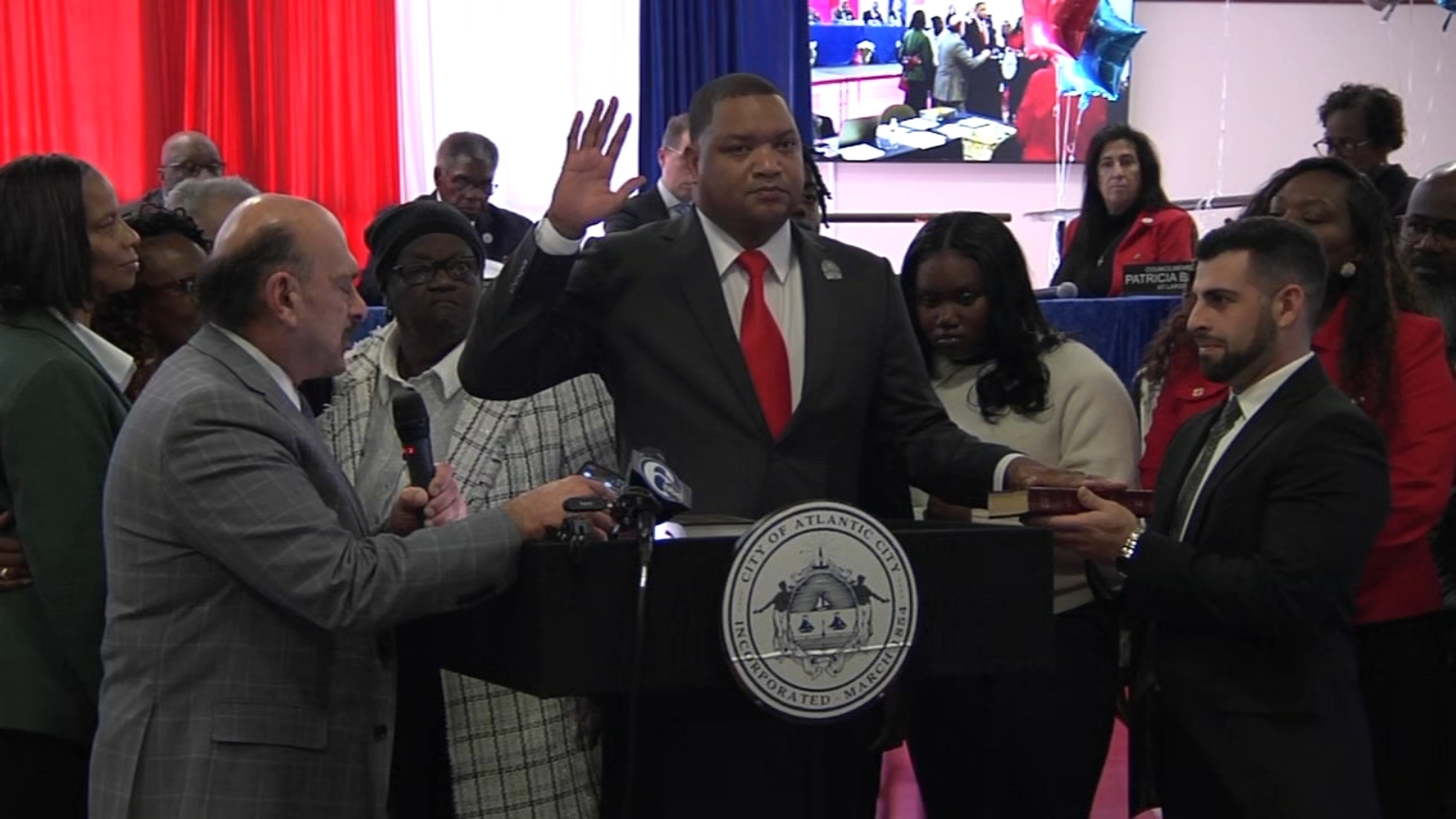
When Marty Small stepped onto the stage at the All Wars Memorial Building on Adriantic Avenue in Atlantic City, New Jersey, on New Year’s Day, he wasn’t just taking an oath of office. The long-serving Atlantic City mayor was making a powerful public statement of resilience, reclaiming his political life just weeks after a dramatic courtroom acquittal. At precisely noon, the Democrat was sworn in to a new four-year term as mayor, cementing his return to the highest office in one of New Jersey’s most storied seaside destinations.
The moment was deeply symbolic. For Small, the path to this inaugural ceremony had been anything but ordinary. While many mayors begin their terms with celebratory speeches and forward-looking policy platforms, Small’s second term commenced under the shadow , now lifted , of a criminal trial that had captured regional attention. Just last month, a jury found him not guilty of allegations that he had abused his teenage daughter, a verdict that cleared the way for him to fully embrace the role he had already won at the ballot box.
From Courtroom to Council Chambers: A Remarkable Political Journey
The story of Marty Small Atlantic City mayor is one of political perseverance. Despite facing serious legal challenges in the months leading up to the November election, Small managed to retain the confidence of Atlantic City’s voters. He easily survived his challenge at the polls, demonstrating that , whether out of loyalty, political alignment, or skepticism about the charges , the electorate was willing to separate the courtroom drama from the candidate they trusted to lead their city.
This kind of political survival is rare. Few elected officials who face serious criminal allegations during a campaign manage to win comfortably and then return triumphantly for another term. Small’s ability to do both speaks to his deep roots in the community and his long-standing relationship with Atlantic City voters. It also reflects the city’s complex political dynamics, where local issues, party loyalty, and personal connections often outweigh national trends or scandal-driven headlines.
The Swearing-In Ceremony at All Wars Memorial Building
The choice of venue for the inauguration carried its own significance. The All Wars Memorial Building on Adriatic Avenue is a landmark location in Atlantic City, a place that honors service and sacrifice. Holding a mayoral swearing-in at such a hallowed location underscored the gravity of the occasion. It was not merely a procedural formality but a public reaffirmation of democratic continuity.
For the supporters who gathered there on New Year’s Day, the ceremony represented closure. It was a chance to put the difficult preceding months behind them and look forward to four more years of Small’s leadership. The event also served as a public moment of vindication for the mayor, who had maintained his innocence throughout the legal proceedings and was ultimately proven right in a court of law.
The Acquittal and Its Political Implications
The not-guilty verdict was the pivotal turning point in Small’s recent political narrative. Facing allegations of abusing his teenage daughter, the mayor could have seen his career , and his reputation , unravel under the weight of public scrutiny. Instead, a jury reviewed the evidence and concluded that the prosecution had not met the burden of proof required to convict.
An acquittal does not always translate into political rehabilitation, but in Small’s case, it appears to have reinforced the bond with his base. Voters who had already chosen to back him in November now had judicial confirmation that the accusations did not warrant a conviction. The combination of electoral victory and legal exoneration gave Small an unusually strong mandate heading into his second term.
What the Jury Verdict Means for Public Trust
Public trust is a fragile commodity for elected officials, especially those facing serious allegations. For Small, the verdict provided a path back to full credibility, though rebuilding trust with skeptical residents will likely remain an ongoing effort. Leaders in such situations often need to demonstrate through policy and community engagement that they remain committed to serving all constituents , not just those who never doubted them.
In a city like Atlantic City, where tourism, gaming, and economic revitalization are constant concerns, the mayor’s attention must return quickly to governance. Theatrics and personal legal battles, however distracting, cannot be allowed to overshadow the daily work of running a municipality. Small’s swearing-in on New Year’s Day marked the beginning of that refocusing period.
Atlantic City’s Political Landscape and Small’s Place in It
Atlantic City has long been a city of contrasts. Once a glittering playground for East Coast travelers, it has weathered decades of economic turbulence, competition from neighboring states, and shifting cultural tastes. Its political scene is equally dynamic, with strong Democratic Party influence and a tradition of colorful local figures. Marty Small fits squarely within that tradition.
Having first risen to prominence in Atlantic City politics, Small built his career through local engagement and party infrastructure. His ability to navigate the city’s diverse communities, balance competing interests, and remain a fixture in the political landscape has made him one of the more recognizable municipal leaders in southern New Jersey.
Challenges Awaiting the Second Term
As Marty Small Atlantic City mayor embarks on his second term, he faces a familiar list of urban challenges. Atlantic City continues to grapple with:
- Economic Revitalization: Competing with newer casino destinations and rebuilding tourism appeal in a post-pandemic travel landscape.
- Public Safety: Maintaining and improving law enforcement outcomes in a city that has historically struggled with crime statistics.
- Infrastructure: Investing in roads, public spaces, and utilities to support both residents and visitors.
- Social Services: Addressing the needs of vulnerable populations, including housing insecurity and addiction recovery.
- Fiscal Discipline: Managing budgets under the constraints of state oversight and the lingering effects of financial instability.
These are not new problems, but they demand renewed attention from a mayor who has just emerged from a bruising personal and political year. Small’s administration will likely need to work hard to demonstrate stability and forward momentum if it hopes to quiet remaining critics and rebuild broader community confidence.
The Broader Story of Political Resilience
There is something undeniably compelling about a political figure who survives not just one but two major tests in rapid succession , a criminal trial and a re-election campaign. The story of Marty Small is, at its core, a story of resilience. It is a reminder that political careers can survive moments of severe crisis when the underlying support structure remains intact.
Of course, resilience is not the same as invulnerability. The mayor will need to prove that his second term is not merely a victory lap but a genuine opportunity to deliver for Atlantic City residents. That means tangible policy achievements, transparent governance, and a willingness to engage constructively with critics as well as allies.
Looking Ahead to the Next Four Years
The next four years will define how Small’s tenure is ultimately remembered. Will the acquittal and re-election be viewed as a turning point that allowed him to focus on the city’s future? Or will the controversies of his first term continue to shape public perception? The answer depends largely on what happens in council chambers, in neighborhood meetings, and on the streets of Atlantic City over the coming months.
For now, though, the moment belongs to celebration and renewal. On a cold New Year’s Day, at a memorial building named for those who served, Marty Small publicly recommitted himself to the people of Atlantic City. The oath he took was simple in its wording but heavy in its meaning. It is the same oath taken by mayors across America, sworn to uphold the law, serve the public, and protect the welfare of their communities.
Conclusion: A Mayor Begins Again
The swearing-in of Marty Small for his second term as Atlantic City mayor marks more than a procedural transition of power. It represents a personal and political comeback, a story of courtroom vindication followed by electoral triumph and ceremonial renewal. As Small moves forward, he carries with him both the weight of the challenges already faced and the responsibility of the years ahead. Atlantic City residents, whatever their views of the recent past, will be watching closely to see what kind of mayor emerges from this pivotal moment , and whether the second term delivers on the promise of a fresh start.