
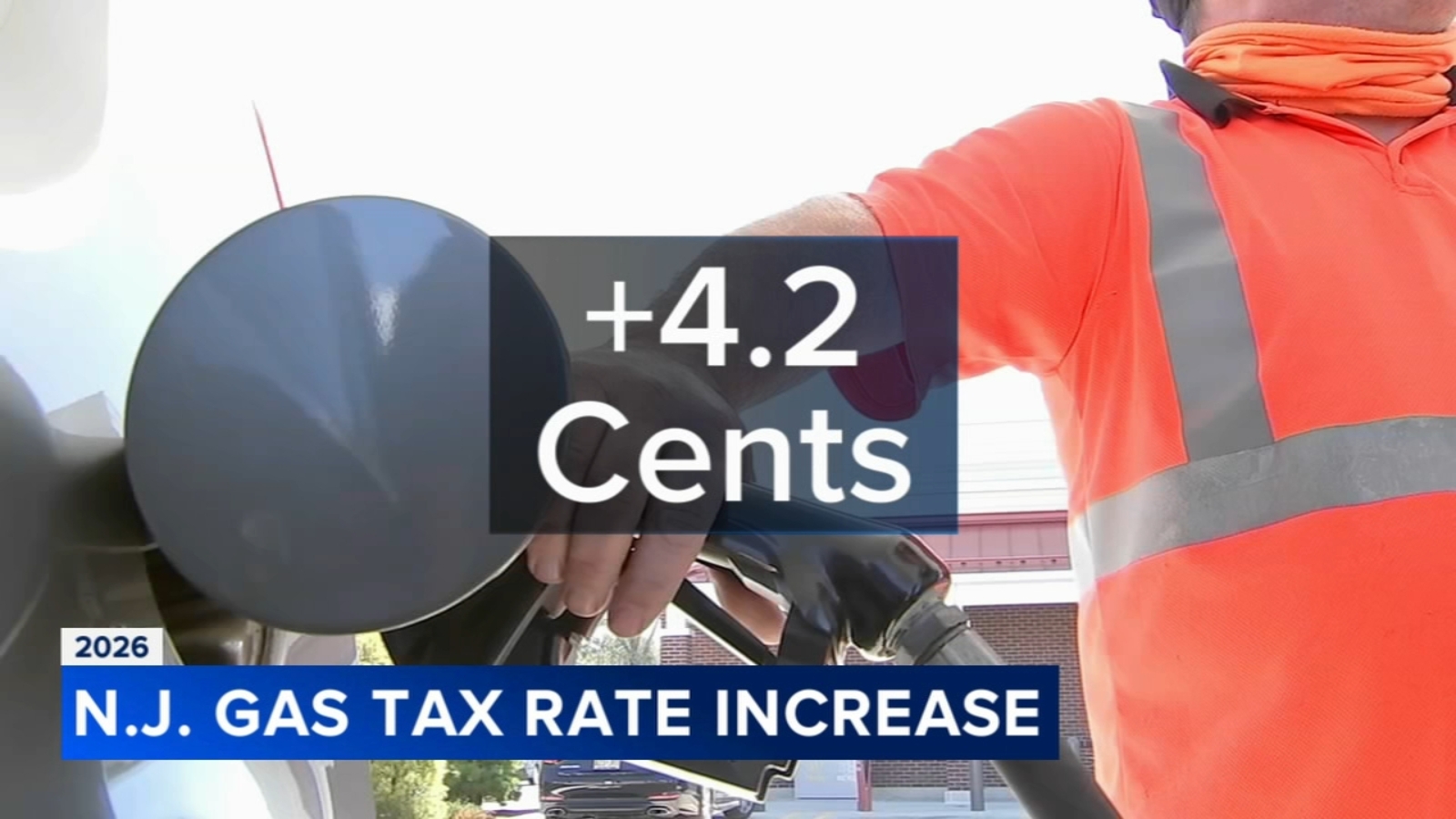
As 2026 kicked off, drivers across the Garden State faced an unwelcome New Year’s surprise , a New Jersey gas tax increase of 4.2 cents per gallon took effect on January 1, raising the state’s total fuel tax rate to 49.1 cents per gallon. This latest bump pushes New Jersey’s gas tax even closer to the top of the national rankings, placing it among the highest in the country and adding meaningful financial pressure to household budgets already stretched thin by inflation and rising costs of living.
For commuters, road-trippers, and commercial drivers alike, the new New Jersey gas tax increase translates into real dollars at the pump. With the average vehicle holding roughly 15 gallons of fuel, a single fill-up now costs about 63 cents more than it did just days before the new year. Over the course of a year, that adds up to hundreds of dollars in additional fuel expenses for the average Garden State household.
Understanding the 2026 Gas Tax Hike
The new 4.2-cent increase wasn’t a sudden decision , it was the result of a long-standing statutory formula tied to fuel consumption and infrastructure needs. New Jersey’s gas tax is reviewed annually, and adjustments are made based on several economic factors, including the average price of wholesale gasoline and the funding requirements of the state’s Transportation Trust Fund.
Before the increase, New Jersey’s gas tax stood at 44.9 cents per gallon. The 4.2-cent addition brings the current rate to 49.1 cents per gallon, a notable jump that continues an upward trajectory that has placed the state among the nation’s top five highest gas tax jurisdictions.
While 4.2 cents may sound modest on paper, the cumulative effect on drivers is substantial. Consider these real-world scenarios:
- Daily commuters driving 30 miles round-trip per day can expect to pay an additional $50-$80 annually just from this single tax adjustment.
- Commercial truckers operating fleets through New Jersey will see operating costs climb dramatically, with some long-haul companies reporting thousands of dollars in added annual expenses per vehicle.
- Rideshare drivers and delivery workers, whose livelihoods depend on fuel efficiency, will see their margins shrink further with each passing mile.
How New Jersey Compares to Other States
With the latest increase, New Jersey’s gas tax now ranks among the steepest in the United States. States like California, Pennsylvania, and Illinois have historically led the nation in fuel taxation, and New Jersey is now firmly in that conversation. Pennsylvania’s gas tax, for comparison, sits at approximately 58 cents per gallon, while California remains the highest at over 60 cents per gallon in some regions.
This positioning matters because high gas taxes often affect more than just drivers. They ripple through the economy in several ways:
- Higher transportation costs for goods and services, which are typically passed on to consumers.
- Increased cross-border shopping, as drivers near state lines often travel to fill up in lower-tax states like Delaware.
- Tourism impact, with some travelers choosing to avoid driving through high-tax states when possible.
Where Does the Money Go? Inside the Transportation Trust Fund
One of the most important questions surrounding any New Jersey gas tax increase is where the revenue actually goes. According to state officials, the additional funds generated by the higher tax rate are directed into the Garden State’s Transportation Trust Fund, which finances critical infrastructure projects across the region.
The Transportation Trust Fund supports a wide range of improvements, including:
- Road and highway repairs , patching potholes, resurfacing aging pavement, and reconstructing damaged roadways.
- Bridge maintenance and replacement , addressing structurally deficient spans that pose safety risks.
- Public transit improvements , funding upgrades to buses, trains, and stations throughout New Jersey Transit.
- Safety enhancements , installing new guardrails, signage, and pedestrian infrastructure.
Advocates for the tax increase argue that New Jersey’s infrastructure has long been underfunded, and that steady revenue streams are necessary to address decades of deferred maintenance. Critics, however, question whether the funds are being allocated efficiently and whether drivers should shoulder the burden of infrastructure financing when other revenue sources , such as income or corporate taxes , could be explored.
The Impact on New Jersey Drivers and Small Businesses
While the official rationale for the New Jersey gas tax increase centers on infrastructure investment, the day-to-day impact on residents is undeniable. For working families already managing tight budgets, every additional cent at the pump represents a trade-off , less money for groceries, savings, or other essentials.
Small businesses are feeling the strain as well. Landscapers, delivery companies, contractors, and independent truckers often operate on razor-thin margins, and rising fuel costs directly affect their bottom line. Some business owners have reported being forced to raise prices, reduce service areas, or cut back on hiring to absorb the increased costs.
For residents living near the Pennsylvania or Delaware borders, cross-border fueling remains a popular , though environmentally counterproductive , way to avoid the higher taxes. This phenomenon not only costs New Jersey potential revenue but also adds extra vehicle miles to the road, increasing wear and emissions.
What Drivers Can Do to Manage Higher Fuel Costs
Although the New Jersey gas tax increase is largely outside individual control, there are practical strategies drivers can adopt to minimize the financial impact:
- Use fuel rewards programs offered by grocery chains, warehouse clubs, and credit card companies to earn discounts at the pump.
- Compare gas prices using apps like GasBuddy or Waze to find the cheapest stations nearby.
- Maintain your vehicle with regular tune-ups, proper tire inflation, and clean air filters to maximize fuel efficiency.
- Consider carpooling or public transit for daily commutes to reduce overall fuel consumption.
- Combine errands into single trips to limit cold starts and idle time.
- Explore electric or hybrid vehicle options, which may help reduce long-term fuel dependence.
Looking Ahead: The Future of New Jersey’s Fuel Tax
The 2026 New Jersey gas tax increase is unlikely to be the last adjustment drivers will see. The statutory formula that governs the state’s fuel tax is designed to recalculate annually, meaning further increases , or, in theory, decreases , remain possible in future years depending on market conditions and infrastructure needs.
State lawmakers continue to debate the structure of New Jersey’s transportation funding. Some legislators have pushed for alternative revenue models, including vehicle-miles-traveled (VMT) fees, which would tax drivers based on how many miles they drive rather than how much fuel they consume. Such a system would more accurately reflect modern vehicle usage, particularly as electric vehicles , which currently pay little to no gas tax , become more common on New Jersey roads.
For now, however, the gas tax remains the primary mechanism for funding the state’s transportation infrastructure, and New Jersey drivers will continue to pay among the highest rates in the nation every time they fill up.
Final Thoughts on New Jersey’s Latest Gas Tax Hike
The 4.2-cent New Jersey gas tax increase that took effect on January 1, 2026, serves as a stark reminder of how policy decisions at the state level directly affect everyday life. Whether you’re commuting to work, running errands, or operating a small business, the additional 49.1 cents per gallon in taxation is a cost that can’t be avoided.
While the revenue generated is intended to support vital infrastructure projects , from repaving crumbling roads to upgrading aging bridges , many residents remain skeptical about whether the tax burden is being distributed fairly. As the conversation around transportation funding continues, drivers should stay informed, take advantage of cost-saving strategies, and engage with their elected representatives to ensure their voices are heard.
Ultimately, the road ahead for New Jersey’s fuel tax is likely to include more debate, more adjustments, and more financial pressure on drivers. Understanding the why behind the increase is the first step toward making smarter decisions at the pump and advocating for a transportation funding system that works for everyone in the Garden State.
Stay informed about New Jersey tax changes, fuel prices, and transportation policy updates by following trusted local news sources and checking the latest state announcements regularly.