
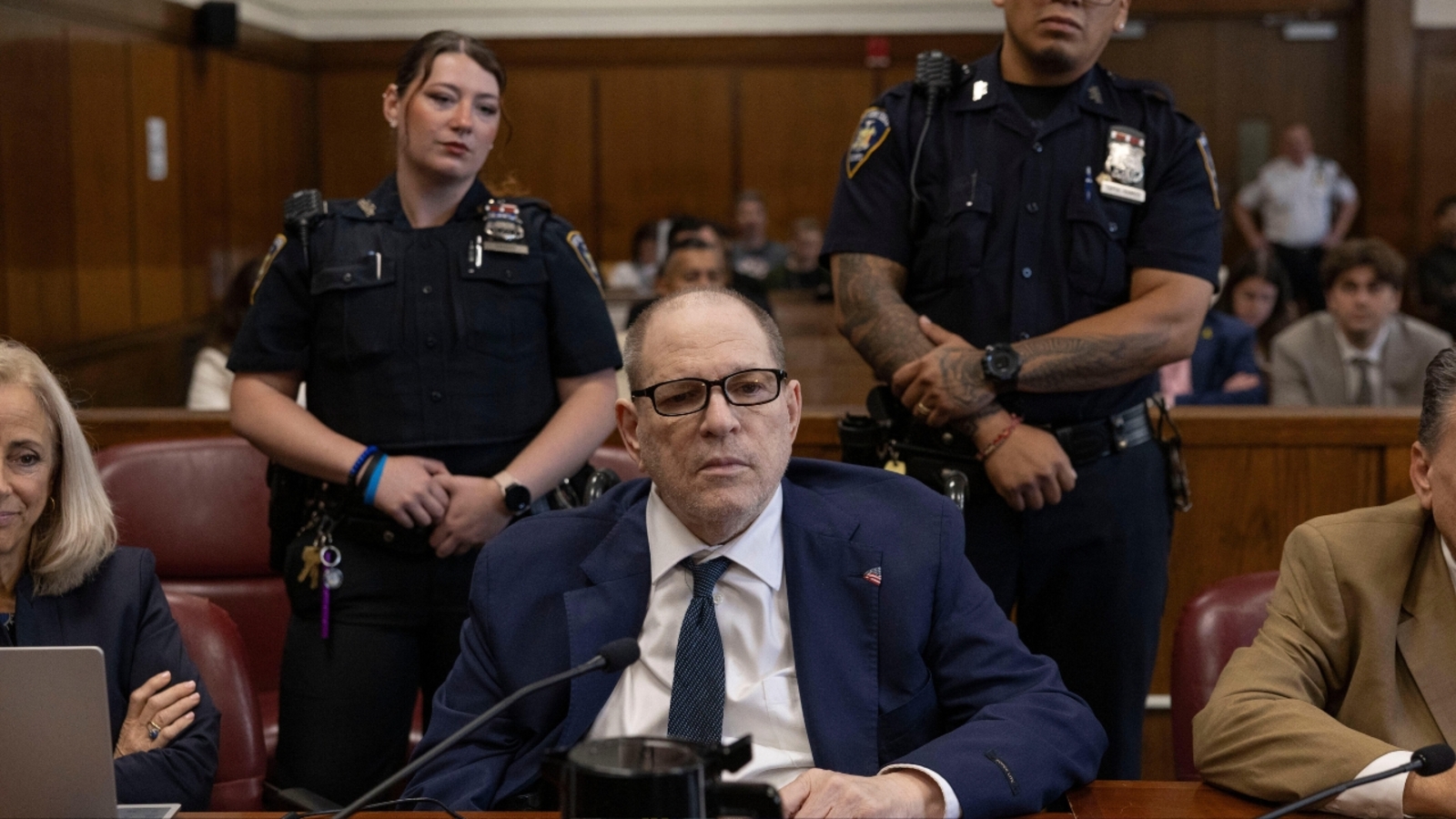
The legal saga surrounding disgraced Hollywood producer Harvey Weinstein continues to unfold as a New York judge has tentatively scheduled a Harvey Weinstein retrial for March 3 on a rape charge brought by Jessica Mann. The decision marks yet another chapter in one of the most closely watched criminal cases in recent American history, with implications that extend far beyond the courtroom walls.
During a hearing on Thursday, defense attorney revealed that Weinstein, 73, would be open to accepting a guilty plea for third-degree rape , a significant development in a case that has already produced two trials, multiple convictions, and a dramatic appellate reversal. However, in a striking moment of courtroom theater, Weinstein himself made a personal statement insisting that he has never attacked anyone, casting doubt on how any plea negotiation might ultimately proceed.
The Retrial Timeline and Legal Context
Judge Curtis Farber’s tentative scheduling of the Harvey Weinstein retrial for early March represents the next phase in a complex legal journey that began nearly six years ago. If the retrial proceeds, it would mark the third time Weinstein faces a jury in Manhattan, a remarkable statistic that underscores both the gravity of the accusations against him and the procedural complexities that have dogged the prosecution.
To understand the significance of the upcoming proceedings, it helps to trace the history of the case:
- First trial: Weinstein was convicted on multiple charges, including predatory sexual assault, based on testimony from accusers including Jessica Mann and Mimi Haleyi.
- Appellate reversal: The initial conviction was overturned on appeal after the New York Court of Appeals ruled that the trial judge had improperly allowed testimony from women whose allegations were not part of the specific charges.
- Second trial: A retrial resulted in a conviction on the Mimi Haleyi count, an acquittal on the Kaja Sokola count, and a mistrial on the Jessica Mann count , the count now set for retrial in March.
The mistrial on the Mann charge effectively left that allegation unresolved, creating the legal vacuum that the upcoming Harvey Weinstein retrial is meant to fill.
Weinstein’s Position: Possible Plea vs. Personal Denial
The most fascinating element of Thursday’s hearing was the apparent contradiction between Weinstein’s legal team’s strategic openness to a plea deal and his own personal insistence on innocence. His attorney suggested that accepting a guilty plea to third-degree rape was under consideration, an offer that would spare Weinstein the ordeal of another trial while also potentially limiting his exposure to additional prison time.
Yet moments later, Weinstein took the unusual step of addressing the court directly, declaring that he has never attacked anyone. This statement, made in open court, complicates any plea negotiation considerably. Defendants who maintain their innocence typically face significant legal and ethical hurdles when entering guilty pleas, and Weinstein’s public denial could make a negotiated resolution far more difficult to achieve.
The third-degree rape charge in New York corresponds to engaging in sexual intercourse with another person without their consent. While serious, it carries a lesser penalty than the first-degree rape charge Weinstein originally faced in connection with Mann’s allegations.
Why the Plea Option Matters
From a strategic standpoint, the defense’s openness to a plea makes sense given Weinstein’s current circumstances. The Hollywood producer has been in custody for nearly six years, much of it spent at Rikers Island, where conditions are notoriously harsh. His representative has described him as “medically fragile and in legal limbo,” painting a picture of a man whose health is deteriorating behind bars while his legal status remains uncertain.
A guilty plea would bring a measure of finality to the proceedings, potentially allowing Weinstein to serve a defined sentence and move on from years of litigation, appeals, and retrials.
The Judge Rejects a New Trial in the Haleyi Case
In a related development on Thursday, Judge Farber also rejected Weinstein’s bid for a new trial in the conviction related to Mimi Haleyi’s allegations. The defense had argued that two jurors subsequently came forward claiming they had been pressured to convict, suggesting that the original verdict was tainted by improper influence during deliberations.
Farber was unconvinced. The judge ruled that the jury complaints about decorum in the deliberation room were adequately addressed at the time, and he stood by the handling of the situation.
“The Court’s response to the jurors’ complaints appropriately balanced the competing interests of investigating the allegations while avoiding any unnecessary taint of the deliberating jury,” Farber wrote in his ruling.
This decision means that the conviction on the Mimi Haleyi count remains intact, even as the Jessica Mann count returns to court for another attempt at resolution. For Weinstein, losing this bid for a new trial closes off one avenue of relief while leaving the door open for the March retrial.
The Broader Significance of Multiple Trials
The prospect of a third Manhattan trial raises important questions about the American criminal justice system, particularly regarding high-profile sexual assault cases. While the legal system guarantees defendants the right to appeal and to seek retrials when convictions are overturned, the repeated prosecution of the same individual on similar charges is relatively uncommon and places enormous strain on both the accusers and the judicial system.
For Jessica Mann, the accuser at the center of the upcoming Harvey Weinstein retrial, the proceedings represent yet another chapter in what has undoubtedly been a difficult personal journey. Mann first testified against Weinstein during the initial trial that led to his 2020 conviction, only to see that conviction reversed and her case retried to a mistrial. The March retrial would require her to testify once more.
For Weinstein, the mounting legal battles have taken an obvious toll. At 73, he remains confined at Rikers Island, a facility known for overcrowding, violence, and inadequate medical care. His status as a high-profile inmate has not shielded him from the harsh realities of pretrial detention in New York City.
The #MeToo Movement in the Background
It is impossible to discuss the Harvey Weinstein retrial without acknowledging the broader cultural context in which it takes place. Weinstein’s initial prosecution was widely regarded as a watershed moment for the #MeToo movement, demonstrating that powerful men could be held accountable for sexual misconduct. The subsequent reversal of his conviction, however, sparked concerns that the legal system was ill-equipped to deliver lasting justice in such cases.
The March retrial will be watched closely by advocates, legal scholars, and members of the public who see the proceedings as a barometer for how the justice system handles sexual assault allegations against prominent figures.
What Happens Next
Several key dates and decisions will shape the trajectory of the case between now and the March retrial:
- Plea negotiations: The defense’s openness to a guilty plea on the third-degree rape charge suggests active discussions may be underway. Weinstein’s public denial of guilt complicates this path but does not necessarily foreclose it.
- Pre-trial motions: Both sides are likely to file motions regarding evidence, testimony, and procedural matters before the March date.
- Weinstein’s health: Given his described “medically fragile” condition, any pretrial hearings and the retrial itself may need to account for his physical limitations.
- Sentencing considerations: If convicted again on the Mann count, Weinstein would face additional sentencing considerations on top of his existing conviction in the Haleyi case.
Conclusion
The tentative scheduling of a Harvey Weinstein retrial for March 3 underscores the extraordinary complexity of one of the most consequential criminal cases of the 21st century. With Weinstein’s defense team signaling openness to a guilty plea while the defendant himself maintains his innocence, the path forward remains uncertain. Judge Farber’s separate ruling rejecting a new trial in the Haleyi conviction ensures that at least some measure of legal finality exists, but the Mann retrial keeps the case very much alive.
As the March date approaches, all eyes will once again turn to the Manhattan criminal courts, where questions of accountability, justice, and the rights of both accusers and the accused continue to collide. Whether the case concludes through a plea deal or another trial, its outcome will reverberate through legal circles and the broader cultural conversation about sexual misconduct for years to come.