
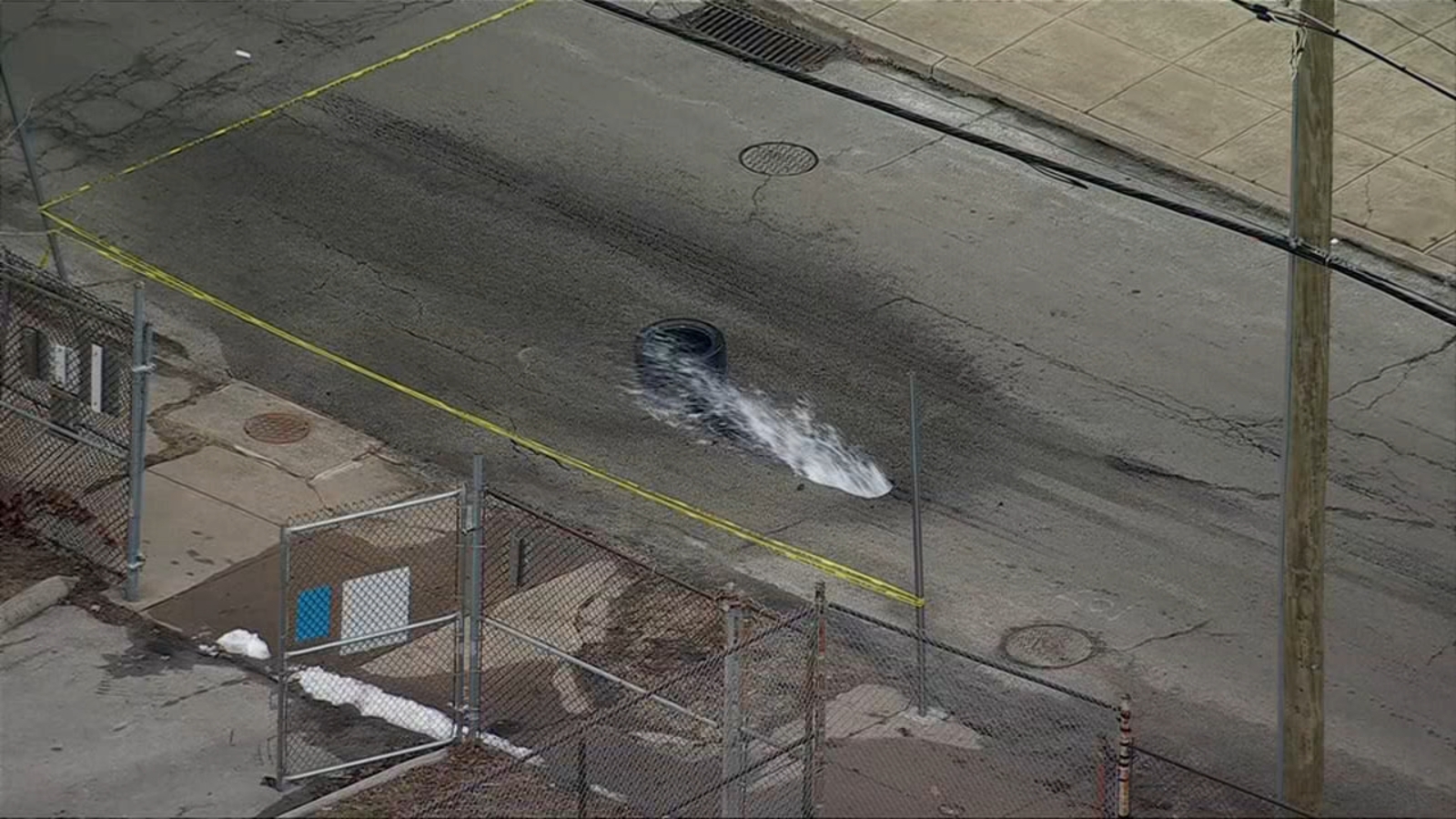
A sudden water main break sent water shooting into the air and shut down a stretch of North Philadelphia on Thursday, leaving residents and commuters scrambling as crews raced to contain the damage. The rupture occurred on the 800 block of North 8th Street, a busy corridor that runs adjacent to the East Poplar Playground, turning an ordinary weekday into an unexpected scene of municipal urgency.
Eyewitnesses reported seeing water gushing from the roadway with enough force to create a dramatic display before Philadelphia Water Department crews arrived on site. The incident forced the full closure of 8th Street between Brown Street and Poplar Street, disrupting traffic flow and raising immediate concerns about the condition of the city’s aging underground water infrastructure.
What Happened on North 8th Street?
The incident unfolded during daytime hours on Thursday, when a buried water main beneath North 8th Street failed without warning. Photographs and video captured at the scene showed water erupting from cracks in the pavement, cascading across the roadway and pooling in nearby gutters. The sheer volume of water illustrated the immense pressure that runs through municipal water distribution lines, even in residential neighborhoods.
According to initial reports, the break was significant enough to warrant an immediate emergency response. Philadelphia Water Department personnel were dispatched to the location to assess the damage, shut off the affected section of pipe, and begin the process of repairing both the water main and the roadway above it.
Immediate Impact on the Surrounding Community
The location of this water main break made it particularly disruptive. Because the rupture happened near the East Poplar Playground, a well-used community recreation space, city officials had to weigh not only the transportation impact but also the safety of any children or families who might have been in the area at the time. While no injuries were reported in connection with the incident, the proximity to a public playground underscored how infrastructure failures can ripple through residential neighborhoods in unexpected ways.
Local businesses along the affected block also faced uncertainty as the street closure cut off customer access. Residents in adjacent buildings may have experienced fluctuations in water pressure or, in some cases, temporary service interruptions while crews worked to isolate the damaged section of pipe.
Why Water Main Breaks Happen
Water main breaks are not uncommon in older American cities, and Philadelphia is no exception. The city’s water distribution network includes thousands of miles of pipes, many of which were installed decades ago. Several factors typically contribute to underground pipe failures:
- Age and material degradation: Many older water mains were constructed from cast iron, which becomes brittle and corrodes over time.
- Soil movement and ground pressure: Shifting soil, freeze-thaw cycles, and heavy traffic loads above buried pipes can cause stress fractures.
- Water pressure fluctuations: Sudden changes in pressure, whether from pump station adjustments or firefighting operations, can stress aging pipe joints.
- Corrosion from soil chemistry: Aggressive soil conditions can eat away at pipe walls from the outside in.
- Construction vibration and ground disturbance: Nearby excavation or heavy construction can damage already-weakened pipes.
Philadelphia has invested significantly in upgrading its water infrastructure in recent years, but the sheer size of the system means that occasional failures remain inevitable. A single water main break like the one on North 8th Street can serve as a reminder of how much modern life depends on the hidden network of pipes beneath our streets.
The Cost of Aging Infrastructure
Beyond the immediate inconvenience of a street closure, water main breaks carry substantial costs. They waste millions of gallons of treated water, damage roadways and private property, and can undermine the structural integrity of nearby sidewalks and foundations. National studies by the American Water Works Association have estimated that the cost of replacing all aging water mains in the United States could run into the hundreds of billions of dollars.
For cities like Philadelphia, where portions of the water system date back more than a century, the challenge is balancing limited capital improvement budgets against the constant risk of pipe failure. Proactive replacement programs are generally far less expensive than emergency repairs, but they require long-term planning and sustained funding.
How the City Responded
When the break was reported, Philadelphia’s emergency response protocol kicked into gear. Utility crews typically follow a structured approach when handling a water main break:
- Site assessment and safety perimeter: Crews first secure the area to protect pedestrians and motorists from potential hazards, including weakened pavement, flooding, and sinkholes.
- Valve isolation: Workers identify and close the valves on either side of the break to stop the flow of water, which can significantly reduce pressure in the affected section.
- Excavation: Heavy equipment is used to remove the damaged roadway and expose the broken pipe.
- Pipe repair or replacement: Depending on the nature of the damage, crews may install a repair clamp, replace a section of pipe, or in more severe cases, replace a longer segment.
- Restoration: Once the pipe is restored, crews disinfect the line, test water quality, and rebuild the roadway surface.
The closure of 8th Street between Brown Street and Poplar Street was a standard precaution to allow crews to work safely and to keep vehicles away from any compromised pavement. As is often the case with major water main breaks, the street closure was expected to last at least through the completion of repairs and the subsequent repaving of the roadway.
What Residents Should Do During a Water Main Break
If you live in or near an area affected by a water main break, there are several practical steps worth keeping in mind:
- Avoid the immediate area: Stay clear of the break site, as flooding, hidden hazards, and weakened pavement can pose serious risks.
- Follow road closure signage: Detours are put in place for safety, and ignoring them can slow emergency response efforts.
- Check for boil water advisories: After a major water main repair, the Philadelphia Water Department sometimes issues precautionary notices about water quality. Always check official channels before drinking tap water following a nearby break.
- Report property damage: If your home or vehicle sustained damage from water or debris, document it carefully and contact both the water department and your insurance provider.
- Conserve water when possible: During major breaks, reducing non-essential water use can help maintain pressure in the broader system.
Understanding Boil Water Advisories
One of the lesser-known consequences of a significant water main break is the potential for a precautionary boil water advisory. When a pipe is opened for repair, there is a small risk that contaminants from the surrounding soil can enter the distribution system. To guard against this, utility companies may issue advisories instructing residents in the affected area to boil tap water before drinking, cooking, or brushing teeth. These advisories are usually lifted within 24 to 48 hours once water quality testing confirms the system is safe.
Looking Ahead: Infrastructure and Resilience
The North Philadelphia water main break is part of a broader national conversation about the state of America’s water infrastructure. The American Society of Civil Engineers has repeatedly graded the nation’s water systems, and the results have consistently highlighted the need for major investment. For Philadelphia, a city with a rich industrial history and an equally rich infrastructure legacy, the path forward involves continued investment in pipe replacement, leak detection technology, and emergency response capability.
Modern approaches to water main management increasingly include the use of acoustic sensors, smart meters, and predictive analytics to identify pipes at risk of failure before they rupture. While these technologies cannot prevent every break, they can help utilities prioritize replacement work and reduce the frequency and severity of unexpected failures.
Conclusion
The water main break that shut down part of North 8th Street near the East Poplar Playground serves as a vivid reminder of the critical role that underground infrastructure plays in daily life. From the water that flows from our taps to the roads we drive on, we depend on a vast and often invisible network that requires constant attention and investment. While crews worked to restore service and reopen the street, the incident underscored both the vulnerability of aging water systems and the dedication of the workers who keep them running. For residents of Philadelphia and cities like it, supporting long-term infrastructure investment is one of the most practical ways to reduce the chances that the next water main break happens on their own block.