
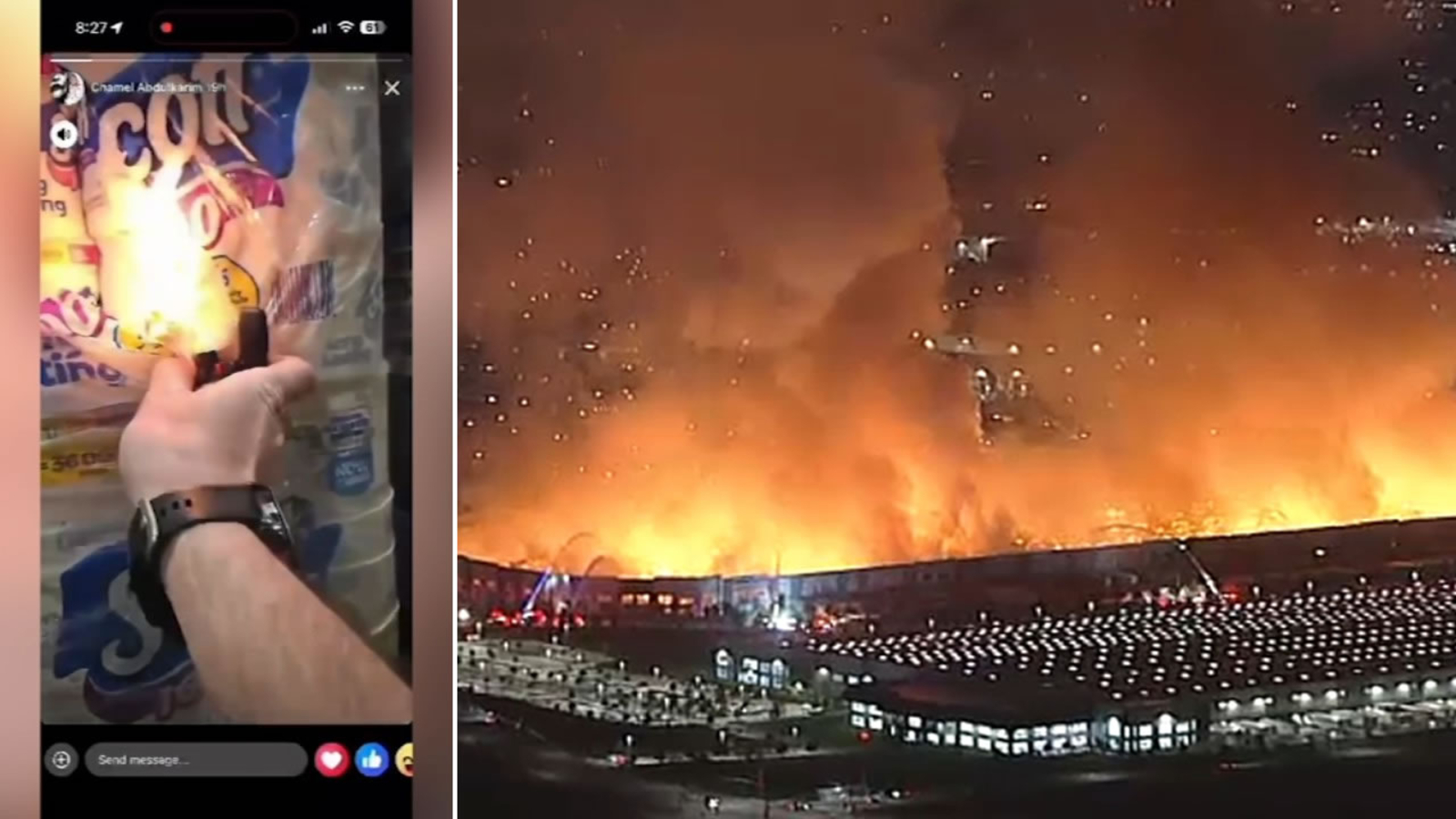
The Ontario warehouse arson case took a dramatic turn this week as investigators revealed social media video footage that allegedly captures both the start of a massive fire and a chilling motive. The blaze, which broke out in the early morning hours at a sprawling Kimberly-Clark Distribution Center in Ontario, California, has led to felony arson charges against a 29-year-old temporary worker who, according to investigators, appears to voice frustrations about inadequate wages in the moments before flames consumed more than one million square feet of warehouse space.
What initially seemed like a catastrophic industrial accident quickly evolved into one of the most talked-about criminal investigations in Southern California this year, raising broader questions about labor conditions, warehouse worker safety, and the growing influence of social media as evidence in criminal cases.
The Night the Fire Began
Flames erupted shortly after 12:30 a.m. on Tuesday at the Kimberly-Clark facility, a massive distribution hub stocked with recognizable household brands including Kleenex tissues and Huggies diapers. Within hours, the fire had destroyed the enormous building and rendered its inventory unsalvageable.
Ontario Fire Department Chief Mike Gerken stated that arson was suspected almost immediately due to the unusually aggressive behavior of the flames. Speaking to reporters, Gerken explained that the rapid spread throughout such a large structure was highly atypical.
“Definitely it was an uncharacteristic fire, just the fire behavior that they were experiencing inside and the rapid spread of that fire for such a large building, to move that quickly , it definitely pushed our firefighters into that defensive operation, and that was one indication that it could possibly be arson in nature,” Gerken said.
Firefighters managed to contain the blaze to the warehouse itself, preventing the fire from spreading to neighboring properties. Miraculously, no injuries were reported among workers or emergency responders despite the scale of destruction.
The Video That Changes Everything
Arson investigators are now examining video footage posted to social media that appears to show the moment the fire was deliberately set. The footage captures cases of toilet paper being ignited inside the warehouse while a person repeatedly expresses frustration about low wages.
In the recording, the individual is heard stating: “If you’re not going to pay us enough to (expletive) live or afford to live, at least pay us enough not to do this.”
The video concludes with what may be the most haunting clip of all: a corridor of the warehouse fully engulfed in flames as the person recording calmly remarks, “There goes your inventory.”
While investigators say they are reviewing the footage carefully, they have not yet officially confirmed whether the individual shown in the video is the same person arrested in connection with the fire.
The Arrest and the Suspect
Police took 29-year-old Chamel Abdul-Karim into custody on suspicion of felony arson. According to authorities, Abdul-Karim was employed at the Kimberly-Clark Distribution Center through a third-party staffing company at the time of the incident. This employment arrangement , common in the warehousing and logistics industry , has since become a focal point in discussions about worker treatment and corporate responsibility.
The arrest raises significant questions about workplace conditions in the modern supply chain, where temporary labor arrangements often leave workers with limited job security, modest wages, and few avenues for advancement or grievance.
Inside the Warehouse: A Co-Worker’s Account
Alex Montero of San Bernardino, a co-worker of the suspect, spoke with reporters about the chaotic moments following the discovery of the fire. According to Montero, he had just met Abdul-Karim shortly before the incident and there was no initial suspicion directed at him.
Montero’s account reveals an intriguing detail: in the immediate aftermath, suspicion initially fell on the warehouse’s automated systems rather than any human actor.
“There was no suspicion that it was him, actually he was missing. So everyone was trying to find him. Everyone was blaming the robots at first. We were almost 100% sure it was the robots until the action in the video of course,” Montero said.
This detail underscores how heavily automated modern distribution centers have become, and how unusual a deliberate act of sabotage would be in such an environment. It also speaks to the unprecedented nature of the Ontario warehouse arson event.
A Massive Loss for a Corporate Giant
The scale of the destruction is staggering. The Kimberly-Clark Distribution Center spanned more than one million square feet and was stocked with paper products from some of the most recognized consumer brands in the world. While the full financial impact has not yet been publicly disclosed, industry analysts suggest that losses from the fire could easily reach hundreds of millions of dollars when factoring in:
- Destruction of physical inventory
- Damage to the warehouse structure
- Disruption to regional distribution networks
- Lost contracts and customer relationships
- Insurance and legal costs
- Long-term rebuilding expenses
For Kimberly-Clark, one of the largest consumer goods companies in the world, the loss of a single distribution facility of this size represents a significant operational setback, particularly given the company’s reliance on rapid product delivery to retailers across the western United States.
Broader Implications for the Warehousing Industry
The Ontario warehouse arson case has sparked renewed conversation about working conditions within the warehousing and logistics sector. Workers in these facilities, often employed through staffing agencies rather than directly by the parent company, frequently report concerns about:
- Low hourly wages that fail to keep pace with regional cost-of-living increases
- Limited benefits compared to direct-hire employees
- Minimal training on safety protocols
- Heavy physical demands with few ergonomic accommodations
- Lack of clear pathways for reporting grievances or workplace concerns
While nothing justifies the destruction of property or endangerment of lives, the alleged statements made by the suspect before the fire have prompted labor advocates to call for renewed scrutiny of staffing practices in the warehousing industry. The case may well influence pending legislation and corporate policy decisions in the months ahead.
Social Media as Modern Evidence
The role of social media footage in this investigation cannot be overstated. The video posted online , apparently by the suspect himself , has provided investigators with what may be the most direct evidence possible of both the act and the motivation behind it. This represents an evolving trend in criminal investigations, where suspects often share incriminating content on platforms before, during, or immediately after committing crimes.
For legal experts, the case offers a textbook example of how digital evidence shapes modern prosecutions. The footage must now undergo rigorous authentication procedures before it can be formally admitted in court, but its impact on public perception of the case is already significant.
What Happens Next?
As the investigation continues, several key questions remain unanswered:
- Will prosecutors formally link the video to Abdul-Karim and secure a conviction?
- What was the exact nature of his employment arrangement and compensation?
- Will Kimberly-Clark face any civil liability related to workplace conditions?
- How will the company rebuild its distribution capacity in the region?
- Will this incident prompt regulatory changes in the warehousing industry?
Abdul-Karim faces felony arson charges that could result in significant prison time if convicted. The severity of the charges reflects both the magnitude of property damage and the deliberate nature of the alleged act.
Conclusion
The Ontario warehouse arson stands as one of the most striking incidents in recent California history , a deliberate act of destruction captured on video, motivated by alleged grievances over wages in a modern supply chain economy. As the legal process unfolds, the case will likely serve as a touchstone for conversations about labor rights, corporate accountability, workplace safety, and the consequences of social media evidence. Beyond the immediate criminal proceedings, the broader lessons of this tragedy are still being written, and they will undoubtedly shape policy discussions, corporate practices, and public awareness for years to come.