
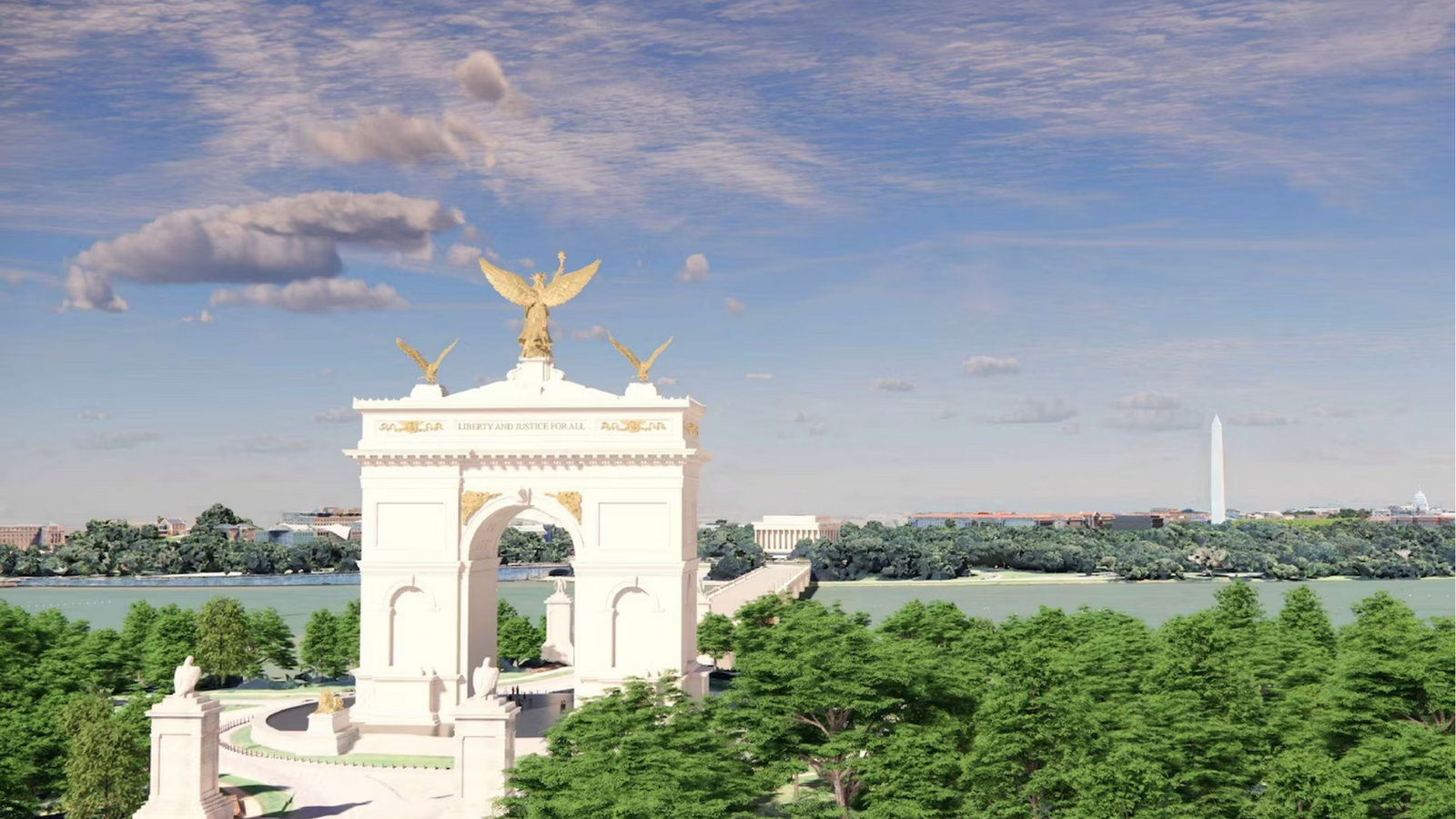
A controversial proposal to erect a 250-foot-tall Trump triumphal arch along the National Mall in Washington, D.C., cleared an important procedural hurdle this week when the Commission of Fine Arts voted to advance the project , though not without demanding substantial design revisions. The seven-member federal panel, now composed entirely of presidential appointees, held a hearing on Thursday that exposed deep divisions over the appropriateness of the structure, its scale, and its symbolic weight in the nation’s capital.
Initial Approval, But Not Without Conditions
Five members of the commission cast votes in favor of moving the project forward, while two were absent from the hearing. Despite the favorable tally, the panel made clear that the current design is far from finalized. Vice Chair James McCrery, who also served as the initial architect behind Trump’s massive White House ballroom project, laid out an extensive list of concerns he expects the design team to address before the proposal advances further.
McCrery’s reservations centered on three significant elements of the current design. First, he challenged the planned 250-foot underground pathway intended to give visitors access to the monument, describing the construction of such a tunnel beneath the capital as “a really, really unfortunate thing.” He acknowledged that underground building is sometimes unavoidable but argued that the arch project did not justify it.
Second, McCrery expressed reservations about the lion statues proposed for the base of the structure. While acknowledging that lions are “noble,” “courageous,” and “strong,” he pointed out that these animals are not native to the American continent and suggested the panel explore more culturally resonant alternatives.
Third, he called on the architects to redesign the arch’s openings so they “open these arches and air them out,” ensuring that visitors and pedestrians can still see Washington’s existing landmarks through the structure rather than having their sightlines blocked.
The Scale of the Proposal
Proponents of the trump triumphal arch describe it as a grand commemorative gesture, but the numbers associated with the design have fueled criticism from preservationists, architects, and ordinary Americans alike. At 250 feet tall, the proposed monument would stand more than twice the height of the Lincoln Memorial and would even surpass France’s iconic Arc de Triomphe , one of the world’s most recognized triumphal monuments.
The proposed location near Arlington National Cemetery has also raised alarm. Critics argue that placing such an enormous structure in such close proximity to one of the nation’s most sacred military burial grounds sends the wrong message about sacrifice, humility, and national memory.
Public Opposition Overwhelming
Perhaps the most striking revelation from the hearing came from Thomas Luebke, the commission’s secretary, who reported that nearly one thousand public comments had been submitted online regarding the project. According to Luebke, an astonishing 100% of those comments opposed the monument.
The substantive criticisms in those comments fell into several recurring themes. Many characterized the proposal as a waste of taxpayer money and a misuse of public funds. Others warned that the structure would obstruct historic vistas and disrupt the carefully planned landscape of the National Mall. A significant number of commenters described the symbolism as inappropriate, imperial, and overtly political , concerns that have followed the project from its earliest stages.
Some used sharper language, calling the design gaudy, oversized, and incompatible with the classical aesthetic that defines the Mall. Perhaps most poignantly, many expressed that the project would be disrespectful to the service members interred at Arlington National Cemetery and to the broader legacy of military sacrifice the United States seeks to honor.
Outside the National Building Museum, where the commission maintains its offices, demonstrators gathered to make their opposition visible. They held hand-painted signs reading “Stop Arch Insanity,” “No Trump Arch,” and “No Vanity Arch” , slogans that captured the frustration of those who view the project as a personal vanity monument rather than a meaningful civic tribute.
Preservation Voices Raise Formal Objections
Inside the hearing room, preservation advocates delivered formal testimony against the project. Zachary Burt, community outreach manager for the D.C. Preservation League, argued that the arch “threatens the solemn vista” connecting Arlington National Cemetery to the Lincoln Memorial. He warned that its sheer scale would “overshadow the revered landmarks that Americans hold in the highest regard” , monuments that together form one of the most carefully composed landscapes in the world.
Lisa Fuller, a lifelong Washington-area resident, grew emotional as she recounted personal memories tied to the Mall’s existing vistas. Describing her childhood walks across Arlington Memorial Bridge, she explained how the journey from the Lincoln Memorial to Arlington connects generations of Americans to the values those monuments represent.
“I first walked across that bridge with my dad after John Kennedy died,” Fuller told the panel. “We started at the Lincoln Memorial. My father told me all about it, and then we walked across, and we saw the Eternal Flame.” Her testimony underscored the deeply held belief that the National Mall is not merely real estate available for new construction , it is a living memorial landscape whose meaning depends on the relationships between its existing structures.
Architect Responds to Concerns
Nicolas Charbonneau, the architect behind the proposed triumphal arch, heard the panel’s concerns directly. Whether he and his team can satisfactorily address McCrery’s critiques , particularly the underground pathway, the lion statues, and the sightline obstructions , remains to be seen. The commission’s request for revisions signals that even sympathetic commissioners recognize the design requires meaningful refinement before it can proceed.
Broader Implications for the National Mall
The ongoing debate over the trump triumphal arch touches on questions that go well beyond one structure. The National Mall has long been governed by a delicate balance of architectural restraint, federal oversight, and respect for historical continuity. Any new monument of this scale would permanently reshape the visual and symbolic identity of the area, and critics argue that such decisions deserve broader public consensus than a single commission vote can provide.
Preservationists worry that approving a 250-foot structure near Arlington sets a precedent that could open the door to other politically motivated monuments, fundamentally changing the character of the capital. Supporters counter that the Mall has always evolved to reflect the values of each generation, and that a triumphal arch commemorating American history would be a worthy addition.
Still, the unanimity of public opposition , every single submitted comment , suggests that whatever technical revisions the architects undertake, the deeper questions about symbolism, scale, and siting remain unresolved. A monument of this ambition cannot succeed if it is rejected by the very public it is meant to honor.
Looking Ahead
With the initial approval secured but significant revisions demanded, the project’s future hinges on whether Charbonneau’s team can produce a redesign that satisfies both the Commission of Fine Arts and the broader American public. Given the overwhelming opposition already on the record, it seems unlikely that cosmetic changes alone will quiet the controversy. The commission’s next review will be a critical test of whether the architect can reimagine the structure in a way that addresses the deeply felt concerns expressed during this week’s hearing.
For now, the trump triumphal arch remains a proposal rather than a fait accompli , but the debate it has ignited over the soul of the National Mall is likely to continue regardless of how the design evolves.