
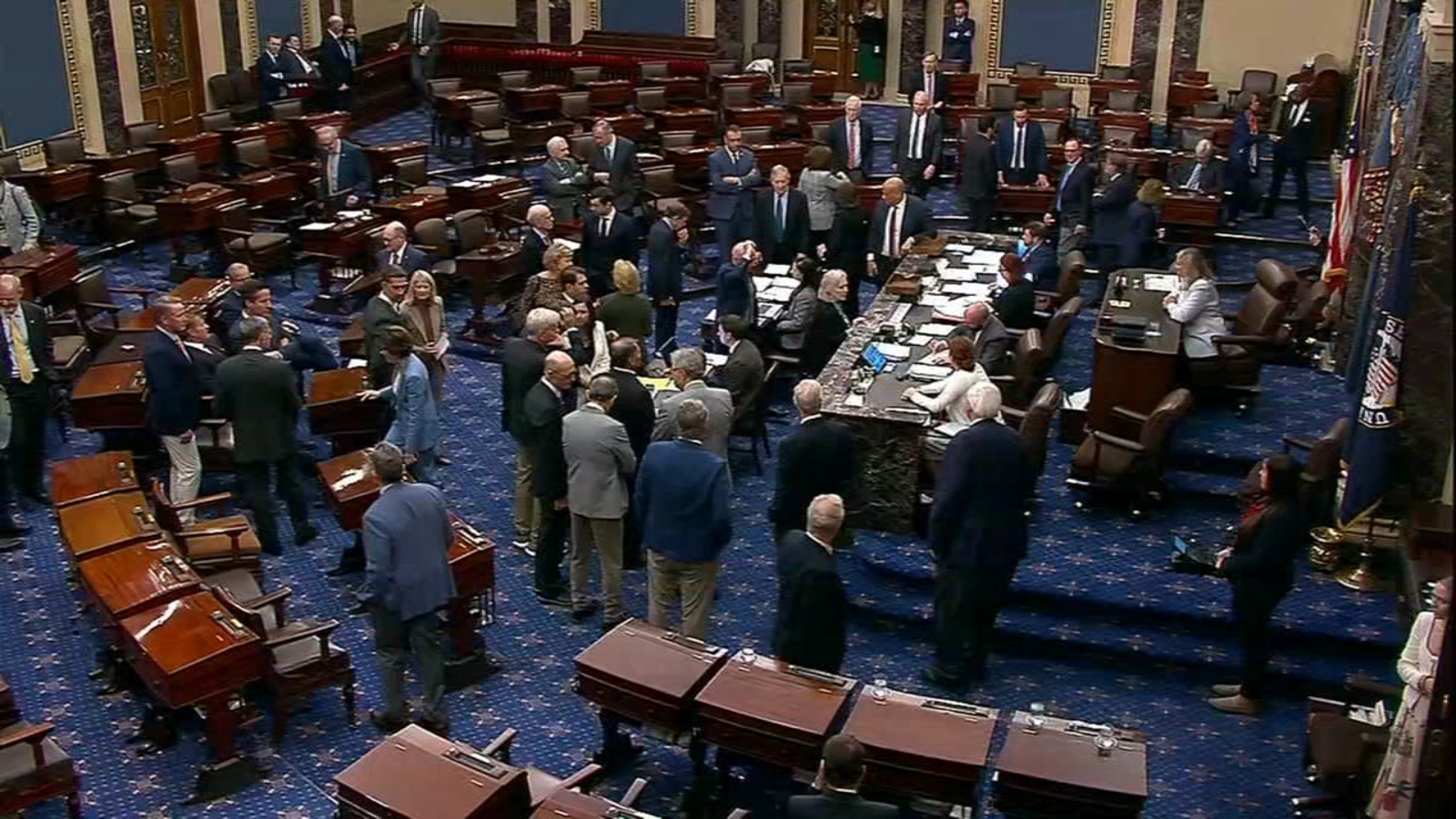
In a decisive bipartisan move, the U.S. House of Representatives has passed a short-term government funding bill designed to keep federal operations funded through December 11, narrowly averting the threat of another disruptive funding lapse just weeks before the November elections. The legislation, which cleared the chamber by an overwhelming 370-48 vote, now heads to President Donald Trump’s desk for his signature after the Senate approved its version earlier this week.
The action comes as lawmakers confronted a hard deadline: the end of the fiscal year on September 30. With campaigns in full swing across the country, members of both parties expressed a strong desire to remove the specter of a federal government shutdown from the political calendar and provide stability for constituents, federal workers, and service members alike.
Why a Continuing Resolution Instead of a Full-Year Budget?
Rather than passing a comprehensive appropriations package for the entire fiscal year, Congress opted for a continuing resolution (CR), a temporary funding mechanism that maintains federal agency budgets at their current operating levels. This approach effectively buys lawmakers additional time to negotiate the finer points of a full-year spending measure, though few in Washington expect those negotiations to be easy.
“It gives the nation and our constituents certainty, certainty that the government will remain open, certainty that our service members will be paid,” said Rep. Tom Cole, the Republican chairman of the House Appropriations Committee, underscoring the value of the stopgap legislation.
The December 11 expiration date sets up what could be another high-stakes budget fight during the holiday season, particularly if the political dynamics in Washington shift following the upcoming elections.
Lessons Learned from Recent Shutdowns
The urgency surrounding this vote was amplified by painful memories of recent funding impasses. Last fall, a record-breaking 43-day federal government shutdown paralyzed agencies and cost the economy billions of dollars after Democrats and Republicans deadlocked over renewing an expiring tax credit that lowers the cost of health coverage through the Affordable Care Act marketplaces. That prolonged standoff was followed by an even longer 76-day shutdown of the Department of Homeland Security, which ended only when lawmakers agreed to fund most of the department while withholding money for immigration enforcement operations.
Those bruising experiences left members of both parties eager to demonstrate that they could govern, even in the heat of an election cycle. Speaker Mike Johnson made the political stakes clear in advance of the vote, framing the bill as a way to avoid what he called “another Democratic shutdown.”
Key Provisions Added in the Senate Version
While the House had passed an earlier version of the funding measure earlier this summer on a largely party-line vote, the bill was significantly revised when it moved through the Senate. These changes were instrumental in winning over skeptical Democrats and broadening the coalition of support.
- Restrictions on DHS fund transfers: The bill prohibits the Department of Homeland Security from shifting funds to the Border Patrol, addressing concerns that such transfers could undermine oversight of immigration enforcement.
- Delay on grant rule: The legislation postpones implementation of a proposed regulation that would have given political appointees in the Trump administration expanded authority to block federal grants to programs they deemed inconsistent with the president’s agenda.
Rep. Rosa DeLauro, the senior Democrat on the House Appropriations Committee, encouraged her caucus to back the measure during a closed-door meeting, noting that the Senate’s revisions had transformed the bill into a more balanced product.
The Battle Over Federal Grants and Political Influence
Perhaps no provision generated more controversy than the proposed federal grants rule. Democrats fear the administration could weaponize the regulation to redirect funding away from states and communities led by their political opponents, effectively using the federal purse as a tool of political retaliation.
“Whether a community receives disaster relief should not depend on who they voted for in the last election,” DeLauro declared, framing the issue in stark moral terms. She praised the Senate’s decision to delay the rule as “an important first step,” but emphasized that further legislative action would be necessary to prevent the policy from being implemented.
This fight is expected to continue well beyond the short-term funding bill, as Democrats have made clear they intend to use every available leverage point to block the grant policy.
What’s at Stake in December’s Budget Fight
The continuing resolution is, by design, a temporary fix. When Congress returns after the election, lawmakers will face a series of difficult decisions about how to allocate hundreds of billions of dollars in spending across an array of competing priorities.
The Republican Position: Defense Spending and Cuts
Republican leaders have made clear that they intend to pursue substantial increases in military spending in any full-year budget agreement. To offset those costs, they have proposed trimming most non-defense programs, a stance that has drawn fierce opposition from Democrats and from advocacy groups representing domestic priorities.
The Democratic Position: Parity and Bipartisanship
Democrats, meanwhile, have insisted that any final agreement must treat defense and non-defense programs with equal consideration. For many in the caucus, deep cuts to domestic programs,particularly those serving low-income families, veterans, and seniors,are simply unacceptable. They have called for a genuinely bipartisan approach rather than a Republican-only budget.
The two sides remain far apart, and the December 11 deadline now looms as the next major flashpoint on the congressional calendar. If a full-year measure cannot pass, lawmakers may be forced to pass another continuing resolution, setting up yet another showdown before the new year.
What the Bill Means for Federal Workers and the Public
For the federal workforce and the millions of Americans who rely on government services, the passage of this government funding bill brings a welcome period of stability. Federal employees can expect to be paid on schedule, and programs ranging from veterans’ benefits to national park operations will continue without interruption. Contractors and small businesses that depend on federal payments also gain certainty about their cash flow heading into the holiday quarter.
Still, the underlying disagreements between the Republican and Democratic visions for federal spending remain unresolved. The short-term victory in the House only postpones, rather than solves, the deeper policy battles over the size and shape of the federal budget.
Conclusion
The House’s passage of the short-term government funding bill marks a momentary triumph of bipartisan pragmatism over partisan brinkmanship, ensuring that federal operations will be funded through mid-December. Lawmakers from both parties deserve credit for recognizing that another shutdown, particularly one occurring on the eve of a national election, would have inflicted unnecessary damage on the economy, the federal workforce, and public trust in government. However, the heavy lifting remains ahead. The December deadline will force Congress to grapple with fundamental questions about military priorities, domestic spending, and the appropriate role of political appointees in directing federal grants. Whether the next budget fight ends in compromise or chaos remains to be seen, but for now, the immediate threat of a shutdown has been pushed back and the nation can breathe a small but meaningful sigh of relief.