
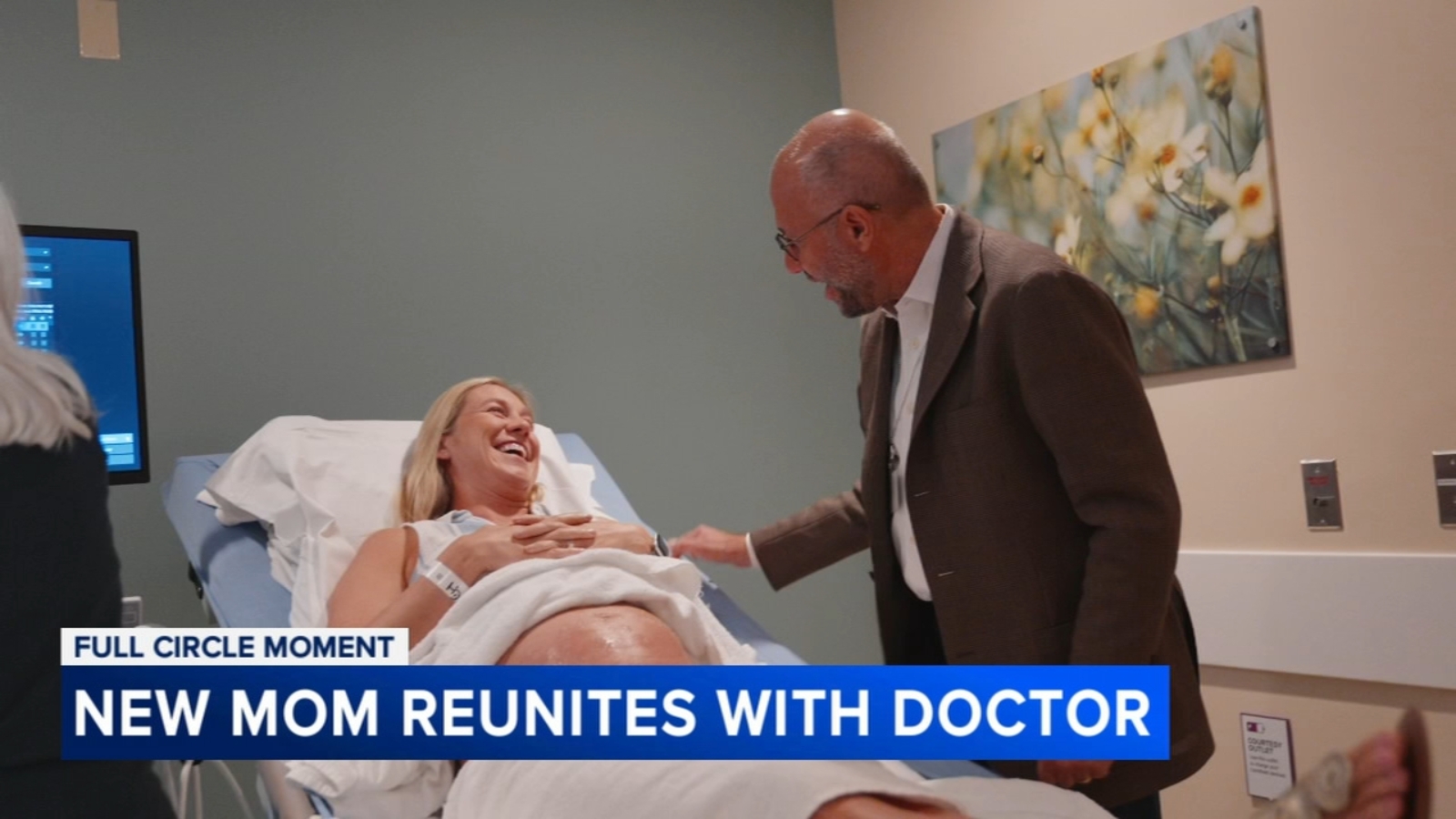
More than three decades ago, a groundbreaking infant heart ablation procedure saved the life of a newborn girl who had been given little chance of survival. Today, that same patient , now a thriving adult , has come full circle in one of the most heartwarming medical reunion stories imaginable. Not only did the pioneering intervention give her a future, but it also allowed her to return to the same doctor who saved her, this time to safeguard her own unborn twins.
This remarkable story, which unfolded at the Children’s Hospital of Philadelphia (CHOP), represents the very best of what modern pediatric cardiology can achieve , and offers a hopeful glimpse into how far the field has come in just one generation.
A Dire Diagnosis Just Days After Birth
In August 1993, Brittany Yannick was only a few days old when her tiny body began fighting for survival. She had developed a severe, uncontrollable cardiac arrhythmia , a dangerously rapid and irregular heartbeat that left her doctors scrambling for answers. Her heart function was deteriorating rapidly, and conventional treatments weren’t working.
“I developed an arrhythmia that doctors couldn’t control,” Yannick recalled years afterward, reflecting on the crisis that began her life’s extraordinary journey.
She was rushed to CHOP, one of the nation’s premier pediatric cardiac care centers, where a young physician named Dr. Jack Rychik would soon make a decision that would change everything.
The Decision That Changed Everything
An Experimental Lifeline
Dr. Rychik faced a heartbreaking dilemma. Brittany’s heart rate continued to climb despite every medication her care team tried. Her heart function was failing. Standard interventions had been exhausted.
“But no matter what medication we were throwing at her, she was not responding, and the heart rate continued to increase, and the heart function continued to deteriorate,” Dr. Rychik remembered.
In a moment that required both medical expertise and courageous intuition, Dr. Rychik chose to attempt an infant heart ablation , a procedure designed to destroy or remove the small amount of heart tissue responsible for the abnormal rhythm. At the time, this was virtually unheard of in pediatric medicine.
Catheters Built for Adults, Not Babies
The challenges were enormous. Ablation technology existed, but it had been developed exclusively for adult patients. The catheters used to navigate the heart and target problematic tissue were far too large for a newborn’s tiny cardiovascular system.
“Today, this is fairly standard fare,” Dr. Rychik explained. “But back then, it was still in development, and solely in the adult realm, and the catheters were not built for children.”
Despite these enormous technical hurdles, the team pressed forward. Brittany’s life depended on it.
The Moment of Triumph
The risky decision paid off in the most extraordinary way. As the ablation procedure targeted the rogue heart tissue, something remarkable happened , for the very first time in her short life, Brittany’s heart rate began to drop. The rapid rhythm that had been threatening to kill her finally slowed.
“And, lo and behold, it stopped the rapid rhythm. And for the first time in Brittany’s life, her heart rate came down,” Dr. Rychik recalled, the emotion of that moment still evident decades later.
The groundbreaking infant heart ablation had worked.
A Lifetime of Follow-Up Care
The successful procedure was only the beginning of Brittany’s long-term medical journey. Following her ablation, she received a pacemaker to help regulate her heart rhythm and continued annual checkups throughout her childhood and into adulthood. Her parents maintained a relationship with Dr. Rychik, updating him on her milestones and progress over the years.
What makes her story particularly inspiring is that Brittany wasn’t just surviving , she was thriving. She grew into a healthy, active young woman with dreams, aspirations, and one day, plans for a family of her own.
A Full-Circle Reunion
Pregnancy Brings New Questions
When Brittany discovered she was pregnant with twins, she was overjoyed , but also understandably anxious. As a survivor of complex cardiac intervention, she knew her pregnancy would require specialized monitoring. She needed expert fetal cardiology care, and she wanted the very best.
That’s when she reached out to Dr. Rychik, who had since risen to become the director of CHOP’s renowned fetal heart program. The two hadn’t seen each other in years, but the bond formed during those terrifying first days of Brittany’s life remained strong.
The Doctor Who Saves Generations
Dr. Rychik’s response was immediate and heartfelt. He didn’t hesitate to perform the fetal heart evaluations on both babies himself, ensuring that Brittany’s twins were developing with healthy hearts before they were even born.
“It was truly unimaginable. I hadn’t seen him in years,” Yannick said. “I kind of just reached out to him to update him on the twins and the pregnancy and the fact that I needed to get the fetal echo. And he wanted to do it for us. So it was really special to have him there and see him and have him care for them.”
The reunion carried deep meaning for both physician and patient. For Dr. Rychik, it represented the ultimate validation of his career-defining decision three decades earlier.
“For me to witness the fact that our innovative actions 30+ years earlier had resulted in the potential for this life and this family and for future generations. It’s just an incredible thing,” he said.
The Evolution of Pediatric Cardiac Ablation
Brittany’s case was part of a transformative era in pediatric cardiology. In the early 1990s, performing an infant heart ablation was considered experimental and fraught with risk. The catheters were oversized, the imaging technology was limited, and few physicians had the courage or training to attempt such procedures on newborns.
Today, thanks to pioneers like Dr. Rychik and the patients whose lives paved the way, pediatric ablation is a well-established treatment option. Specialized pediatric catheters, advanced imaging, and refined techniques now allow cardiologists to treat arrhythmias in even the smallest patients with far greater safety and precision.
The evolution of this procedure has saved countless lives since Brittany’s pioneering case. What was once a desperate, last-resort measure has become a routine, life-saving intervention performed at major pediatric cardiac centers worldwide.
What Fetal Heart Evaluations Reveal
During her pregnancy, Brittany underwent detailed fetal echocardiograms , specialized ultrasounds that allow cardiologists to visualize a baby’s heart structure and function before birth. These evaluations can detect:
- Congenital heart defects such as holes in the heart, valve abnormalities, or vessel malformations
- Arrhythmias developing in utero
- Functional concerns like weakened heart muscle or poor blood flow
- Genetic cardiac conditions that may run in families
For mothers with pre-existing cardiac conditions , or those whose own heart history raises concerns , fetal echocardiography provides crucial information that allows care teams to plan for any interventions the baby might need immediately after birth.
Thriving at Six Months Old
Today, Brittany’s twins are six months old and thriving. Their healthy hearts beat steadily, a testament to both modern fetal cardiology and the legacy of the groundbreaking infant heart ablation that saved their mother’s life before any of them were born.
The story of Brittany Yannick and Dr. Jack Rychik isn’t just a feel-good reunion , it’s a powerful reminder of how medical innovation creates ripple effects across generations. A single decision, made in desperation three decades ago, ultimately enabled an entire family to exist.
The Power of Long-Term Doctor-Patient Relationships
One of the most beautiful elements of this story is the enduring bond between doctor and patient. In an era of fragmented healthcare and frequent provider changes, the relationship between Brittany and Dr. Rychik stands as a testament to the importance of continuity in medicine.
For patients with complex medical histories, having a physician who knows your full story , who remembers the crisis that started it all and has followed your journey through every milestone , is invaluable. That kind of relationship fosters trust, encourages follow-through on care plans, and provides emotional comfort during medical challenges.
For physicians, seeing former patients grow up, thrive, and start families of their own is among the most rewarding aspects of a career in medicine. Dr. Rychik’s pride in watching Brittany become a mother is the kind of moment that makes decades of difficult work worthwhile.
Looking to the Future
As pediatric cardiology continues to advance, stories like Brittany’s will become increasingly common. Innovations in minimally invasive procedures, improved catheter technology, enhanced imaging, and refined genetic screening all promise to give even more children the chance at long, healthy lives.
Meanwhile, fetal cardiology programs like the one Dr. Rychik now directs at CHOP are giving expecting parents unprecedented insight into their babies’ heart health, allowing care teams to intervene at the earliest possible moment when needed.
Conclusion
The reunion between Brittany Yannick and Dr. Jack Rychik is more than a touching news story , it’s a living illustration of medicine’s highest purpose. A desperate decision to attempt an infant heart ablation on a critically ill newborn in 1993 gave that child a lifetime she otherwise wouldn’t have had. Decades later, the same physician stood ready to care for the next generation of her family, ensuring her twin babies would enter the world with healthy hearts.
For families facing similar diagnoses today, this story offers hope. Pediatric cardiac care has advanced in extraordinary ways, and survival rates for even the most complex congenital heart conditions continue to improve. The pioneers who pushed the boundaries of what was possible decades ago have paved the way for countless children to grow up, chase their dreams, and one day start families of their own , just like Brittany.