
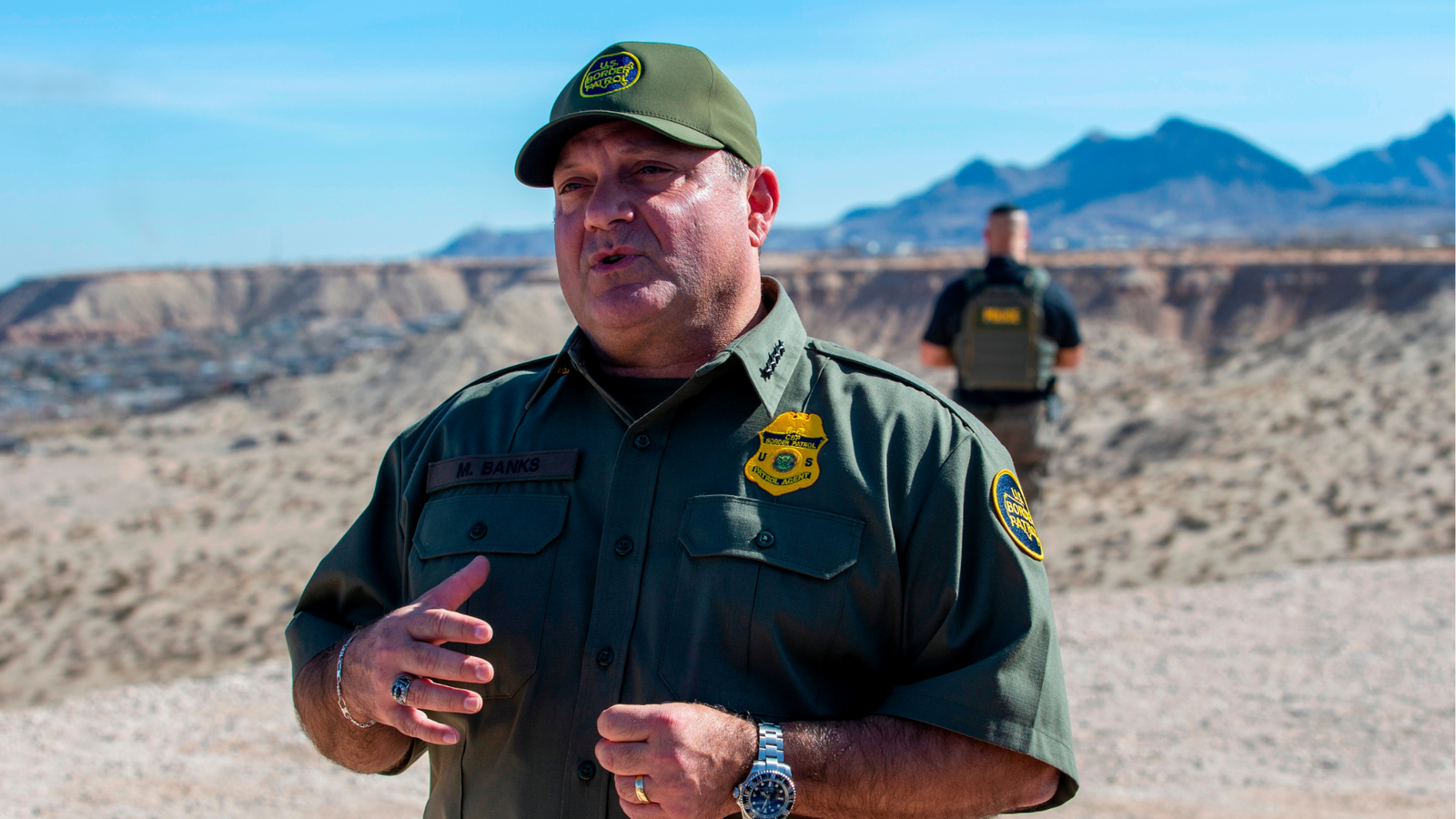
When news broke about the border patrol chief resignation of Michael Banks, it marked yet another significant development in the ongoing transformation of America’s immigration enforcement infrastructure. After 37 years of service, Banks announced he is stepping down from his position leading the U.S. Border Patrol, the nation’s primary federal agency responsible for securing thousands of miles of international boundaries.
This departure represents more than just one official leaving office. It signals a broader pattern of DHS leadership changes during a period when immigration policy has become one of the most contentious political battlegrounds in the country. The resignation comes at a pivotal moment, with the Trump administration recalibrating its aggressive approach to border security and interior enforcement operations.
The Announcement and Immediate Reaction
Banks broke the news himself during a Fox News interview, explaining his decision with characteristic directness. “It’s just time,” he said. “I feel like I got the ship back on course from the least secure disastrous chaotic border to the most secure border this country has ever seen.” His remarks suggest a sense of mission accomplished, framing his tenure as one defined by transformation and recovery from what he characterized as previous failures.
The Department of Homeland Security confirmed the resignation shortly after, while the White House declined to comment. Rodney Scott, Commissioner of U.S. Customs and Border Protection (CBP), issued a statement thanking Banks for his service “during one of the most challenging periods for border security.” Scott, who served as Banks’ direct supervisor, has emerged as one of the agency’s more visible public figures.
Banks’ Unconventional Path to Leadership
What makes Banks’ career particularly interesting is the unconventional route he took to the top of the Border Patrol. He returned to the agency last year after an extended absence, having never previously held a senior leadership position within its ranks. His rise to prominence came not from within the agency’s traditional hierarchy but from his work as border czar to Texas Governor Greg Abbott.
This role placed Banks at the center of one of the most aggressive state-led border enforcement efforts in American history. During a period when illegal crossings reached record highs, Texas launched a multibillion-dollar enforcement surge that frequently put the state at odds with the Biden administration. The resulting turf battles between federal and state authorities highlighted the fractured nature of America’s immigration enforcement landscape and foreshadowed many of the conflicts that would later emerge.
Banks’ Texas experience gave him credibility with hardline immigration advocates and made him a natural fit for the Trump administration’s priorities when he returned to federal service. Yet despite leading an agency at the forefront of high-profile Trump immigration enforcement efforts, he maintained a notably low public profile compared to other officials like Gregory Bovino, the now-retired commander who became a recognizable face of city-based operations.
A Concurrently Turbulent Time at ICE
The border patrol chief resignation is not occurring in isolation. Todd Lyons, the acting director of U.S. Immigration and Customs Enforcement (ICE), is also departing later this month. His replacement, David Venturella, brings an unusual background to the position, having spent years working for private contractors before returning to government service. This dual leadership transition at both of DHS’s primary immigration enforcement agencies suggests a coordinated effort to reshape the architecture of federal immigration policy.
These personnel moves come just two months after Markwayne Mullin, a former Republican senator from Oklahoma, took over as homeland security secretary. With DHS overseeing both CBP and ICE, the new secretary appears to be assembling a team that aligns with his vision for enforcement priorities.
Context: The State of the Border
Understanding the significance of this resignation requires examining the broader context of border security policy under the current administration. When Banks returned to the Border Patrol, illegal crossings had reached historic highs, with millions of encounters recorded annually. The agency faced criticism from both directions,condemned by immigration advocates as overly aggressive and by enforcement hardliners as inadequate.
Today, the picture looks dramatically different. Arrests for illegal crossings have plunged to their lowest levels since the mid-1960s, a remarkable statistical shift that began during the late stages of the Biden administration and has accelerated under Trump. Banks points to this transformation as evidence of his success, though immigration researchers and policy analysts continue to debate the precise factors driving the decline.
Among the variables often cited are expanded enforcement resources, policy changes that restricted asylum access, increased cooperation with Mexican authorities, and economic conditions in migrant-sending countries. Regardless of attribution, the numbers themselves represent a sea change in border enforcement metrics.
The Wider Enforcement Picture
CBP has been one of several federal agencies participating in high-profile immigration enforcement operations conducted primarily in cities governed by Democrats. These operations, which escalated significantly over the past year, triggered a dramatic spike in arrests and led to confrontations that have intensified political tensions across the country.
Tragedy struck earlier this year in Minneapolis, where two American citizens were fatally shot by federal immigration officers during enforcement actions. These incidents have raised serious questions about use-of-force protocols, training standards, and accountability mechanisms within the agencies responsible for interior enforcement.
Critics argue that such operations blur the traditional lines between border security and domestic law enforcement, while supporters maintain they represent necessary steps to address what they characterize as a crisis of illegal immigration. The debate shows no signs of resolution, particularly as enforcement actions increasingly affect communities far from any actual international border.
The Role of Border Czar Tom Homan
One figure who looms large over these developments is Tom Homan, Trump’s border czar and a close ally of CBP Commissioner Rodney Scott. Homan has shaped much of the administration’s enforcement philosophy and has been particularly influential in directing operations targeting sanctuary cities and jurisdictions that limit cooperation with federal immigration authorities.
Scott, who has acted as the agency’s primary public spokesperson, did not appear at the recent Border Security Expo in Phoenix, an annual conference where government officials typically update contractors on the state of border operations. Banks’ absence from the same event may have been an early indication of the transition to come, though his announcement still caught many observers by surprise.
What’s Next for Border Patrol Leadership?
As of now, no successor has been named to replace Banks. The selection process will likely draw significant scrutiny, given the political weight attached to the position. Candidates may emerge from within the agency’s senior ranks, or the administration could look outside the traditional pipeline,perhaps even drawing on the kind of unconventional backgrounds that characterized his own return to the role.
Whoever takes the helm will inherit an agency that has been fundamentally reshaped during Banks’ tenure, with new operational priorities, expanded authorities, and an elevated public profile. The next chief will also need to navigate the complex relationship between Border Patrol operations and ICE activities, particularly as both agencies undergo leadership transitions simultaneously.
Implications for the Future of Border Enforcement
The border patrol chief resignation fits within a broader pattern of turnover at DHS that reflects the administration’s willingness to reshape its enforcement apparatus. Whether these changes represent continuity or meaningful policy shifts remains to be seen. Banks himself framed his departure in personal terms, telling Fox News that after 37 years of service, “it’s time to enjoy the family and life.”
Yet the timing is significant. With illegal crossings at historic lows and enforcement operations generating both praise and criticism, the administration appears to be entering a new phase. The simultaneous transitions at both Border Patrol and ICE suggest coordinated thinking about the future direction of immigration enforcement.
For the American public, these leadership changes will shape how immigration policy is implemented for years to come. For communities along the border and in major cities where enforcement operations have become routine, the stakes could not be higher. And for the thousands of agents and officers who serve in these agencies, the leadership vacuum creates both challenge and opportunity.
Conclusion
The resignation of Border Patrol Chief Michael Banks marks the end of an era defined by dramatic transformation of America’s border security apparatus. From the chaotic scenes of record-breaking illegal crossings to today’s historic lows, Banks was present for some of the most consequential shifts in immigration enforcement in modern American history. As DHS continues its broader leadership shake-up and a new generation of officials takes the reins, the policies and practices that emerge will determine whether the current trajectory represents a durable new equilibrium or merely a momentary pause in an ever-evolving political struggle over immigration, sovereignty, and the meaning of America’s borders.