
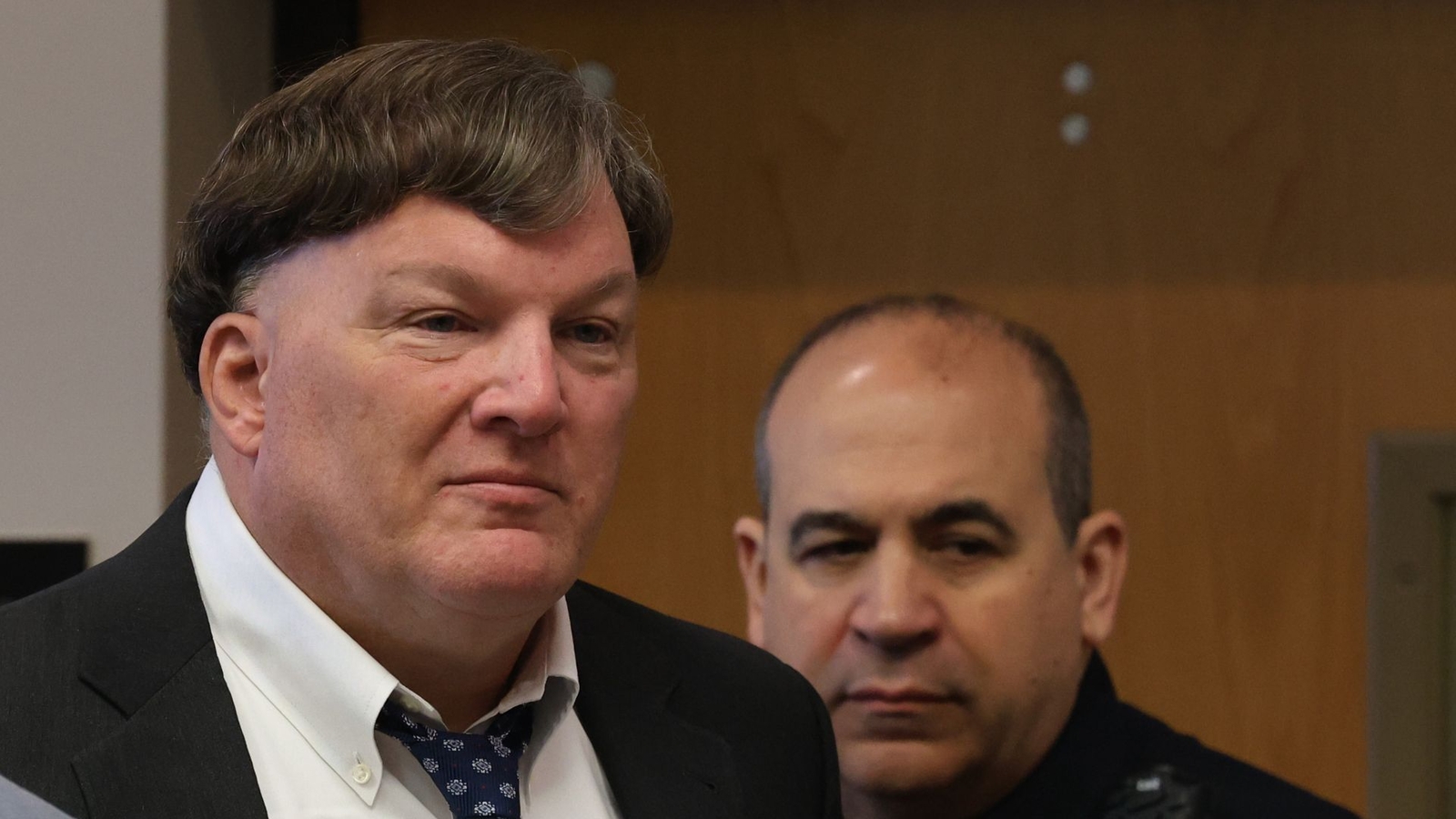
In a case that has haunted Long Island for years, disturbing new details have emerged about the Gilgo Beach serial killer, Rex Heuermann, and his activities behind bars. The accused murderer, who recently confessed to a string of horrific killings, has reportedly been communicating with another notorious serial killer while awaiting his fate in a Suffolk County jail cell. These revelations paint a chilling portrait of a man who remains eerily detached from the gravity of his crimes.
A Disturbing Pen Pal Exchange
According to Suffolk County Sheriff Errol Toulon, Heuermann has exchanged correspondence with Keith Hunter Jesperson, the convicted serial killer known infamiously as the “Happy Face Killer.” Jesperson earned his chilling nickname because he drew smiley faces on letters sent to media outlets while confessing to multiple murders during the 1990s. Toulon revealed that Jesperson “reached out a few times” to Heuermann from his own prison cell, and the Gilgo Beach serial killer reportedly wrote back at least once.
The contents of their letters remain unknown to authorities and the public, raising troubling questions about what two confessed killers might discuss with one another. The exchange adds yet another dark chapter to an already deeply disturbing case that has gripped the nation for over a decade.
The Happy Face Killer Connection
Jesperson was convicted of eight murders committed across multiple states, including Oregon, Washington, Idaho, and California, between 1990 and 1998. He confessed to his crimes in 1998 through a handwritten letter to authorities that was decorated with smiley faces. His outreach to Heuermann suggests a morbid fascination with the Gilgo Beach case and possibly a desire to connect with someone who shares a similar dark history.
Life Inside a 6-by-9 Foot Cell
Heuermann has been held at the Riverhead Correctional Facility since his arrest in 2023, confined largely to a cramped 6-foot-by-9-foot cell. Despite these tight quarters, the former architect appears to have developed a routine that includes extensive reading. Toulon shared that Heuermann is “an avid reader of books and periodicals,” and has recently consumed several true-crime and mystery novels.
A Reading List Focused on Violence
The books Heuermann has reportedly read while incarcerated are striking in their thematic focus:
- “Chosen to Die” by Lisa Jackson, a thriller following detectives tracking a serial killer operating in Montana
- “Portrait in Death” by Nora Roberts, which centers on a police lieutenant pursuing a serial murderer
- “The Dead Girl” by Melanie Thernstrom, a memoir that explores the subject of murder from a deeply personal perspective
This reading selection has done little to ease public concerns about Heuermann’s mindset. The choice to immerse himself in stories about serial killers while awaiting sentencing for his own serial killing spree has prompted speculation from criminal psychologists and true-crime observers alike.
A Profile in Emotional Detachment
Perhaps most unsettling is Heuermann’s documented behavior since his incarceration began. Sheriff Toulon, who brings more than four decades of law enforcement experience to his observations, stated plainly that he has “never seen an inmate like this” throughout his long career. The Gilgo Beach serial killer’s demeanor has remained virtually unchanged in the three years he has spent behind bars.
The Sociopath Assessment
Toulson’s professional assessment of Heuermann is damning in its simplicity. According to the sheriff, the accused killer displays no emotional variation whatsoever, no change in facial expressions, and no visible signs of despair or remorse. The sheriff’s conclusion is direct: “I really think he’s a sociopath.”
This complete emotional flatness is consistent with many documented cases of individuals diagnosed with antisocial personality disorder. The lack of remorse, the manipulative calmness, and the apparent inability to connect emotionally with the suffering he caused are hallmark traits that criminal profilers have long associated with the most dangerous offenders.
Limited and Controlled Visits
Throughout his time at Riverhead Correctional Facility, Heuermann’s visitation list has remained remarkably small. According to Toulon, only four people have regularly visited the Gilgo Beach serial killer: his daughter, his ex-wife, his attorney, and his therapist. This tight inner circle suggests either deliberate efforts to limit outside contact or a genuine scarcity of people willing to maintain a relationship with an admitted serial killer.
The presence of a therapist on his visitation list is particularly notable. It suggests that Heuermann may be receiving psychological evaluation or treatment, though the nature and frequency of these sessions have not been publicly disclosed.
The Confession and the Victims
In April of this year, Heuermann appeared in court and admitted to murdering eight women in a spree that terrorized Long Island for more than a decade. His guilty pleas included the killings of:
- Melissa Barthelemy
- Megan Waterman
- Maureen Brainard-Barnes
- Amber Lynn Costello
- Jessica Taylor
- Valerie Mack
- Sandra Costilla
- Karen Vergata (though he was not formally charged in her death)
Prosecutors outlined a horrifying pattern in which Heuermann allegedly targeted sex workers before disposing of their remains near Gilgo Beach on Long Island’s south shore. The discovery of the bodies back in 2010 initially launched one of the most extensive serial murder investigations in New York history, eventually leading investigators to Heuermann after years of painstaking forensic work and DNA analysis.
The Plea Agreement Details
As part of his guilty plea arrangement, Heuermann was required to submit to an interview with the FBI’s Behavioral Analysis Unit, the elite group of criminal profilers based at Quantico. According to Toulon, however, this interview has not yet taken place. The behavioral analysis team typically seeks to understand the psychological motivations, patterns, and background of serial offenders, and their eventual session with Heuermann may provide invaluable insights into how the Gilgo Beach killings unfolded over such an extended period.
Sentencing and What Lies Ahead
Heuermann is scheduled to be formally sentenced on June 17, when he is expected to receive a sentence of life in prison. Given the number of victims and the brutal nature of the crimes, prosecutors have indicated they will seek the maximum available punishment. The sentencing hearing will likely bring an emotional conclusion for the families of the eight victims, many of whom have spent years seeking justice for their loved ones.
The life sentence, while bringing a degree of closure, will not end the public fascination with the Gilgo Beach serial killer case. Investigators continue to examine whether Heuermann may have been responsible for additional unsolved murders beyond those to which he has confessed. His forthcoming interview with the behavioral analysis unit may yield crucial information about any other potential victims.
Conclusion
The revelations about Rex Heuermann’s jail communications and reading habits have added a deeply unsettling dimension to the Gilgo Beach serial killer saga. The fact that an admitted murderer of eight women has been exchanging letters with another convicted serial killer, while choosing to immerse himself in literature about serial murder, offers a window into a mind that appears to view these crimes as something less than the horrifying atrocities they truly are. Sheriff Toulson’s assessment of Heuermann as a sociopath rings consistent with the behavior described, and it serves as a sobering reminder that the families affected by these crimes will carry their losses for a lifetime. As the June 17 sentencing date approaches, the public continues to grapple with the chilling reality that one of Long Island’s most notorious killers has shown no remorse and remains, even behind bars, a study in calculated detachment.