
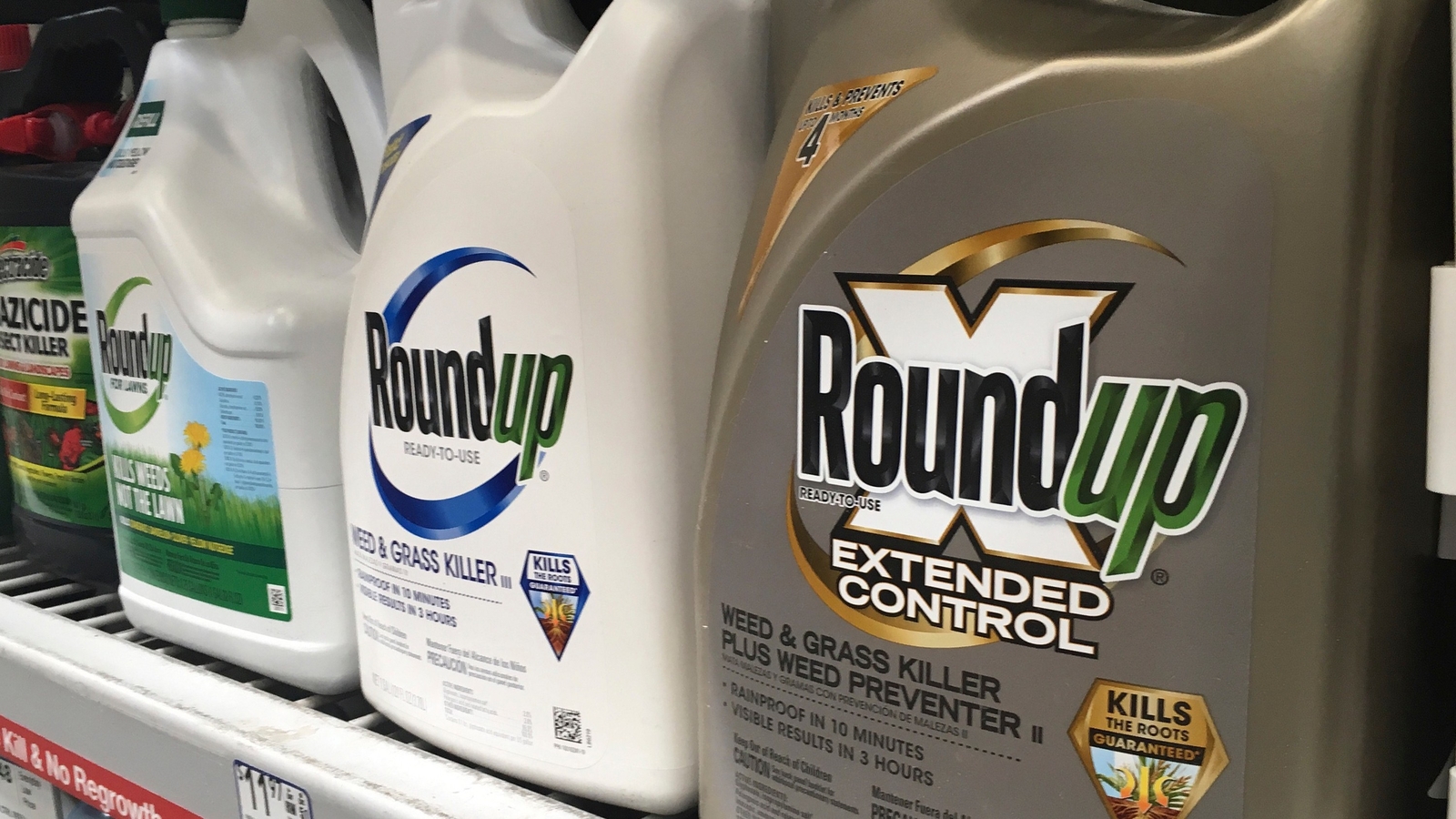
In a landmark decision that has sent ripples through the agricultural, legal, and public health communities, the Supreme Court has sided with Bayer, the manufacturer of the widely used weedkiller Roundup, effectively blocking thousands of roundup lawsuits alleging the company failed to warn consumers about cancer risks. The 7-2 ruling represents a significant turning point in nearly a decade of legal battles over one of the most controversial herbicides in modern agriculture.
Understanding the Supreme Court’s Roundup Decision
The high court’s decision centers on a fundamental question of regulatory authority: when federal agencies have approved a product’s labeling, should state courts be permitted to hold manufacturers liable for failing to provide additional warnings? In this case, the justices determined that failure-to-warn lawsuits related to Roundup cannot proceed in state courts because the Environmental Protection Agency (EPA) has already concluded that the product’s active ingredient, glyphosate, is “not likely to cause cancer in humans” when used as directed.
This decision carries enormous weight because it effectively creates a shield for manufacturers who comply with federal labeling requirements. For thousands of plaintiffs who have filed roundup lawsuits claiming they developed non-Hodgkin’s lymphoma after exposure to the herbicide, the ruling represents a major obstacle to obtaining compensation through state courts.
The Case That Sparked a Legal Battle
The lawsuit before the Supreme Court was brought by John Durnell, a Missouri resident who spent more than 20 years serving as his neighborhood association’s “spray guy,” applying Roundup to parks in his historic St. Louis community. After developing non-Hodgkin’s lymphoma, Durnell sued Bayer, and a jury awarded him $1.25 million, finding the company had failed to adequately warn him about potential cancer dangers.
Durnell’s case was just one among thousands. The litigation against Bayer, which acquired Roundup’s original manufacturer Monsanto in 2018, has included some multibillion-dollar verdicts and approximately 200,000 claims, the majority from home users rather than agricultural workers.
The Science Behind the Controversy
At the heart of the roundup lawsuits lies a contentious scientific debate. In 2015, the World Health Organization’s International Agency for Research on Cancer classified glyphosate as “probably carcinogenic to humans.” This classification has fueled concerns among health advocates and environmental groups who argue that the herbicide poses genuine cancer risks.
However, the EPA has reached a different conclusion, determining that glyphosate-based products like Roundup are not likely to cause cancer when used according to label instructions. This regulatory disagreement has provided ammunition for both sides of the litigation, with plaintiffs pointing to international research and defendants citing American regulatory approval.
Bayer’s Response and Settlement Strategy
In the wake of the Supreme Court ruling, Bayer expressed satisfaction with the outcome. The company stated that the decision “is good for science, farmers, and industries that depend on regulatory clarity for innovation” and predicted it “should help significantly contain the Roundup litigation after nearly a decade of legal battles.”
Despite this legal victory, Bayer continues to face substantial financial exposure. The company previously set aside $16 billion to settle cases and earlier this year proposed a $7.25 billion class-action settlement intended to resolve many of the remaining claims. A federal judge recently ruled that this proposed settlement will be heard in Missouri state court, where many of the roundup lawsuits have been consolidated.
Bayer has also pursued an alternative strategy: lobbying states to pass legislation specifically shielding the company from liability in failure-to-warn lawsuits. Three states have already agreed to such protections.
Reactions from Plaintiffs’ Representatives and Environmental Groups
The Supreme Court decision was met with sharp criticism from attorneys representing cancer patients and from environmental organizations. Christopher Seeger, an attorney proposed as a claimants’ representative in the pending settlement, condemned the ruling as one that “wrongly slams the courthouse door on Americans sickened by pesticides,” though he acknowledged that the settlement framework could still provide compensation to some affected individuals.
Environmental advocacy groups were equally forceful in their criticism. Jay Feldman, executive director of Beyond Pesticides, called the decision “a tragic setback for public and environmental health.” Patti Goldman, a senior attorney at Earthjustice, argued that “the fact that EPA approved a pesticide label does not mean a product is safe, and it should not become a shield for companies that fail to warn about cancer risks, neurological harm, and other serious dangers.”
What the Ruling Doesn’t Address
Importantly, while the Supreme Court decision closes one legal avenue for plaintiffs, it may not end all litigation against Bayer. Attorney Ashley Keller, representing some plaintiffs, noted that the ruling could still permit lawsuits alleging problems with the way Roundup was designed, rather than just failures to warn about its risks. This distinction could preserve certain claims even as it blocks the most common type of roundup lawsuits.
The Political Dimension: MAHA Movement Tensions
The Supreme Court ruling has also exposed fault lines within the current administration’s political coalition. The decision is widely viewed as a victory for President Donald Trump, whose administration supported Bayer’s position. However, the ruling creates tension with allies in the “Make America Healthy Again” (MAHA) movement led by Health Secretary Robert F. Kennedy Jr.
Kennedy has repeatedly stated that glyphosate causes cancer, even as he acknowledged that a recent executive order aimed at boosting domestic glyphosate production was necessary for food supply and national security reasons. This contradiction highlights the difficult balancing act between agricultural interests and public health concerns that has characterized pesticide policy debates.
Some health advocates have criticized the EPA’s approval process, arguing that it relied on limited information and that state court litigation has uncovered additional evidence suggesting harm. These critics maintain that federal regulatory approval should not be the final word on product safety.
Implications for Consumers and Farmers
For consumers, the ruling means that those who used Roundup at home and later developed cancer will find it significantly more difficult to pursue roundup lawsuits based on inadequate warning labels. Bayer has already stopped using glyphosate in Roundup products sold in the U.S. residential lawn and garden market, though the company continues to market glyphosate-based products to agricultural customers.
Farmers, meanwhile, have welcomed the decision as a protection of their access to a critical agricultural tool. Blake Hurst, a corn and soybean farmer and former president of the Missouri Farm Bureau, praised the ruling, stating that “today’s decision protects our access to the tools that let us care for our soil, protect our crops, and keep food affordable for your family and mine.” Agricultural industry groups have consistently argued that Roundup is essential for maintaining a robust food supply.
Bayer had warned that continued litigation pressure could force the company to consider pulling glyphosate from U.S. agricultural markets entirely, a scenario that farmers and industry groups feared would have significant economic consequences.
Looking Ahead: The Future of Pesticide Litigation
The Supreme Court’s decision sets a significant precedent for how courts will handle the interplay between federal regulatory approvals and state-level tort claims. Legal experts anticipate that the ruling could influence litigation strategies not just for Roundup, but for a wide range of products subject to federal labeling requirements.
For the thousands of plaintiffs currently involved in roundup lawsuits, the path forward now largely depends on the proposed $7.25 billion class-action settlement. If approved, this settlement would provide compensation to many claimants without requiring them to prove their cases in court. However, some plaintiffs may choose to pursue design-defect claims or explore other legal theories that remain viable after the Supreme Court’s decision.
Conclusion
The Supreme Court’s ruling blocking most roundup lawsuits marks a watershed moment in the ongoing national conversation about pesticide safety, corporate liability, and the authority of federal regulators. While the decision delivers a clear victory for Bayer and provides regulatory certainty for agricultural producers, it has also frustrated cancer patients, environmental advocates, and public health officials who argue that more needs to be done to protect communities from potentially harmful chemicals. As the proposed class-action settlement moves through the courts and the MAHA movement continues to push for stricter regulation, the debate over Roundup’s safety,and the broader question of how America balances agricultural productivity with public health protection,is far from settled.