
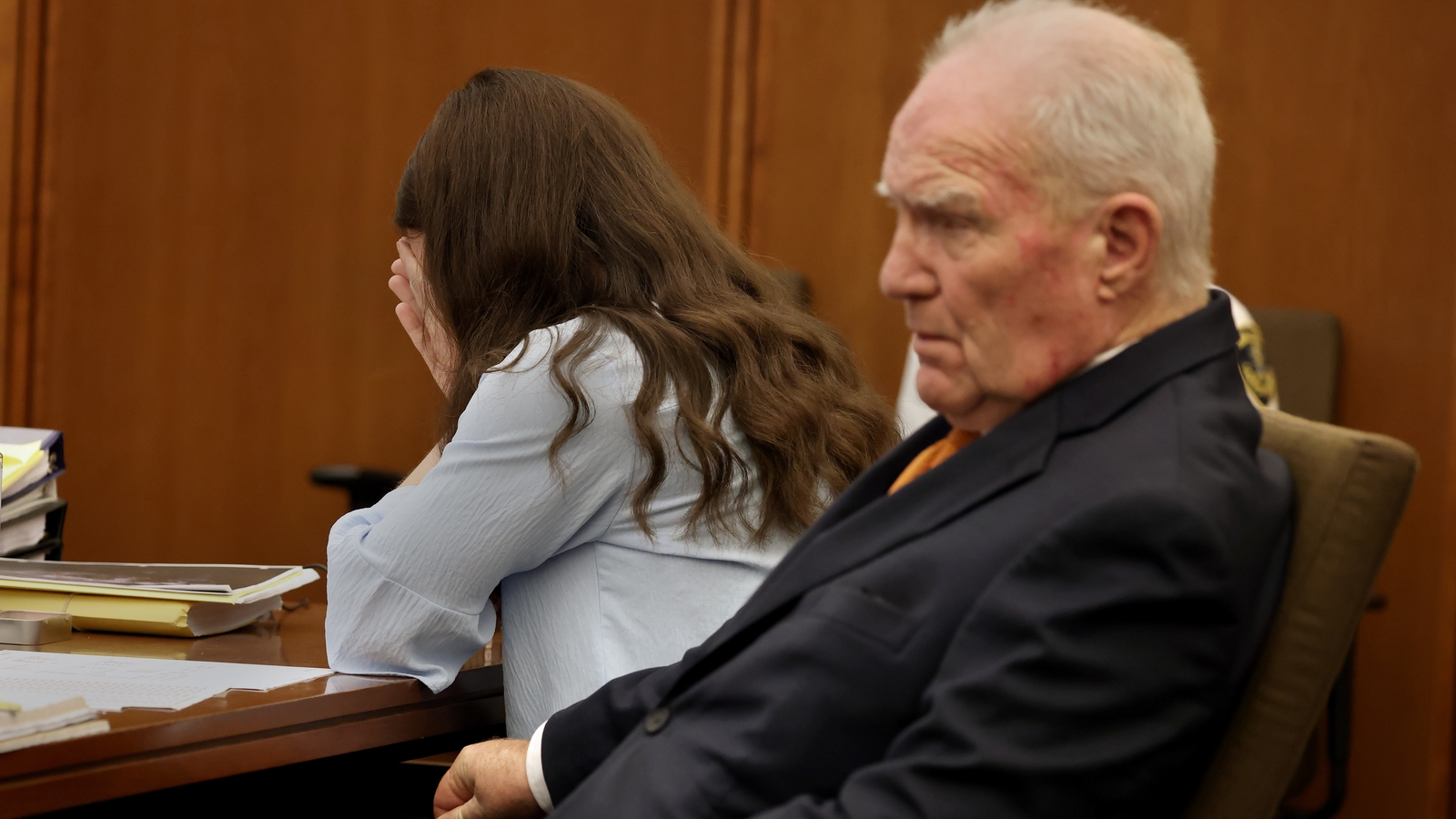
The Lindsay Clancy trial continued this week with gripping testimony from first responders who were among the first to arrive at the Duxbury, Massachusetts home in January 2023, where Clancy allegedly killed her three young children before attempting to take her own life. Officers and paramedics took the stand on Thursday, painting a harrowing picture of the chaotic moments after the tragedy unfolded, while the prosecution and defense laid out sharply contrasting views of Clancy’s mental state at the time of the killings.
First Responders Take the Stand in Lindsay Clancy Trial
For two days, jurors in Plymouth County Superior Court have listened to emotional and detailed accounts from those who arrived on the scene that winter night. Police officers Stephen Hall and Brian Josephine, alongside fire department supervisor PJ Hussey and paramedic Jennifer Stratton, described the desperate and heartbreaking scene they encountered.
The Chaotic Scene at the Duxbury Home
Officers Hall and Josephine testified that they were dispatched separately to the coastal home south of Boston. Upon arrival, they found Patrick Clancy frantically calling for help from behind the residence. His wife, Lindsay Clancy, was drifting in and out of consciousness in the snow after jumping from a second-floor window , a fall that left her paralyzed from the waist down.
“I can’t wake them up – I can’t get them up!” Patrick Clancy screamed at the officers, who followed the sound of his desperate voice down into the basement. There, they discovered the bodies of 3-year-old Dawson, 5-year-old Cora, and 8-month-old Callan. Only the infant, Callan, had a faint pulse.
Fire department supervisor PJ Hussey testified that he glimpsed through a basement window as Patrick Clancy unwrapped an exercise band from his child’s neck. Paramedic Jennifer Stratton confirmed that despite their efforts, the infant never regained a pulse.
The emotional weight of the testimony was palpable. Officer Josephine noted, “Based on my training and experience from previous incidents, I knew it wasn’t going to be good.” The scene “turned very chaotic very quickly” as additional ambulances arrived, Hussey recalled.
Inside the Defense: Postpartum Psychosis as a Central Argument
At the heart of the Lindsay Clancy trial is the question of criminal responsibility. Her defense attorneys do not dispute that she strangled the children using exercise bands. Instead, they argue she was experiencing postpartum psychosis, a rare but severe mental illness linked to the hormonal shifts, sleep deprivation, and emotional stress that follow childbirth.
According to her legal team, Clancy’s attorney told jurors during opening statements that she suffered from bipolar disorder, and that antidepressants prescribed after the birth of her third child worsened her condition. The defense has characterized the killings as the tragic culmination of a mental health crisis , not a premeditated act.
Clancy herself has stated that a voice told her, “This is your last chance. Kill the children so you can kill yourself,” according to her lawyer. She reportedly used multiple methods to attempt suicide that night, including the jump from the window and additional self-harm attempts.
Patrick Clancy’s Heartbreaking Testimony
Earlier in the trial, Patrick Clancy took the stand and described the gradual deterioration of his wife’s mental health in the months leading up to the tragedy. He recounted how she confided in him about intrusive thoughts of harming their children, as well as recurring thoughts of suicide.
Clancy sought care from specialists in postpartum mood disorders and was prescribed multiple psychiatric medications. When those treatments proved ineffective, she checked into a psychiatric hospital. Just 19 days after her discharge, she killed the children.
Patrick Clancy’s anguished 911 call was played for the jury. He was still on the phone with dispatchers when he discovered the bodies of his three children, mere minutes after returning home from an errand his wife had asked him to run. He has said in interviews that he has forgiven his ex-wife, viewing her as ill rather than evil. The trial marks the first time the two have seen each other since the killings.
The Prosecution’s Case: Intentional Action
While the defense frames the tragedy as a mental health crisis, prosecutors argue that Lindsay Clancy , a former labor and delivery nurse at Massachusetts General Hospital , acted intentionally. They are pursuing murder charges, asserting that Clancy understood her actions and is therefore criminally responsible for the deaths.
The prosecution’s strategy appears designed to convince the jury that the killings were not the result of an uncontrollable psychiatric episode, but rather a conscious decision. As a former medical professional, prosecutors may argue, Clancy had the training and knowledge to understand the gravity of her actions.
Medical Negligence Allegations
Adding another layer of complexity to the case, both Lindsay Clancy and her ex-husband have filed separate lawsuits accusing her medical providers of failing to properly diagnose, treat, and monitor her mental health condition. These civil suits allege that the medical system missed critical warning signs and failed to intervene appropriately, even as her condition worsened.
These allegations could play a role in the criminal trial by providing context for the defense’s argument that Clancy’s mental illness was real, severe, and inadequately addressed by healthcare professionals.
Stakes and Possible Outcomes
The outcome of the Lindsay Clancy trial carries enormous weight. If convicted of murder, she faces life in prison without the possibility of parole. However, if the jury finds her not guilty by reason of lack of criminal responsibility , essentially a verdict of not guilty due to mental illness , she would be committed to a state mental health facility rather than a prison.
This distinction is crucial and underscores how the jury’s assessment of her mental state will determine the trajectory of the rest of her life. The case has drawn significant public attention, not only because of its tragic nature but also because of its broader implications for how the legal system handles cases involving postpartum mental illness.
Mental Health Resources and Awareness
The Lindsay Clancy trial has also brought renewed attention to postpartum mental health, a topic that experts say is often misunderstood or stigmatized. While postpartum depression is widely discussed, postpartum psychosis is far rarer and far more severe, affecting an estimated 1 to 2 out of every 1,000 new mothers.
Symptoms can include hallucinations, delusions, and intrusive thoughts of harming oneself or one’s children. Mental health professionals stress that postpartum psychosis is a medical emergency requiring immediate intervention.
For those experiencing suicidal thoughts, substance use issues, or other mental health crises, free and confidential help is available 24 hours a day, seven days a week by calling or texting 988, the national Suicide and Crisis Lifeline. Additional resources can be found at 988lifeline.org or by dialing the legacy toll-free number at 800-273-8255.
Conclusion
The Lindsay Clancy trial is a deeply emotional and legally complex case that has captured national attention. With first responders providing visceral accounts of the tragic night, Patrick Clancy sharing his heartbreak on the stand, and both prosecution and defense presenting starkly different narratives of intent and mental illness, the jury faces an extraordinarily difficult decision. Beyond the verdict, the case has ignited important conversations about postpartum psychosis, the responsibilities of mental health providers, and how the justice system balances accountability with compassion for those suffering from severe psychiatric conditions. As the trial continues, the community , and the nation , watches closely, hoping for both justice and a deeper understanding of the mental health crisis that preceded this unthinkable tragedy.