
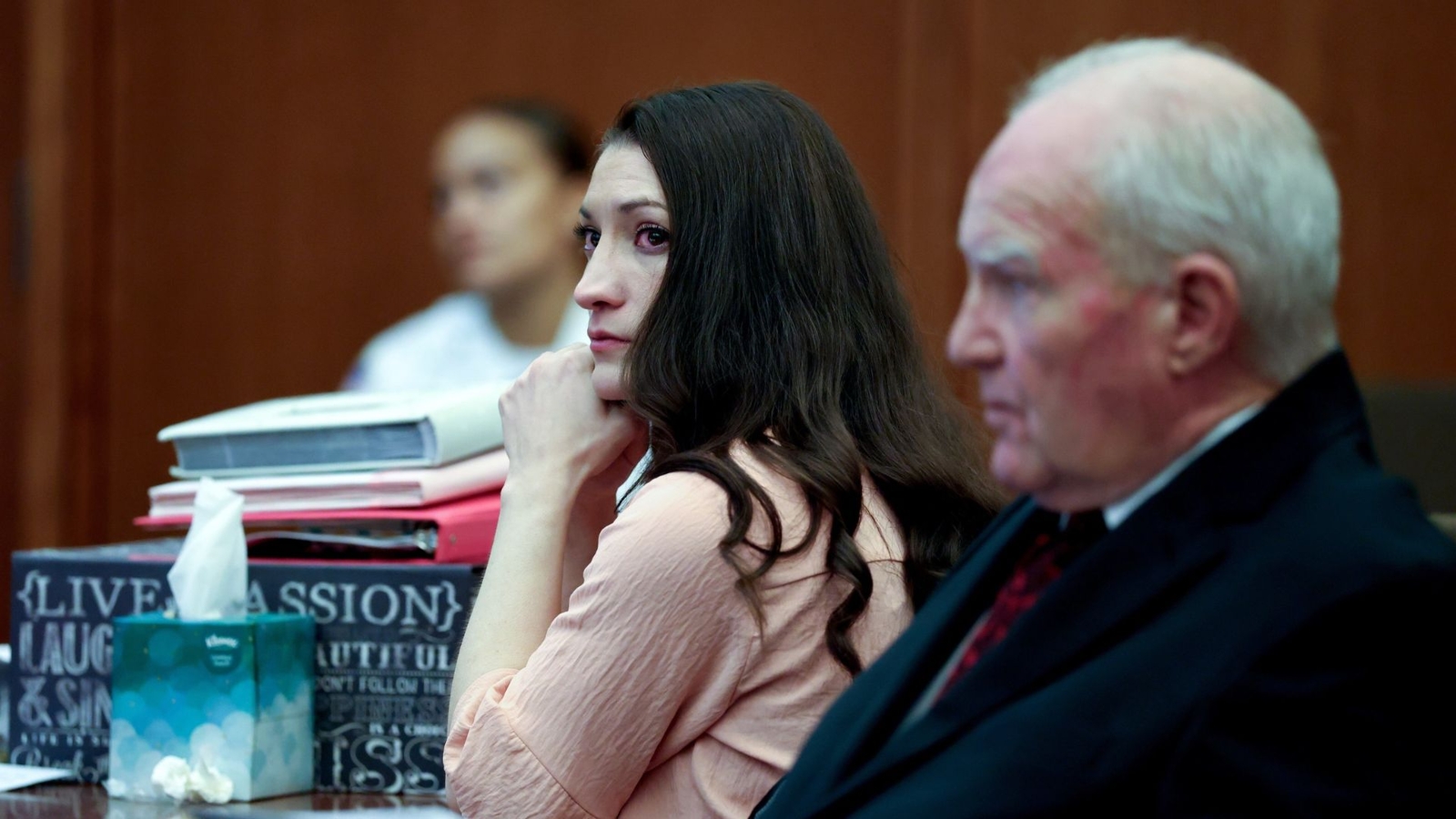
The Lindsay Clancy trial has taken another emotional turn as testimony continues in a Massachusetts courtroom, this time featuring a chaplain who spoke with the mother in the days following the deaths of her three young children. Sheila Cavanaugh, a certified chaplain at Brigham and Women’s Hospital, took the stand on Thursday to recount her early conversations with Clancy, including the mother’s chilling statement about her children being “safe” and her account of hearing a voice commanding her to act.
A Chilling First Conversation
Cavanaugh told the jury that she met with Clancy at least fourteen times during her hospitalization at Brigham and Women’s Hospital. Her first encounter with the defendant occurred on January 31, 2023, just days after the tragic events at the family’s Duxbury residence, a quiet residential area outside Boston. Clancy had been admitted to the hospital after attempting to take her own life following the homicides, and by the time of their first meeting, her breathing tube had been removed.
Despite being covered in medical equipment and wearing a neck brace, Clancy reportedly exhibited an unusually flat affect during that initial meeting. Yet her first words to the chaplain have remained etched in Cavanaugh’s memory.
“I am so glad my children are safe,” Clancy reportedly said while Cavanaugh held her hand to comfort her. The two had just been praying together when Clancy made the statement, a moment that underscored the deeply complicated emotional landscape surrounding the case.
Cavanaugh responded in a way she described as “theological,” telling Clancy: “Lindsay, your children are safe. They are safe in heaven with God.” The chaplain said she held her hand throughout the conversation as they prayed together for the three children.
The Voice That Allegedly Drove Her Actions
Perhaps the most significant element of Cavanaugh’s testimony centered on Clancy’s repeated references to hearing a commanding voice in the days and weeks after the deaths of her children. According to the chaplain, Clancy mentioned a male voice on multiple occasions during their early meetings.
“According to Lindsay, the voice told her that if she did not obey the command, neither she nor her children would be safe,” Cavanaugh explained to the jury. “She alluded to the fact that it was a male voice and that it was persistent.”
This testimony is central to the Lindsay Clancy trial because the defense is building its case around the argument that Clancy was suffering from severe postpartum psychosis at the time of the killings. If Clancy truly believed she was receiving auditory commands, her attorneys contend, she may not have been able to distinguish right from wrong when she strangled her children on January 24, 2023.
Corroborating Testimony from a Forensic Psychologist
Cavanaugh’s appearance on the witness stand came shortly after the jury heard from Dr. Paul Zeizel, a forensic psychologist who testified earlier in the week. Zeizel, who never treated Clancy before the homicides, met with her approximately sixty times over the past three years. During one of those early sessions, he facilitated a speakerphone call between Clancy and her then-husband, Patrick Clancy.
Zeizel told the jury that Clancy was unable to express much emotion during that call, but she did convey her love for her husband. More importantly, she described hearing a male voice issuing commands that left her with no choice but to kill her children and then take her own life.
According to Zeizel’s testimony, the last time Clancy reported hearing this voice was January 24, 2023, the very day she killed her daughter Cora, age 5, her son Dawson, age 3, and her baby son Callan at their family home. He further testified that as of his most recent evaluations, Clancy has not reported hearing voices since the events in question.
Pushback on Cross-Examination
During a brief cross-examination, the prosecution pressed Cavanaugh on why her chaplain’s notes failed to mention that Clancy had been hearing a voice in her head prior to the homicides. The chaplain acknowledged the omission but offered a clarifying explanation about her professional role.
She told the court that as a chaplain, her purpose was not to evaluate the patient clinically but rather to “be a witness to her suffering.” This distinction may become important as the defense attempts to establish a timeline of Clancy’s mental state before the killings, particularly since Zeizel’s testimony suggests Clancy has not reported auditory hallucinations since January 2023.
Cavanaugh also told the jury that she continued visiting Clancy after her transfer to Tewksbury Hospital, where the defendant has remained in state custody for the past three years. She estimated she has now seen Clancy approximately two hundred times across both facilities.
The Defense Strategy and Postpartum Psychosis Argument
Defense attorney Kevin Reddington announced on Thursday that he expects to rest his case on Friday after calling one more witness, an expert on postpartum psychosis. This signals that the defense is nearing the end of its presentation after spending years preparing what amounts to a mental health-based defense strategy.
The defense attorneys have never disputed that Clancy was responsible for the deaths of her three children. What they have argued consistently is that she should not be held criminally responsible for her actions because she was suffering from postpartum psychosis at the time. This mental health condition, which can develop in the days or weeks after childbirth, is characterized by hallucinations, delusions, and a break from reality.
To support this argument, the defense has emphasized Clancy’s claims of hearing a commanding voice, her flat emotional affect in the immediate aftermath of the killings, and what her attorneys have described as a complete break from the loving mother she had been prior to January 2023.
What Comes Next in the Trial
Thursday’s session ended earlier than expected after jurors heard only about an hour of testimony. This marked the second consecutive day that the jury was sent home ahead of schedule. On Wednesday, Judge William Sullivan attributed the delay to an “unforeseen circumstance” but provided no further details. He ordered the jury not to speculate about the reason for the disruption.
“It’s going to be a short session, but prepare yourselves for a longer one tomorrow,” Sullivan told jurors on Thursday before dismissing them. “If you’re going to blame anyone for this, blame me.”
Clancy faces three counts of first-degree murder in connection with the deaths of her three children. She has pleaded not guilty to all charges. Her defense has not denied her role in the deaths but has argued she should not be held criminally responsible due to her mental state at the time.
The Weight of the Testimony
The chaplain’s testimony adds a deeply human and spiritual dimension to a case that has already included extensive forensic and psychological evidence. Cavanaugh’s account of Clancy expressing relief that her children were “safe” while still connected to life-support equipment presents a haunting paradox that the jury will have to grapple with in deliberations.
Whether the jury ultimately accepts the postpartum psychosis defense will depend not only on expert medical testimony but also on these granular, human accounts of how Clancy behaved and spoke in the immediate aftermath of one of the most devastating acts in recent Massachusetts criminal history. The combination of Cavanaugh’s chaplaincy observations and Zeizel’s forensic psychological findings gives the defense two distinct professional perspectives on Clancy’s mental state, both of which point toward serious psychiatric disturbance.
Conclusion
The Lindsay Clancy trial continues to draw national attention as testimony unfolds about the mother’s mental state before and after the deaths of her three young children. The chaplain’s account of Clancy’s flat affect, her comments about her children being “safe,” and her repeated references to a commanding male voice have become central pieces of the defense’s argument that she was experiencing severe postpartum psychosis. As the defense prepares to rest its case with a final expert witness on postpartum psychosis, the jury will soon be tasked with weighing whether Clancy’s documented mental health crisis absolves her of criminal responsibility for the deaths of Cora, Dawson, and Callan. Whatever the outcome, the testimony from this week has provided a chilling window into the psychological turmoil that preceded the tragedy at the heart of this case.