
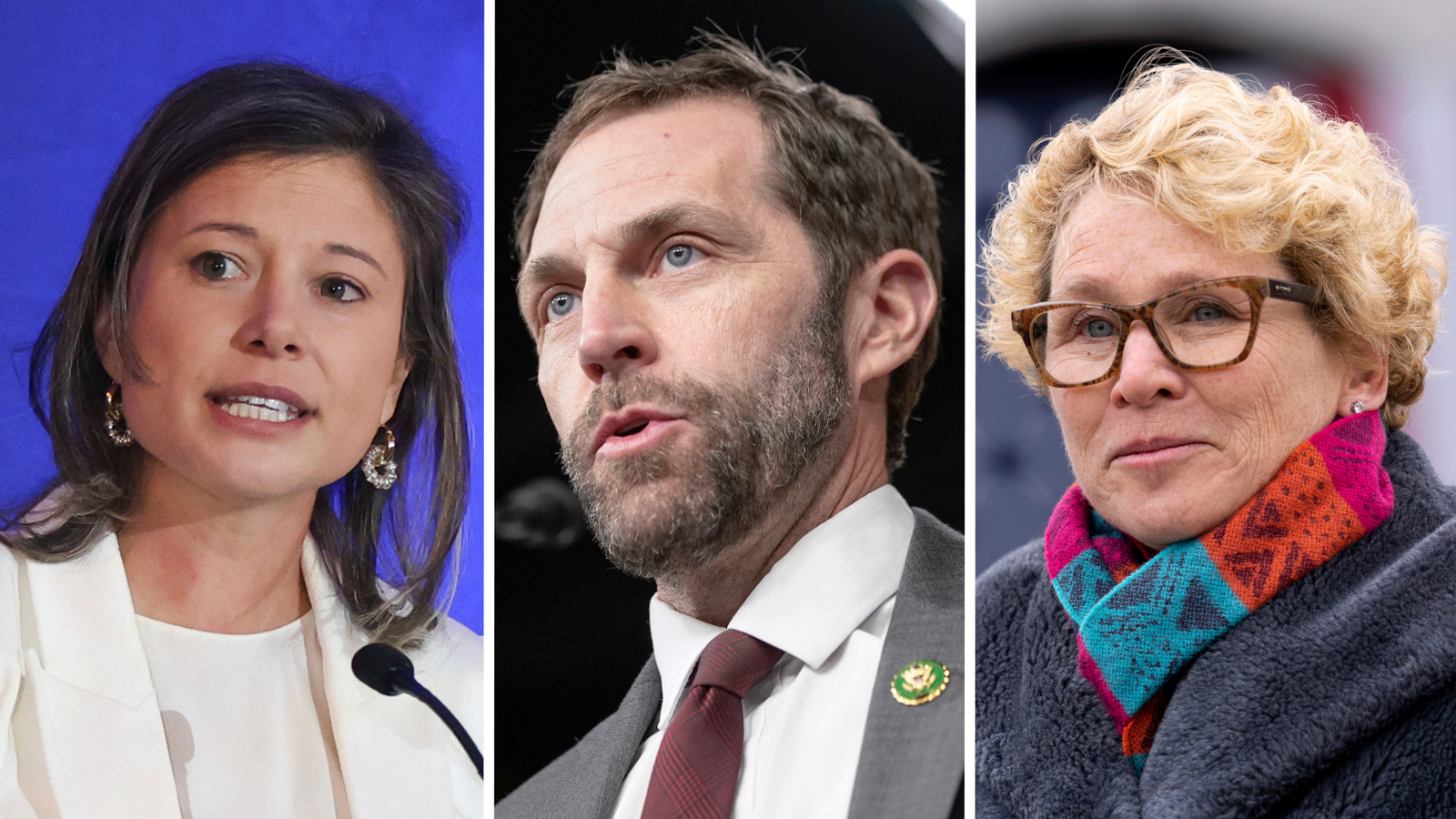
Three additional House Democrats have come forward to confirm they are under federal investigation in connection with a social media video urging U.S. military and intelligence service members to refuse illegal orders. The developments surrounding the Democrats investigated over illegal orders video case have intensified political tensions in Washington, as the number of lawmakers now facing scrutiny continues to climb.
Democratic Reps. Jason Crow of Colorado, Maggie Goodlander of New Hampshire, and Chrissy Houlahan of Pennsylvania shared their investigations publicly on Wednesday, joining Senate Democrats Elissa Slotkin of Michigan and Mark Kelly of Arizona, who had previously revealed similar circumstances. All five lawmakers are military veterans or former intelligence officers who participated in a video posted in November.
The Video at the Center of the Controversy
The original video, which spread rapidly across social media platforms, featured the Democratic lawmakers stating that members of the U.S. armed forces and intelligence community have a legal right,and indeed a duty,to refuse unlawful orders. The message drew upon long-standing principles embedded in the Uniform Code of Military Justice and reinforced by decades of military training.
While the video’s premise is grounded in established American legal tradition, it struck a nerve with the Trump administration. President Donald Trump took to social media in November to denounce the participants as “traitors,” labeling their conduct “SEDITIOUS BEHAVIOR, punishable by DEATH!” When pressed by reporters on whether the president genuinely wanted to execute members of Congress, White House Press Secretary Karoline Leavitt clarified that he did not, but accused the Democrats of encouraging service members to “defy the president’s lawful orders.”
Statements from the Newly Investigated Lawmakers
Each of the three newly identified Democrats has pushed back forcefully against the investigation, framing it as an attempt at political intimidation rather than a legitimate legal inquiry.
Rep. Jason Crow
Crow, a former Army Ranger who served multiple deployments, took to X (formerly Twitter) with a defiant message. He accused President Trump of “using his political cronies in the Department of Justice to continue to threaten and intimidate us.” Crow warned, “But he’s picked the wrong people.” He emphasized his lifelong commitment to the Constitution, noting that he took an oath both when he joined the military and again when he was sworn in as a member of Congress. Concluding his statement, Crow declared: “We will not be threatened, we will not be intimidated, we will not be silenced.”
Rep. Maggie Goodlander
Goodlander, who served as a Navy Reserve intelligence officer, characterized the investigation as dangerous and inappropriate. “It is sad and telling that simply stating a bedrock principle of American law caused the President of the United States to threaten violence against me,” she wrote, “and it is downright dangerous that the Justice Department is targeting me for doing my job.” She echoed the broader sentiment that “these threats will not deter, distract, intimidate, or silence me.”
Rep. Chrissy Houlahan
Houlahan, an Air Force veteran, pointed to the political motivations she believes underlie the federal probe. In her post on X, she argued that the lawmakers are “being targeted not because we said something untrue, but because we said something President Trump and Secretary Hegseth didn’t want anyone to hear.” Her framing positions the investigation as a response to truth rather than a defense against wrongdoing.
The Earlier Investigations and the Censure of Senator Kelly
The trio’s announcements followed closely on the heels of Sen. Elissa Slotkin’s disclosure earlier in the week. Slotkin revealed that the inquiry had been initiated by Jeanine Pirro, the U.S. Attorney for the District of Columbia and a prominent Trump ally. A spokesperson for Pirro’s office declined to confirm or deny whether investigations into the additional lawmakers were underway, leaving the exact scope and basis of the federal probes somewhat opaque.
Meanwhile, Sen. Mark Kelly has faced a separate but related consequence. Defense Secretary Pete Hegseth issued a formal censure against the Arizona Democrat, citing the video’s alleged undermining of the chain of command, creation of confusion about duty, and conduct unbecoming of an officer. The punishment includes a reduction in rank and a decrease in retirement pay,a process Hegseth indicated would unfold over roughly 45 days.
Kelly has responded by filing a lawsuit against Hegseth, arguing that the censure infringes upon his constitutional rights. In an interview with ABC News following the censure, Kelly remained steadfast, stating that he would “absolutely not” alter his message to U.S. troops about the importance of rejecting illegal commands.
The Constitutional and Legal Stakes
At the heart of this controversy lies a foundational question: when the president and military leadership characterize an order as lawful, but a service member perceives it as illegal, who decides? The Democrats in the video insist they have done nothing more than articulate a principle drilled into service members from their earliest days of training. The refusal of unlawful orders is not a new or radical concept,it is, in fact, a cornerstone of military ethics taught across all branches.
However, the administration views the video’s framing as dangerously close to incitement, particularly in an era of heightened political polarization. The phrase “illegal orders” itself is contested in this context, as the boundaries of legality are often determined through subsequent judicial review rather than at the moment an order is given.
The underlying details of the investigations remain unclear. Federal prosecutors have not publicly outlined what statutes or actions the video allegedly violated, and the participating lawmakers have consistently maintained that their statements were constitutionally protected speech from sitting members of Congress.
Broader Political Implications
The escalating situation has raised alarm among legal scholars, civil liberties advocates, and members of both parties who view the use of federal prosecutorial power against sitting legislators as a troubling precedent. The targeting of lawmakers for statements made in their official capacity, particularly those grounded in established legal doctrine, suggests a potential weaponization of the justice system for political purposes.
Democrats across Capitol Hill have rallied around their colleagues, arguing that the investigations represent an unprecedented overreach. The administration’s position, conversely, appears to be that public reminders about refusing orders,even if legally accurate,could be construed as insubordination when delivered by members of Congress rather than military superiors.
Constitutional Tensions
The case touches on multiple constitutional fault lines:
- Free Speech vs. Military Discipline: Lawmakers argue their speech is constitutionally protected, while the Pentagon argues it interferes with good order and discipline.
- Separation of Powers: The investigation of sitting members of Congress by executive-branch prosecutors raises questions about institutional independence.
- Civilian Control of the Military: Both sides claim to uphold this principle,the administration by defending the chain of command, and the lawmakers by reminding service members of their legal obligations.
What Comes Next
As the investigations continue, several key questions loom large. Will federal prosecutors ultimately bring formal charges against any of the five lawmakers? How will Senator Kelly’s lawsuit progress through the courts, and will it result in a reversal of his censure? And perhaps most importantly, will this episode serve as a chilling precedent for other members of Congress who might wish to speak publicly about military matters?
For now, the five Democrats stand united in their refusal to retract their message or apologize for their participation in the video. Their resolve, combined with the legal challenges they have mounted, suggests that the broader fight over the boundaries between political speech and military obedience is far from over.
Conclusion
The unfolding situation surrounding the Democrats investigated over illegal orders video represents more than a political skirmish,it is a significant test of constitutional principles that have defined American governance for centuries. With three House members and two senators now facing federal scrutiny, the case has become a flashpoint in the ongoing debate over executive power, military authority, and the rights of elected officials to speak truth as they see it. As legal proceedings advance and political rhetoric continues to escalate, the nation watches closely to see whether the foundational principles of civilian oversight and lawful resistance will be preserved or eroded in this unprecedented chapter of American political history.