
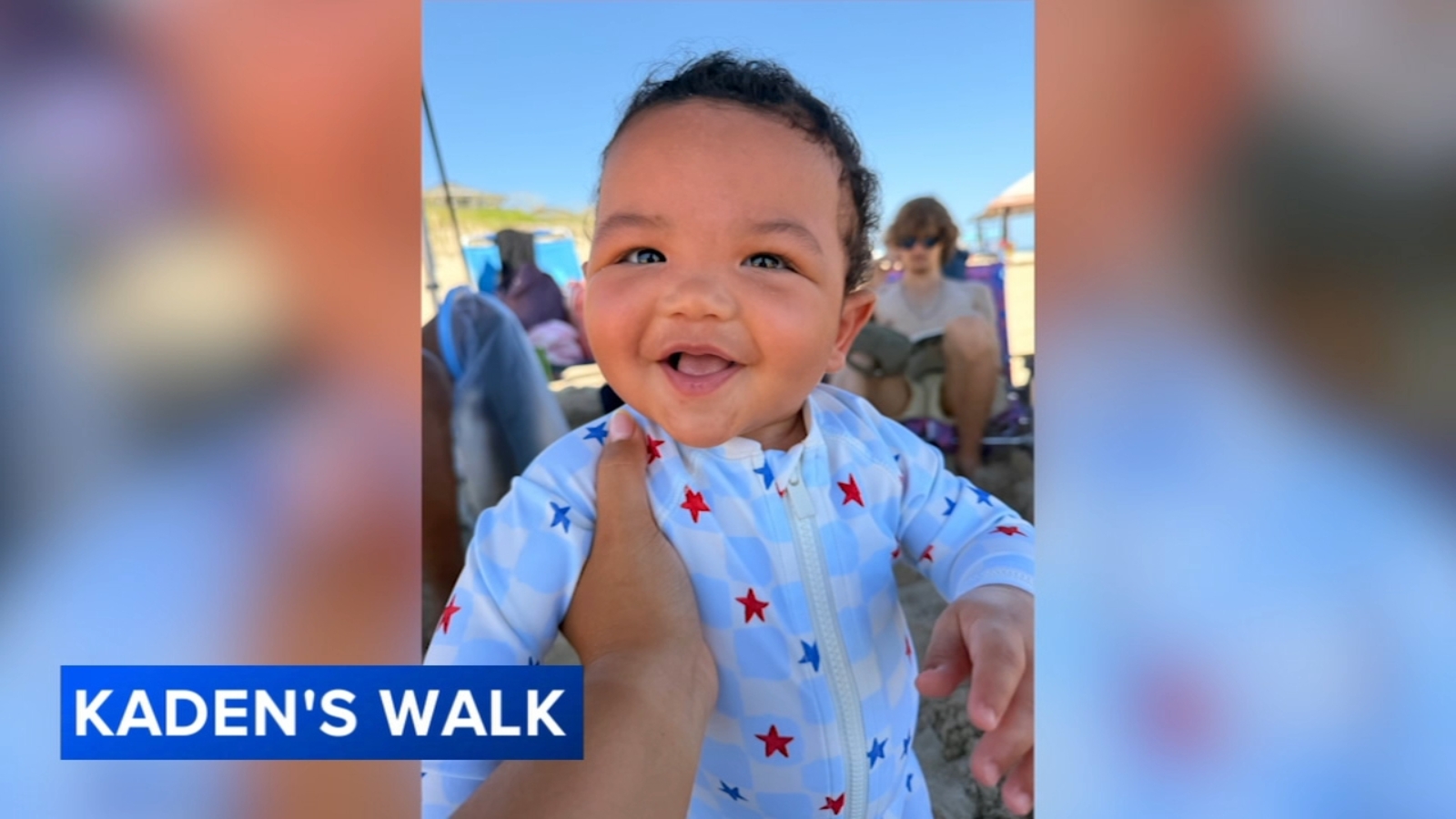
When Bryan and Taylor Dennis welcomed their newborn son Kaden into the world, they had no idea their journey would lead them into the unfamiliar territory of a rare neurological condition called hemimegalencephaly. This congenital disorder, characterized by the abnormal enlargement of one hemisphere of the brain, affects only a handful of infants worldwide. For the Dennis family of Delaware, learning about this condition has transformed their lives in ways they never anticipated, turning their private struggle into a powerful mission to raise awareness, support other families, and fund research for a cause that has very few public advocates.
A Mother’s Instinct Sparks a Critical Journey
From the very first days of Kaden’s life, his mother Taylor, a trained nurse, sensed that something wasn’t quite right. At just five days old, she noticed movements that seemed unusual,jerky, exaggerated motions that resembled an intensified startle response. These weren’t the typical reflexive twitches of a newborn; they were something different, something that lingered in her mind as the days passed.
Like many parents who voice early concerns, the Dennises were initially reassured by medical professionals that these movements fell within the range of normal infant behavior. For a while, they trusted that judgment. But as weeks turned into months, the situation grew increasingly alarming. What had been occasional odd movements evolved into persistent, uncontrolled seizures that came in rapid waves.
The Tipping Point
The moment that changed everything came during an intense twelve-hour stretch when Kaden’s seizures became nearly constant. “His seizures had progressed to every 15 minutes,” the family recalled, describing what it felt like to watch their baby endure such relentless neurological activity. That terrifying episode prompted an emergency trip to Children’s Hospital of Philadelphia (CHOP), where a team of specialists could finally conduct the thorough imaging workup that had been missing.
Understanding Hemimegalencephaly: A Rare Neurological Condition
An MRI scan revealed the truth behind Kaden’s suffering: he had hemimegalencephaly, a condition in which one cerebral hemisphere grows significantly larger than the other. In Kaden’s case, the left side of his brain was abnormally enlarged, creating a structural imbalance that triggered relentless seizure activity. He was also diagnosed with early myoclonic infantile encephalopathy, a specific type of seizure disorder that often accompanies this brain malformation.
Hemimegalencephaly is exceedingly rare, with estimates suggesting it affects approximately one in every million births, though researchers believe the true incidence may be slightly higher due to underdiagnosis. The condition occurs during fetal brain development when neurons fail to migrate properly, resulting in an oversized, malformed hemisphere that cannot function normally. This abnormal tissue generates chaotic electrical signals, leading to the severe, drug-resistant seizures that often characterize the disorder in early infancy.
The rarity of hemimegalencephaly presents significant challenges for affected families. Because so few children are diagnosed with this condition each year, dedicated research funding remains limited, specialist expertise is concentrated at only a handful of pediatric hospitals, and treatment options require highly specialized surgical teams. For families who suddenly receive this diagnosis, finding reliable information can feel like searching for a needle in a haystack.
Symptoms and Early Warning Signs
Parents of children diagnosed with hemimegalencephaly often report similar stories to the Dennis family,early onset of unusual movements, rapid progression of seizure activity, and a long road to definitive diagnosis. Common symptoms include:
- Refractory seizures starting in infancy that don’t respond to standard anti-seizure medications
- Developmental delays affecting motor skills, cognitive function, or both
- Asymmetry in head size or facial features due to the enlarged brain hemisphere
- Hypotonia (low muscle tone) or abnormal muscle tension
- Hemiparesis (weakness on one side of the body) in older affected children
A Life-Changing Surgery
In February, Kaden underwent a major neurosurgical procedure at CHOP designed to halt the seizure activity originating from the malformed left hemisphere. The surgery, often called a hemispherectomy or hemispherotomy depending on the technique used, involves disconnecting or removing the affected portion of the brain to prevent abnormal electrical signals from spreading to healthy tissue.
These procedures are remarkable feats of modern pediatric neurosurgery. Despite the gravity of removing or disconnecting an entire brain hemisphere, young children often experience remarkable recoveries because their remaining brain tissue possesses extraordinary neuroplasticity,the ability to reorganize and take over functions previously handled by the removed region. For many children with hemimegalencephaly, this surgery represents the best chance at a seizure-free life.
For Kaden, the outcome was nothing short of transformative. According to his parents, the surgery successfully stopped his seizures. Even more encouraging, he began meeting developmental milestones that had previously seemed out of reach. While he will require ongoing medical monitoring throughout his life, the immediate prognosis has given his family something they hadn’t dared to hope for: a future unburdened by constant seizures.
Filling the Information Gap
The months following Kaden’s diagnosis were marked by exhaustive research and emotional processing for Bryan and Taylor. What they discovered, or rather didn’t discover, troubled them deeply. When searching online for information about hemimegalencephaly, the available resources were sparse, scattered, and often written in dense medical terminology inaccessible to desperate parents.
“When you’re doing a lot of research on this type of stuff, there really isn’t much out there,” Bryan explained. The lack of accessible information, combined with the isolating nature of such a rare diagnosis, motivated the family to take action. They created an Instagram page called Walking Beside Kaden, initially intended as a simple way to share updates with friends and family about their son’s progress.
What began as a personal support network quickly grew into something much larger. The page attracted attention from other families around the world who had children with hemimegalencephaly or were navigating similar rare diagnoses. Strangers began reaching out, sharing their own stories, seeking advice, and offering solidarity. The Dennis family realized their experience could serve a greater purpose,creating the resource they wished had existed when they first received Kaden’s diagnosis.
Building a Community of Hope
The power of social media in rare disease communities cannot be overstated. For families affected by uncommon conditions, digital platforms serve as virtual gathering spaces where geographic isolation dissolves and shared experience creates immediate bonds. Parents who might never meet in person find comfort in knowing that someone else truly understands the fear of watching their child seize, the exhaustion of endless medical appointments, and the complex emotions surrounding major brain surgery.
Through their growing online presence, the Dennis family has inadvertently become ambassadors for a condition most people have never heard of. Their willingness to share intimate details of their journey,including setbacks, fears, and triumphs,has provided a roadmap for other families who feel lost in their own diagnostic journeys.
Walking for Awareness: Kaden’s Walk
Capitalizing on the momentum of their growing community, the Dennis family announced plans for Kaden’s Walk, an awareness and fundraising event scheduled for November. The walk represents the family’s vision of bringing together all the people and organizations that have supported them throughout Kaden’s treatment while extending hope to families still navigating their own challenges with hemimegalencephaly.
“It’s just a way to bring all the communities together that have helped support him and helped us get through this, but not only give some hope to maybe another family that is going through the same type of thing,” Bryan explained. The event embodies a dual mission,gratitude for those who have stood beside them and advocacy for those still searching for support.
Funds raised through Kaden’s Walk will benefit a local epilepsy foundation, channeling resources toward the broader community of individuals affected by seizure disorders. While hemimegalencephaly represents only a tiny fraction of epilepsy cases, the underlying mechanisms and treatment advances developed for rare forms of epilepsy often inform care for all seizure patients.
Lessons from One Family’s Journey
The Dennis family’s story carries several powerful messages for parents, medical professionals, and communities alike. First and foremost, it underscores the vital importance of parental instincts. Taylor’s nursing background gave her a trained eye, but countless studies show that parents,regardless of medical training,are often the first to recognize that something is wrong with their child. Healthcare providers who dismiss early concerns risk delaying diagnoses for time-sensitive conditions where intervention windows matter enormously.
Secondly, this story highlights the unique challenges facing families affected by rare diseases. The isolation of a hemimegalencephaly diagnosis, the scarcity of accessible information, and the limited number of specialists capable of providing optimal care all compound the emotional and logistical burdens on affected families. Building awareness isn’t merely about recognition,it’s about creating the infrastructure of support, research funding, and clinical expertise that patients deserve regardless of how common their condition happens to be.
The Power of Advocacy
Perhaps most importantly, the Dennis family’s journey demonstrates how personal experience can transform into powerful advocacy. By sharing their story publicly, creating accessible online resources, and organizing community events, they’ve expanded the conversation around hemimegalencephaly and given voice to a community that often goes unheard. Their work ensures that the next family receiving this daunting diagnosis will find information, connection, and hope more readily than the Dennis family did.
Looking Forward: A Future of Possibility
As Kaden continues to grow and develop, his family remains cautiously optimistic about his future. His seizures have stopped, he’s meeting developmental milestones, and ongoing medical appointments will help his care team monitor his progress and address any new challenges that emerge. Meanwhile, the broader effort to raise awareness about hemimegalencephaly continues gaining momentum, one walk, one social media post, and one conversation at a time.
The rarity of conditions like hemimegalencephaly can make affected families feel invisible in a healthcare landscape dominated by more common illnesses. But through determination, advocacy, and the courage to share their most vulnerable moments publicly, families like the Dennises are changing that reality. Their message to other parents facing similar diagnoses is simple but profound: you are not alone, and your child’s story matters.
For anyone interested in supporting Kaden’s Walk or learning more about hemimegalencephaly and related rare neurological conditions, following the Walking Beside Kaden page and participating in awareness events represents meaningful ways to contribute to a community that thrives on collective support. In the face of extraordinary challenges, this Delaware family has built something remarkable,not just hope for their own son, but a legacy of awareness and connection that will benefit countless others for years to come.