
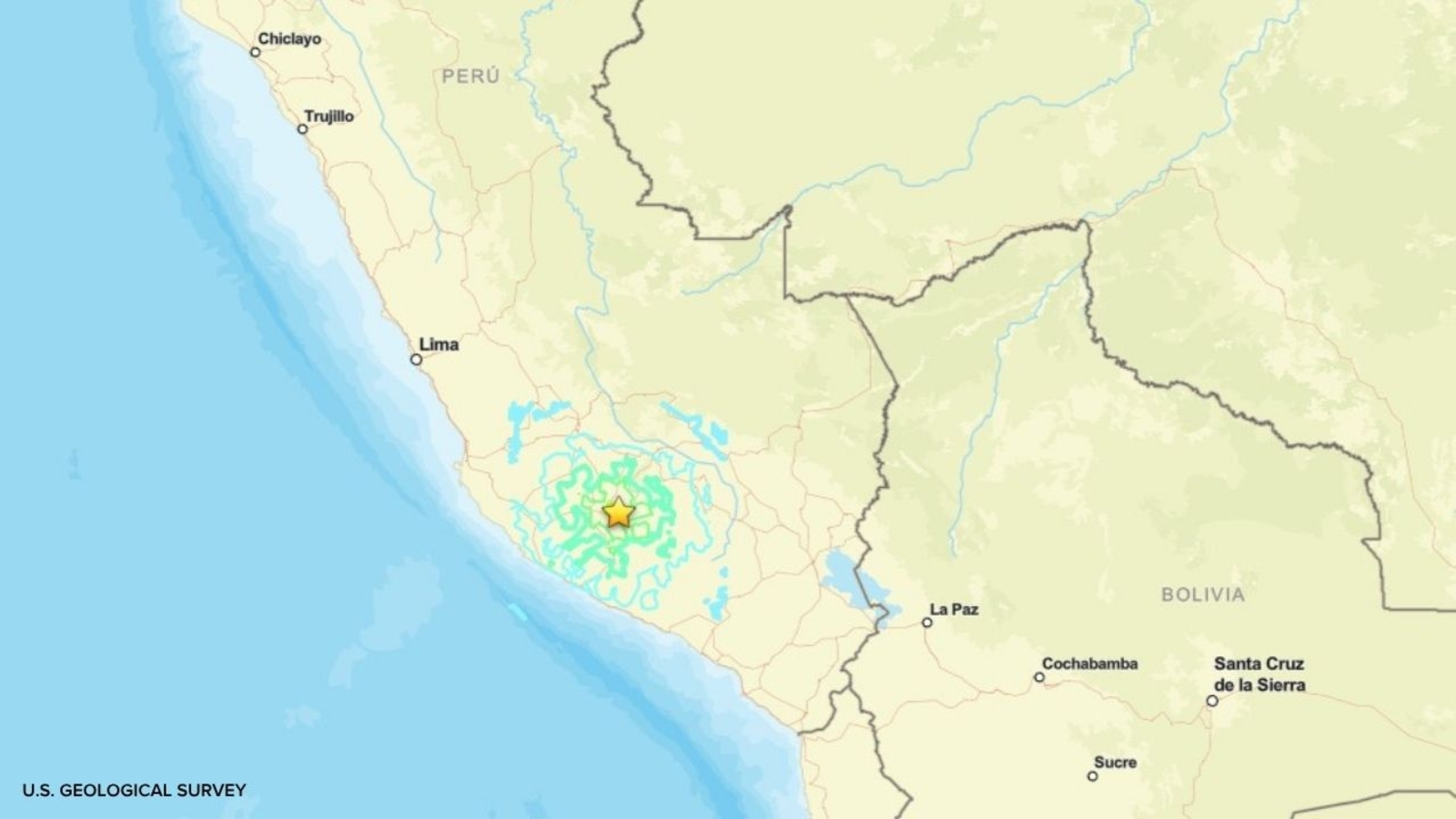
A Peru earthquake measuring magnitude 6.7 rattled the country’s southern Andes Mountains on Thursday, sending tremors through several populated regions but ultimately causing no immediate damage or casualties. According to the U.S. Geological Survey (USGS), the powerful seismic event struck at 1 p.m. local time (18:00 GMT), with its epicenter located deep beneath the rugged terrain of the Parinacochas province. The quake was felt across multiple southern Peruvian regions, including Ica and Arequipa, prompting local authorities to mobilize and assess the situation. Fortunately, early reports confirmed that the communities nearest the epicenter emerged largely unscathed from this significant geological event.
Understanding the Peru Earthquake: Key Details
The Peru earthquake registered a magnitude of 6.7, making it a notable seismic event capable of producing substantial shaking in populated areas. The USGS pinpointed the epicenter approximately 38 kilometers (24 miles) northwest of the city of Upahuacho, situated in the Parinacochas province within the Ayacucho region of southern Peru.
One of the most significant factors that likely limited the destructiveness of this earthquake was its considerable depth. The quake originated roughly 66 kilometers (41 miles) below the Earth’s surface, which typically distributes seismic energy over a broader area while reducing the intensity of ground shaking at the surface. This characteristic often proves crucial in determining whether an earthquake causes widespread devastation or relatively minor disruption.
Where the Tremors Were Felt
The seismic waves from this Peru earthquake traveled far beyond the immediate epicenter region. Residents across several southern Peruvian regions reported feeling the ground shake, including:
- Ayacucho Region – The closest populated area to the epicenter, where the city of Upahuacho and surrounding communities experienced the strongest shaking
- Ica Region – A coastal and inland region that felt the tremors despite being further from the epicenter
- Arequipa Region – One of Peru’s most populated southern areas, where residents also reported feeling the earthquake
Official Response and Early Assessments
Following the Peru earthquake, government officials and local authorities moved quickly to evaluate the situation and communicate with affected communities. The response highlighted Peru’s well-established protocols for handling seismic events.
Civil Defense Statement
Luis Vásquez, the head of Civil Defense in Peru, addressed the public through local radio station RPP, providing reassurance about the earthquake’s impact. He stated confidently that “no damage of any kind has been reported so far,” indicating that the initial response to this Peru earthquake was largely positive from a humanitarian perspective.
Local Leadership Reassurance
Yony Reyes, the mayor of Parinacochas province, echoed the encouraging news from the provincial capital. His confirmation that there were no reports of damage in the area closest to the epicenter provided further evidence that this particular seismic event, despite its considerable magnitude, had not resulted in the catastrophic outcomes that earthquakes of this size sometimes produce.
Tsunami Assessment
The Peruvian Navy conducted an immediate assessment regarding potential tsunami threats following the Peru earthquake. Their determination that there was no tsunami threat provided critical reassurance to coastal communities that might otherwise have needed to evacuate. This announcement was particularly important given Peru’s extensive Pacific coastline and the devastating potential of tsunami waves generated by undersea earthquakes.
Why Peru Experiences Frequent Earthquakes
The occurrence of this Peru earthquake should come as no surprise to those familiar with the country’s geological setting. Peru sits along the Pacific “Ring of Fire,” a horseshoe-shaped zone of intense seismic and volcanic activity that encircles the Pacific Ocean. This region experiences approximately 90% of the world’s earthquakes due to the complex interactions between multiple tectonic plates.
The Pacific Ring of Fire Connection
The Ring of Fire represents the boundaries where several major tectonic plates meet, including the Pacific Plate, the Nazca Plate, the South American Plate, and others. Along Peru’s western coast, the Nazca Plate subducts beneath the South American Plate, a process that generates enormous geological stress. As these plates grind against each other, energy accumulates and is periodically released in the form of earthquakes,exactly the mechanism behind the recent Peru earthquake.
Historical Seismic Activity in Peru
Peru’s position along this volatile geological boundary means that significant earthquakes are a regular occurrence. The country has experienced numerous devastating seismic events throughout its history, with some causing tremendous loss of life and property damage. Understanding this pattern of seismic activity helps explain why Peruvian authorities have developed sophisticated earthquake response systems and why the population generally maintains a high level of awareness about earthquake preparedness.
A Reminder of Past Devastation
While the most recent Peru earthquake fortunately caused no reported damage, the memory of more destructive seismic events serves as a sobering reminder of the country’s vulnerability. In 2007, Peru experienced one of its most catastrophic earthquakes in recent memory.
The 2007 Pisco Earthquake
A magnitude 7.9 earthquake struck a province within the Ica region in 2007, with devastating consequences. This powerful Peru earthquake resulted in nearly 600 deaths and caused widespread destruction throughout the affected region. The 2007 event remains one of the deadliest natural disasters in Peru’s recent history and serves as a benchmark for understanding the potential consequences when seismic events occur closer to population centers or at shallower depths.
The contrast between the 2007 tragedy and the recent 6.7-magnitude event highlights an important truth about earthquakes: magnitude alone does not determine outcomes. Factors such as depth, proximity to populated areas, building infrastructure quality, and timing all play crucial roles in determining whether an earthquake becomes a disaster or simply a noteworthy event.
Earthquake Preparedness: Lessons and Recommendations
The relative absence of damage from this latest Peru earthquake provides an excellent opportunity to discuss earthquake preparedness,a topic relevant not only to Peruvians but to residents of any seismically active region. Whether you live in Peru, California, Japan, or anywhere else along the Pacific Ring of Fire, having proper preparation can mean the difference between life and death when a significant earthquake strikes.
Essential Items for Your Earthquake Kit
Building a comprehensive earthquake preparedness kit is one of the most important steps anyone living in a seismically active area can take. Here are critical items that should be included:
- Water Supply – At least one gallon per person per day for a minimum of three days
- Non-Perishable Food – A three-day supply of food that doesn’t require cooking or refrigeration
- Flashlight and Extra Batteries – Essential for navigating in darkness if power fails
- First Aid Kit – Comprehensive supplies for treating injuries
- Whistle – To signal for help if trapped
- Dust Mask – To filter contaminated air
- Moist Towelettes and Garbage Bags – For sanitation purposes
- Wrench or Pliers – To turn off utilities if necessary
- Manual Can Opener – For accessing canned food supplies
- Local Maps – In case electronic navigation becomes unavailable
- Cell Phone with Chargers – And a backup battery pack
- Important Documents – Copies of identification, insurance information, and emergency contacts
Beyond the Kit: Preparedness Strategies
Having supplies is only one component of effective earthquake preparedness. Equally important are the strategies and knowledge that help people respond appropriately when shaking begins:
- Drop, Cover, and Hold On – Know this fundamental response technique and practice it regularly
- Identify Safe Spaces – Know the safest spots in each room of your home, office, or school
- Plan Communication – Establish family meeting points and out-of-area emergency contacts
- Secure Heavy Items – Anchor bookshelves, water heaters, and other heavy objects that could fall
- Know Your Building – Understand the structural characteristics of where you live and work
Looking Forward: Monitoring and Awareness
The recent Peru earthquake serves as a reminder that seismic activity remains an ever-present reality for millions of people living along the Pacific Ring of Fire. While modern monitoring systems like those operated by the USGS can detect earthquakes quickly and provide critical early information, the inherent unpredictability of when and where earthquakes will strike means that preparedness must be a continuous priority.
Peru’s government agencies, including Civil Defense and the Navy, demonstrated effective coordination in responding to this event. Their rapid communication with the public, accurate assessments of damage and tsunami risk, and ongoing monitoring efforts represent best practices that other nations can learn from when developing their own earthquake response protocols.
Conclusion
The magnitude 6.7 Peru earthquake that struck the southern Andes on Thursday represents a significant seismic event that fortunately resulted in no immediate damage or casualties. The earthquake’s considerable depth of 66 kilometers, combined with its location in a sparsely populated mountainous region, likely contributed to the relatively minor impact despite its substantial magnitude. As Peru continues its existence along one of the world’s most seismically active zones, events like this underscore both the ongoing geological realities facing the country and the importance of maintaining robust earthquake preparedness systems. For residents of Peru and other earthquake-prone regions worldwide, the lessons are clear: respect the power of the Earth, prepare thoroughly for inevitable seismic events, and learn from both the events that cause devastation and those that pass with minimal harm. The next earthquake is not a matter of if, but when,and readiness remains our most powerful defense.