
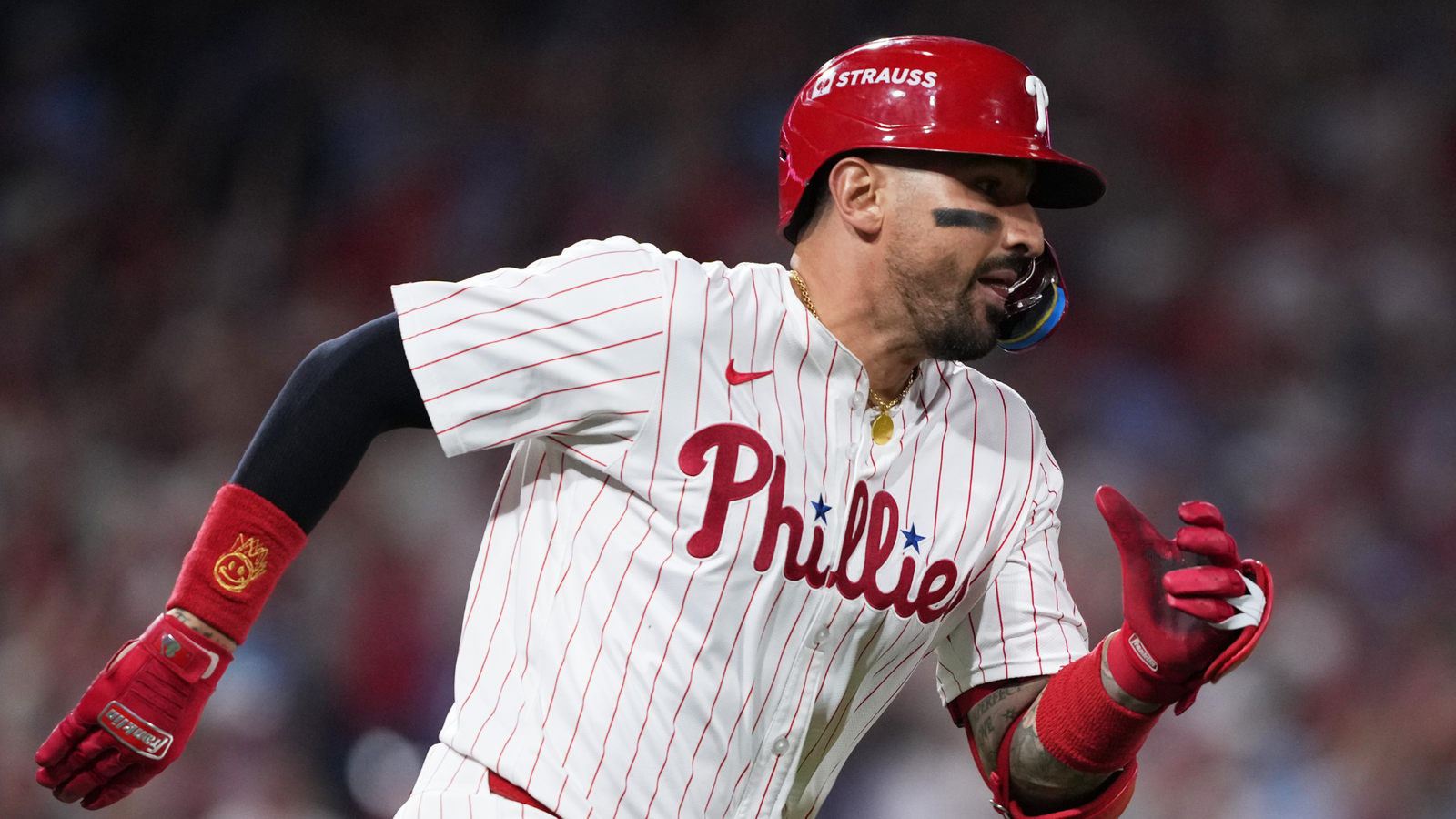
The Philadelphia Phillies have officially made their move, and it’s one that’s sending shockwaves through the baseball world. The Phillies released Nick Castellanos, ending a tenure that began with high expectations but ultimately ended in disappointment and controversy. The Nick Castellanos release comes at a pivotal time for the franchise, just months before the start of a new season, and leaves the slugging outfielder free to sign with any club at the league minimum despite still being owed a significant sum of money.
Castellanos, who will turn 34 on March 4, was in the final year of a five-year, $100 million contract. The Phillies will be responsible for paying out the remaining $20 million owed to him, minus the prorated portion of the league minimum that any new team would pay. In essence, Philadelphia is eating a substantial amount of guaranteed money to part ways with a player who, on paper, still had something to offer offensively.
The Numbers Behind the Decision
Looking purely at the stat sheet, Castellanos’s 2024 campaign wasn’t disastrous. He appeared in 147 games for the National League East champions, posting a .250 batting average with 17 home runs and 72 RBIs. Those are respectable numbers for a corner outfielder in today’s game, particularly one who plays half his games in a hitter-friendly ballpark like Citizens Bank Park.
However, baseball is rarely just about statistics. The relationship between Castellanos and manager Rob Thomson had clearly deteriorated, and the front office evidently decided that moving on was the cleaner path forward rather than attempting to repair what had become a fractured dynamic in the clubhouse.
The Benching That Started It All
The tension between Castellanos and Thomson boiled over late in the 2024 season when the outfielder was benched after what Thomson publicly described as “an inappropriate comment.” The incident occurred after Castellanos was pulled for a defensive replacement during a game, a move that clearly did not sit well with the veteran.
Castellanos opened up about the friction in September, telling reporters that his communication with Thomson had been “questionable, at least in my experience.” That kind of public criticism of a manager rarely ends well in professional sports, and it appears the seeds of this eventual parting were planted in those moments of frustration.
The Miami Incident: A Beer in the Dugout
If the benching was the slow burn, the so-called “Miami incident” was the flashpoint that may have sealed Castellanos’s fate with the organization. On Thursday, Castellanos took to Instagram to address the situation directly, admitting to bringing a Presidente beer into the Phillies dugout after being removed from a game.
“After being taken out of a close ball game in front of my friends and family, I brought a Presidente into the dugout,” Castellanos wrote in his social media post. “I then sat right next to Rob and let him know that too much slack in some areas and too tight of restrictions in others was not conducive to us winning.”
The image of a player openly consuming,or attempting to consume,an alcoholic beverage in the dugout during an active game is, to put it mildly, unconventional. Castellanos did note that his teammates intervened before he actually took a sip, and he expressed gratitude to them for stopping him. He also confirmed that he had issued apologies to his teammates, Thomson, and Phillies president of baseball operations Dave Dombrowski.
A Frustration-Laced Statement
While Castellanos did not disclose the specific comment that had so angered his teammates earlier in the season, his Instagram post made it clear that he felt the team’s management style was inconsistent. The implication was that some players were given too much leeway while others faced overly strict standards, creating what he viewed as an unfair environment.
Whether one sympathizes with Castellanos or not, his public airing of grievances likely contributed to the organization’s decision to move in a different direction. Teams generally prefer to handle internal disputes behind closed doors, and the repeated leaks to the media,and eventually to social media,suggested a player who was either unwilling or unable to keep things in-house.
The Financial Reality for the Phillies
The decision to release Castellanos rather than trade him carries significant financial implications. Philadelphia will be on the hook for the bulk of his $20 million salary for the upcoming season, an amount that will count against their luxury tax calculations. For a franchise that has been aggressive in pursuing playoff success,and even a World Series title,this is a notable cost.
That said, the Phillies are not in dire financial straits. The team has consistently ranked among MLB’s highest spenders, and owner John Middleton has demonstrated a willingness to pay top dollar for talent. The price tag associated with parting ways with Castellanos is more of a sunk cost than a budget-breaking concern.
More importantly, eating this contract opens up a roster spot and, perhaps more crucially, clears the air in a clubhouse that clearly needed a reset.
Adolis García Steps In as the Replacement
The Phillies did not enter this situation unprepared. Back in December, they signed Adolis García to a one-year, $10 million contract, a move that now appears even more prescient in hindsight. García, who has spent his career patrolling right field, is expected to step into the everyday role that Castellanos once occupied.
García brings a different profile to the position. Known primarily for his defensive abilities and power potential, he represents a stylistic shift from Castellanos, who was more of a pure hitter with occasional lapses in the field. Whether García can replicate or exceed Castellanos’s offensive production remains to be seen, but the Phillies are betting that the combination of his glove work and his upside at the plate will more than compensate.
A New Chapter in Right Field
The transition from Castellanos to García is symbolic in some ways. The Phillies are moving on from a player whose bat was his calling card but whose relationship with the organization had become untenable. In his place, they’re inserting a player who brings a more balanced skill set and, presumably, a cleaner slate with the coaching staff and front office.
For Castellanos, the future is uncertain but not bleak. At 33 years old with a track record of offensive production, he should attract interest from contending teams looking for a right-handed bat with postseason experience. The catch, of course, is that any new club would only be responsible for paying him the league minimum, with Philadelphia covering the remainder of his salary. That’s a bargain-basement price for a player of his caliber, and several teams around the league would likely be willing to take that deal.
What This Means for the Phillies’ 2025 Outlook
The Phillies are coming off a season in which they won the National League East and advanced deep into the playoffs. Losing a middle-of-the-order bat like Castellanos is not insignificant, but the team has built enough depth to absorb the loss. With García in right field, Bryce Harper at first base, and Kyle Schwarber serving as the designated hitter, the heart of Philadelphia’s lineup remains intact.
The bigger question may be whether the move improves the overall clubhouse atmosphere. Chemistry matters in baseball, perhaps more than in any other major sport. A team can have all the talent in the world, but if the players aren’t pulling in the same direction, that talent often goes to waste. The Phillies evidently decided that the cost of keeping Castellanos,in both dollars and distraction,outweighed the benefits of his bat.
Final Thoughts on a Tense Divorce
The Nick Castellanos release is a reminder that professional sports is a business, and sometimes the business side requires difficult decisions. Castellanos is owed $20 million, the Phillies are absorbing a luxury tax hit, and a 34-year-old outfielder is suddenly looking for a new home in what could be the final chapter of his career.
For Philadelphia, the move signals a commitment to accountability and clubhouse harmony. For Castellanos, it’s a chance to reset and prove that his best baseball still lies ahead. And for the rest of baseball, it’s yet another reminder that even big-money contracts can be cut short when the relationship between player and organization breaks down beyond repair.
Whether this turns out to be the right call for the Phillies will be measured in October, when the games matter most. Until then, all parties involved will be looking to move forward,Castellanos to a new opportunity, and Philadelphia to the next chapter of their championship aspirations.