
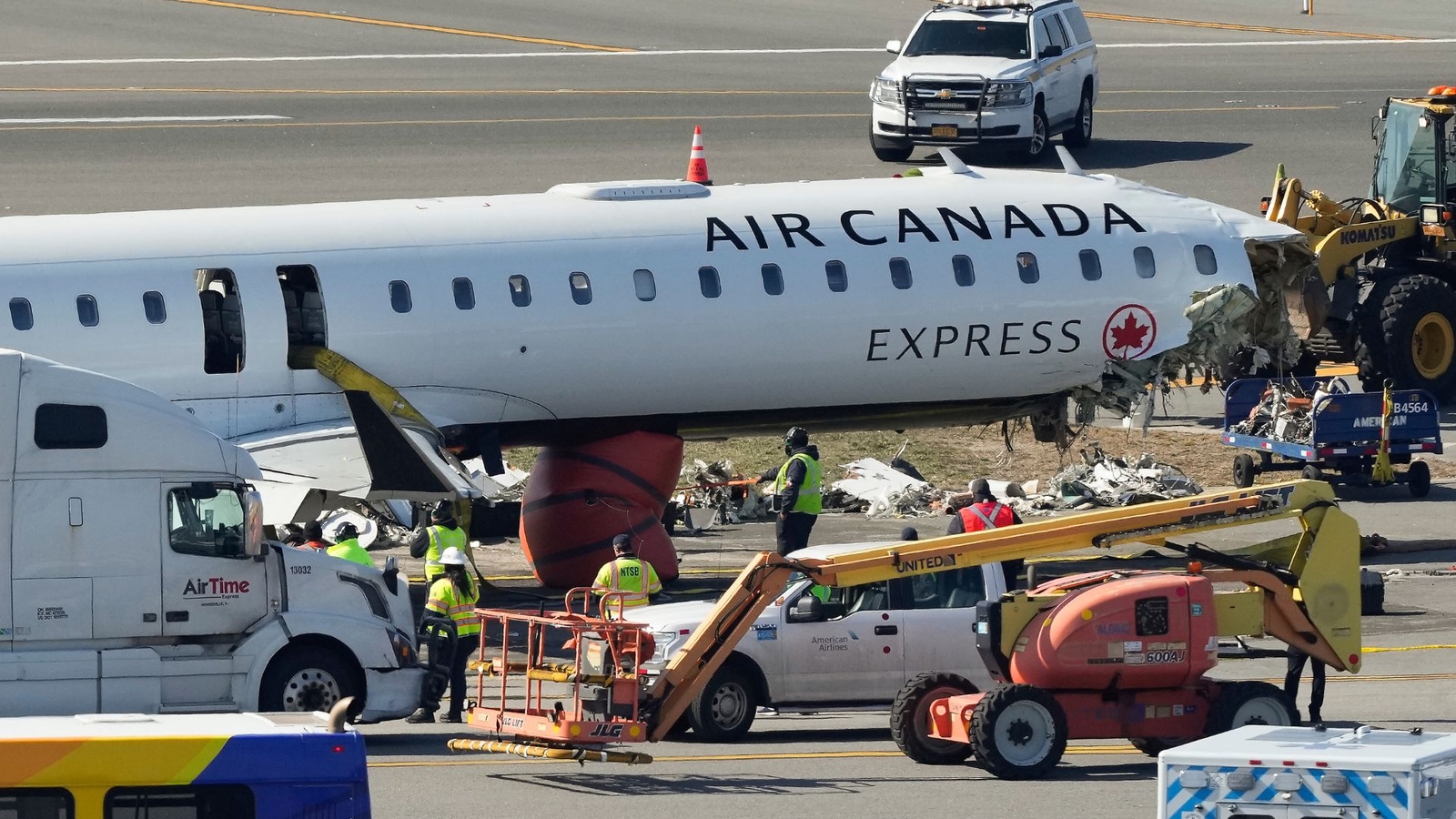
On March 22, tragedy struck New York’s LaGuardia Airport when a plane crash involving a commercial aircraft and an airport firetruck claimed two lives and injured dozens more. The National Transportation Safety Board (NTSB) has now released its preliminary report, shedding new light on the final seconds before the devastating collision. While the findings do not assign final cause, they provide a detailed snapshot of what occurred on the runway that night and raise critical questions about ground operations, runway safety protocols, and communication procedures at one of the nation’s busiest airports.
This article breaks down everything we know so far from the NTSB preliminary report on the LaGuardia Airport plane crash, including witness accounts, speed data, air traffic control staffing, and the long road ahead to a final determination.
A Night of Tragedy: What Happened at LaGuardia Airport
The LaGuardia Airport plane crash occurred during what should have been a routine landing or takeoff operation. According to the NTSB’s preliminary findings, both the driver of the airport firetruck and the pilot of the aircraft attempted evasive maneuvers,swerving to avoid one another in the critical seconds before impact. Despite their efforts, the collision was unavoidable.
The crash resulted in the deaths of both pilots aboard the aircraft. Two crew members who were inside the firetruck were transported to the hospital with injuries. Roughly 40 passengers and additional crew members on the plane were also reported injured, making this one of the most serious ground-collision incidents at a U.S. commercial airport in recent memory.
Runway Warning Lights: Functional but Ignored
One of the most significant revelations in the NTSB aviation investigation concerns the status of the runway warning lights. These lights,specifically designed to alert ground vehicles when aircraft are landing or taking off,were confirmed to be functioning properly on the night of the LaGuardia Airport plane crash.
What the preliminary report does not yet explain is why the firetruck did not stop when those warning lights were activated. Investigators will likely spend considerable time examining whether the lights were visible, whether procedural issues interfered with the crew’s response, or whether human factors played a role. This detail alone suggests that systemic issues,rather than equipment failure,may be at the heart of the runway safety breakdown.
What Runway Warning Lights Do
Runway warning lights are a critical component of airport ground vehicle safety infrastructure. They illuminate when an aircraft is on approach or departure, providing ground crews with a clear, unambiguous signal to halt operations near active runways. Their proper functioning on the night of the crash shifts investigative focus away from infrastructure and toward human performance, training, and procedural compliance.
Air Traffic Control Staffing on the Night of the Crash
The NTSB preliminary report also addressed the staffing situation inside the LaGuardia air traffic control tower on the night of the incident. Two controllers were on duty, which is considered standard for that particular shift. However, one controller was juggling both responsibilities while the other was coordinating a separate emergency situation elsewhere.
This dual-emergency scenario is significant because it raises questions about workload distribution, situational awareness, and whether standard operating procedures were followed when one controller became occupied with a different incident. The air traffic control staffing dynamics during the crash will be a focal point of the ongoing aviation accident investigation.
The Role of the “Stop, Stop, Stop” Transmission
One of the most revealing pieces of testimony in the report comes from an interview with the turret operator aboard the firetruck. He recalled hearing the air traffic controller transmit “stop, stop, stop” but admitted he did not initially know to whom the command was directed. Only when a second, more specific transmission,”Truck 1, stop, stop, stop”,came through did the operator realize the urgent message applied to their vehicle.
By that point, the firetruck had already entered the runway. As the crew turned left in an attempt to escape the path of the approaching aircraft, they spotted the airplane’s lights on the runway directly ahead. Moments later, the collision occurred.
Speed Data: A Critical Detail in the Investigation
The NTSB report provides specific speed data for both vehicles at the time of impact. The firetruck was traveling at approximately 30 miles per hour, while the aircraft’s last recorded speed was around 104 miles per hour. This stark difference in velocity underscores just how little time both crews had to react.
Aviation safety experts will analyze whether the firetruck’s speed was appropriate given the circumstances, and whether the aircraft’s speed at that stage of flight was within normal parameters. The combined closing speed of more than 130 miles per hour left virtually no margin for error.
Casualties and the Human Toll
The LaGuardia Airport plane crash has left a profound mark on the aviation community and the families of those involved. The two pilots who perished were experienced professionals operating in conditions that suddenly turned catastrophic. Their quick thinking in attempting to swerve may have prevented an even greater loss of life.
The two firetruck crew members survived but required hospitalization. Approximately 40 passengers and crew aboard the aircraft sustained injuries, ranging from minor to serious. The full scope of injuries, including long-term recovery prospects for survivors, will likely be referenced in future updates from the NTSB and the airline involved.
The Long Road to a Final Report
It is important to emphasize that the preliminary report represents only the early stage of a comprehensive NTSB investigation. No final cause has been determined, and investigators have cautioned against drawing premature conclusions. A complete final report is not expected for another 12 to 24 months.
During that time, investigators will likely:
- Conduct detailed interviews with all surviving crew members and witnesses
- Analyze cockpit voice recordings and flight data from the aircraft
- Review air traffic control communications and radar data
- Examine the maintenance and operational history of the firetruck
- Assess airport ground vehicle procedures and training programs
- Evaluate the runway warning light system’s design and visibility
- Consider any contributing environmental or operational factors
Implications for Aviation Safety
This tragic incident is likely to prompt a broader review of airline safety protocols, particularly those governing the interaction between ground vehicles and active runways. The fact that runway warning lights were functioning properly raises important questions about training, communication clarity, and the decision-making process that led the firetruck to enter the runway despite those warnings.
The Federal Aviation Administration (FAA) and airport authorities nationwide may also examine whether similar runway incursion risks exist at other facilities. Runway safety has been a persistent focus of aviation regulators, and incidents like the LaGuardia Airport plane crash reinforce the need for continuous improvement.
Looking Ahead
As the investigation progresses, additional details will emerge that may reshape our understanding of what went wrong on the night of March 22. Families of the victims, airline employees, airport workers, and the traveling public all deserve clear answers about how such a tragedy could have occurred at one of the country’s most heavily trafficked airports.
For now, the NTSB’s preliminary findings offer a sobering reminder that even with functioning safety systems and standard staffing, the combination of split-second decisions, simultaneous emergencies, and high-speed operations can produce devastating outcomes. The final report, expected within the next one to two years, will be critical in determining what changes,technological, procedural, or regulatory,may prevent another LaGuardia Airport plane crash from ever happening again.
Until then, the aviation community mourns the loss of two pilots, extends support to the injured, and recommits itself to the pursuit of safer skies and safer runways for everyone who depends on air travel.