
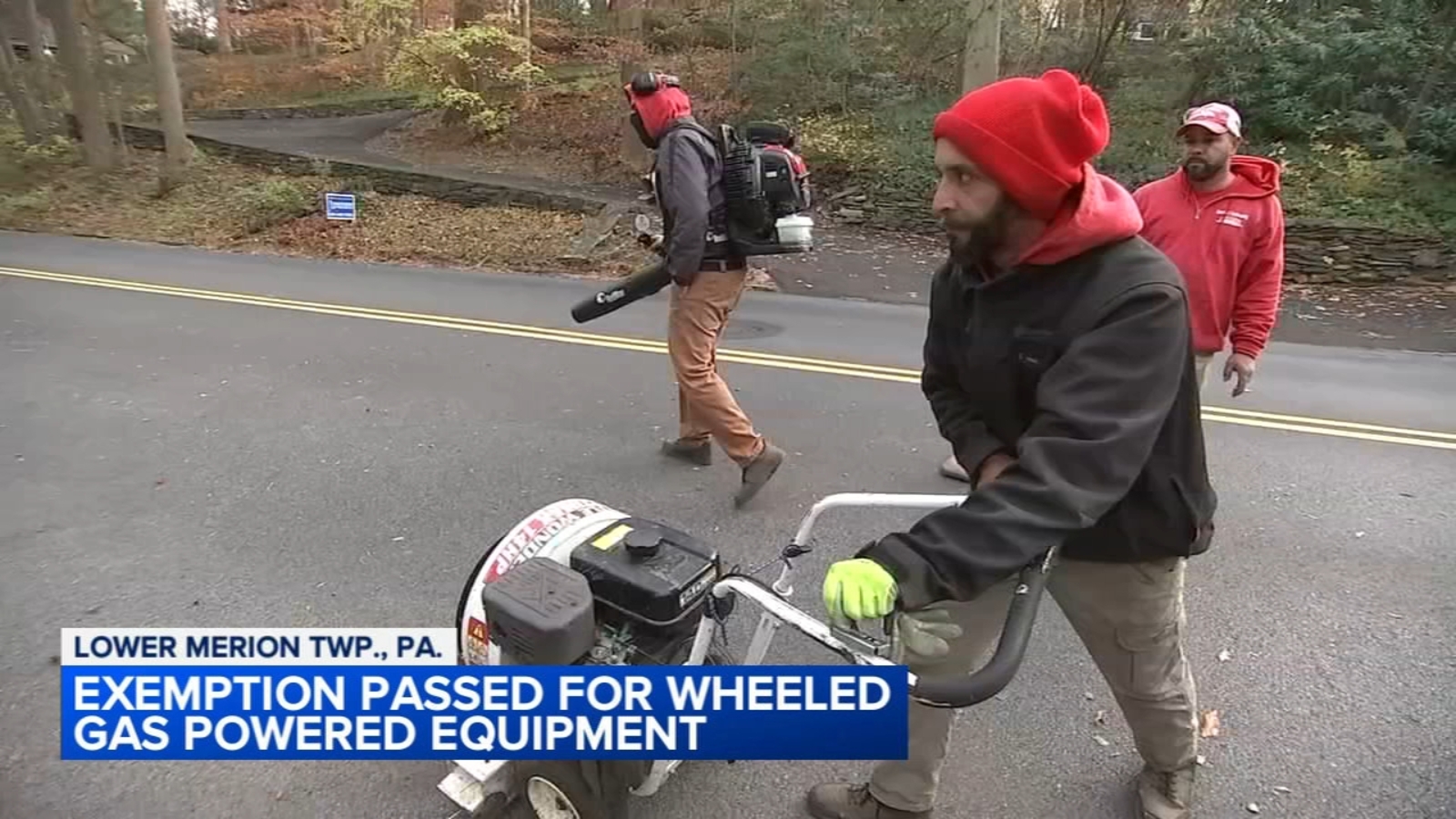
A quiet suburban revolution is unfolding in Lower Merion Township, Pennsylvania, where local officials have just refined one of the most talked-about environmental policies in the region: a gas leaf blower ban that is reshaping how residents and landscaping professionals maintain their properties. After passing an initial ordinance last November, the Board of Commissioners returned to the issue with amendments designed to clarify the rules and address concerns from the community’s professional landscapers. The result is a more nuanced ordinance that still targets the most polluting equipment while allowing certain gas-powered tools to remain in use.
The Story Behind the Gas Leaf Blower Ban in Lower Merion Township
Lower Merion Township, located just outside Philadelphia along the storied Main Line, has long been known as a community that takes environmental stewardship seriously. When commissioners first approved the gas leaf blower ban in November, it positioned the township among a growing list of municipalities willing to take decisive action against small-engine equipment that contributes significantly to urban air pollution and noise complaints.
However, the original legislation sparked debate among landscaping professionals who argued that the ban would severely impact their ability to serve clients efficiently, particularly during peak fall cleanup season. Wheeled equipment, such as riding mowers and certain types of vacuums, do not produce the same kind of localized noise or emissions that handheld gas blowers do, yet they were lumped into the same category under the original wording.
On Wednesday evening, the Board of Commissioners took action to address those concerns by passing amendments that exempt wheeled, gas-powered equipment from the ban. The move, while modest in scope, represents a meaningful clarification that recognizes the practical realities faced by commercial landscapers while preserving the spirit of the original ordinance.
What the Exemptions Actually Cover
Understanding the difference between handheld and wheeled equipment is essential to grasping why the amendments matter. Handheld gas-powered leaf blowers have drawn the ire of environmental advocates because they:
- Emit nitrogen oxides and volatile organic compounds at concerning levels
- Generate noise levels that can exceed 100 decibels
- Disturb dust, allergens, and particulates into the air
- Require two-stroke engines that typically burn oil mixed with gasoline
Wheeled equipment, by contrast, is generally larger, more stable, and produces a different emissions profile. The new amendments specifically allow gas-powered equipment that operates on wheels, which includes certain riding mowers, walk-behind vacuums, and similar devices. This distinction gives professional landscapers a workable path forward while still eliminating the most problematic tools from daily use.
Breaking Down the Phased Implementation Timeline
Perhaps the most important element for residents and businesses to understand is the timeline. The commissioners deliberately structured the ban as a phased approach rather than an immediate prohibition. This gives everyone time to transition equipment, adjust budgets, and adapt their professional practices.
Phase One: The Seasonal Ban Begins June 1st
The first phase of the gas leaf blower ban goes into effect on June 1st, establishing a seasonal restriction. Under this phase, handheld gas-powered leaf blowers will be prohibited during certain months of the year, presumably when their use is most concentrated and most disruptive to neighbors. The seasonal approach mirrors strategies employed by other municipalities that have wrestled with similar concerns.
For homeowners, this means rethinking how they approach yard cleanup during peak summer months. For landscapers, it means scheduling jobs around the seasonal restrictions or converting to electric and battery-powered alternatives that are not subject to the same limitations.
Phase Two: Full Ban by 2029
Looking further ahead, the ordinance sets a target of 2029 for the complete elimination of handheld gas-powered leaf blowers throughout the township. This four-year runway acknowledges that:
- Battery technology has improved dramatically in recent years
- Professional-grade electric blowers are becoming increasingly capable
- Replacing commercial equipment fleets requires significant capital investment
- Some landscaping contracts run multiple years and require time to renegotiate
The 2029 deadline is not arbitrary. It gives the industry time to innovate and adapt, while also signaling to manufacturers that Lower Merion Township is committed to long-term environmental progress. Other municipalities have used similar timelines to encourage manufacturers to develop better electric alternatives.
Why Lower Merion’s Decision Reflects a Broader National Movement
Lower Merion Township is not alone in confronting this issue. Communities across the United States have been wrestling with the environmental and quality-of-life impacts of small gas engines, and many have decided that outright bans or seasonal restrictions are the appropriate response. Cities and towns in California, Colorado, Connecticut, and several other states have implemented similar measures, and the trend appears to be accelerating.
The Environmental Case Against Gas Leaf Blowers
The scientific justification for these policies is becoming increasingly clear. According to various studies, a single gas-powered leaf blower can produce as much pollution in one hour as a modern automobile produces over hundreds of miles of driving. The two-stroke engines used in many handheld models release:
- Unburned hydrocarbons directly into the air at ground level
- Particulate matter that contributes to respiratory issues
- Carbon monoxide in measurable concentrations
- Noise pollution that disrupts both human sleep patterns and local wildlife
For a community like Lower Merion, where residential lots are relatively close together and outdoor living is highly valued, the cumulative impact of dozens of gas blowers operating every morning creates a quality-of-life issue that transcends the environmental statistics.
The Economic Considerations
Critics of gas leaf blower bans often raise concerns about the cost burden on small landscaping businesses. Professional-grade battery-powered equipment can cost significantly more upfront than its gas-powered counterparts, and the battery technology requires ongoing replacement as cells degrade over time. The phased approach in Lower Merion helps mitigate these concerns by giving businesses time to plan their capital expenditures and potentially benefit from improving technology as the deadline approaches.
Some landscaping companies have already begun transitioning their fleets, recognizing that the writing is on the wall not just in Lower Merion but in neighboring communities as well. Companies that make the switch early often find that electric equipment offers lower maintenance costs, quieter operation that allows for more flexible scheduling, and reduced fuel and oil expenses.
What Residents Should Know About Compliance
For homeowners in Lower Merion Township, the new ordinance and its amendments carry several practical implications worth understanding. First, the seasonal ban taking effect June 1st means that residents should think carefully about their summer landscaping plans. Many homeowners who previously relied on neighbors or hired help for leaf cleanup will need to arrange for electric alternatives or accept that their service providers will need to work around the seasonal restrictions.
Second, the wheeled equipment exemption means that anyone using riding mowers, certain types of garden vacuums, or similar wheeled gas-powered tools is not affected by the ban. This is particularly relevant for residents with large properties or those who handle their own yard work.
Third, neighbors who experience violations of the ordinance now have a clearer framework for reporting concerns. The amendments provide better-defined categories that make enforcement more straightforward for township officials.
The Future of Yard Equipment in Lower Merion
Looking beyond the immediate timeline, the gas leaf blower ban represents the kind of incremental environmental policy that often produces the most lasting change. Rather than demanding an overnight transformation, the township is creating a predictable pathway that allows residents and businesses to plan accordingly. By 2029, when the full ban takes effect, battery technology will likely have advanced even further, making the transition more seamless than it might be today.
The commissioners have been deliberate in signaling that environmental progress and economic practicality can coexist. The exemption for wheeled equipment demonstrates a willingness to refine policies when warranted, which builds public trust in the regulatory process. Communities that take a rigid, inflexible approach to environmental regulation often face backlash that undermines their broader goals. Lower Merion appears to be taking the opposite approach, treating the gas leaf blower ban as a living policy that can evolve based on real-world experience.
For now, eyes will be on June 1st, when the first phase actually goes into effect and residents see how the amended ordinance functions in practice. Enforcement, compliance, and any unexpected consequences will likely shape future discussions at the commissioner level. But the direction is clear: Lower Merion Township has committed to a future where the familiar drone of a gas leaf blower becomes a memory rather than a morning soundtrack.
The story unfolding in this Pennsylvania community serves as a model for other municipalities considering similar action. Thoughtful policy design, clear timelines, and willingness to amend based on stakeholder feedback all contribute to an ordinance that is more likely to achieve its intended environmental and quality-of-life goals. For Lower Merion, the gas leaf blower ban is no longer a question of whether, but when, and the answer is now firmly on the books.