
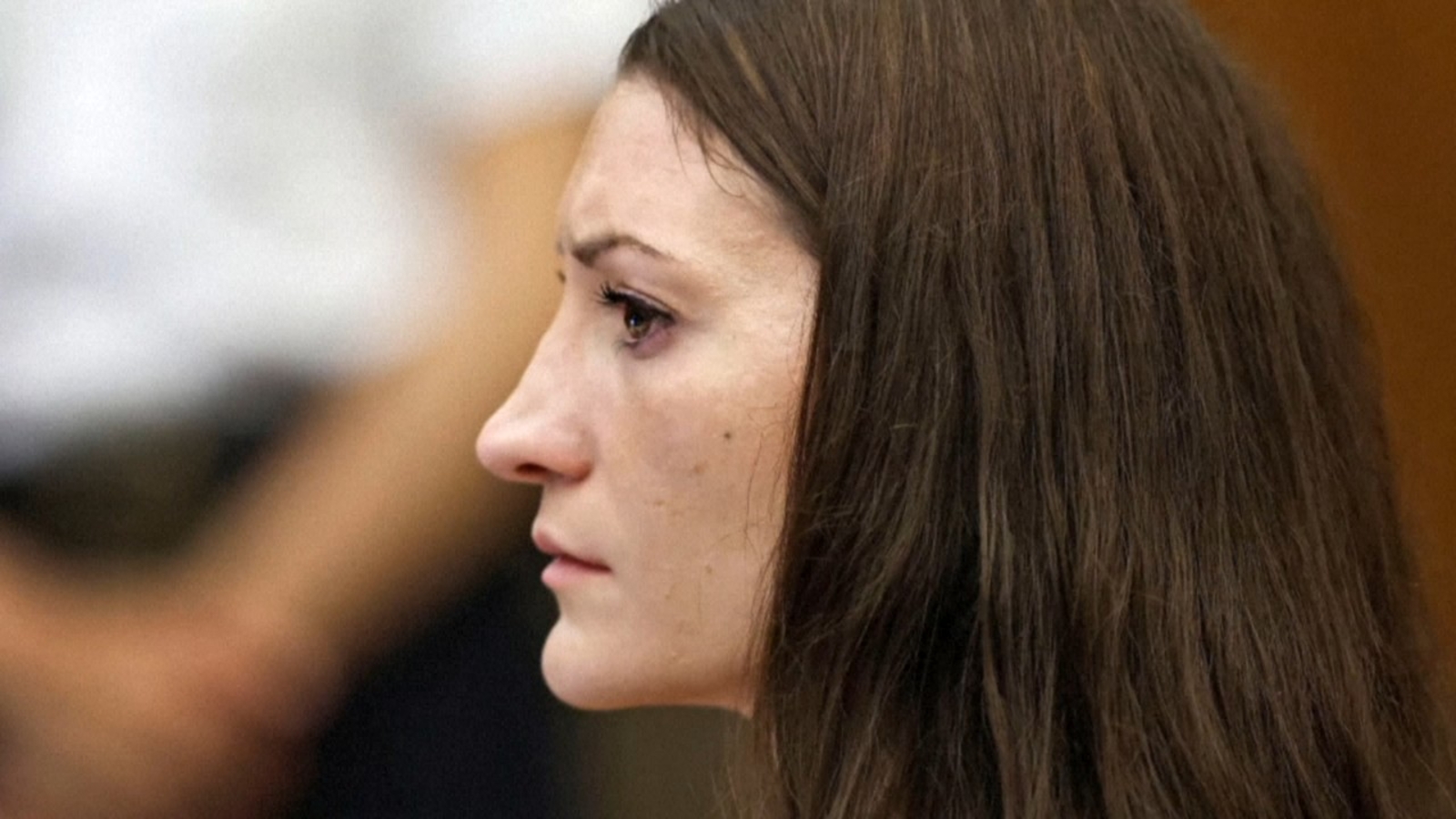
The Lindsay Clancy trial took a dramatic turn this week as a forensic toxicology expert took the witness stand, providing critical testimony about the concentration of medications found in the defendant’s bloodstream following the tragic deaths of her three young children. Justin Brower, a toxicologist from NMS Labs, informed jurors that the levels of antidepressants and antipsychotics in Clancy’s system were well below what medical professionals would consider “toxic or suicidal,” potentially undermining a key element of the defense’s strategy.
Clancy, 35, has pleaded not guilty to three counts of murder in connection with the deaths of her 5-year-old daughter Cora, 3-year-old son Dawson, and infant son Callan. The children died at the family’s home in Duxbury, a suburb of Boston, on January 24, 2023. The case has drawn national attention due to its heartbreaking circumstances and the complex intersection of mental health, motherhood, and the criminal justice system.
Toxicology Testimony Reveals Sub-Therapeutic Drug Levels
During his testimony on Wednesday, Brower explained that the amounts of certain medications detected in Clancy’s blood were actually below standard therapeutic levels. This finding is significant because it suggests that Clancy’s claimed overmedication may not align with the forensic evidence presented to the jury.
“Usually, people take handfuls of pills when they are trying to harm themselves and take their own life, and this is not consistent with that,” Brower told the court, establishing that the drug concentrations did not match what would typically be expected in a serious suicide attempt.
The toxicologist noted that Quetiapine, an antipsychotic medication, was the most prevalent substance found in Clancy’s system. However, even this drug was present at a level approximately ten times lower than what would be classified as toxic. When pressed by prosecutors about whether the concentrations could have caused someone to stop breathing, Brower acknowledged that this was “not necessarily” the case, though he added that additional information about Clancy’s overall medical condition would be needed for a complete assessment.
The Defense Pushes Back on Toxicology Findings
Clancy’s defense attorney, Kevin Reddington, attempted to challenge the implications of Brower’s testimony by highlighting the limitations of relying solely on numerical data when evaluating a person’s health status.
“What you’re saying is that the numbers alone do not tell the tale of what happened to a particular individual, right?” Reddington asked during cross-examination. Brower agreed with this assessment, acknowledging that toxicology reports represent only one piece of a much larger medical puzzle.
It is worth noting that toxicology interpretations inherently involve a degree of professional judgment. A landmark 2009 report from the National Academy of Sciences found that even qualified experts can reach substantially different conclusions from the same underlying data. This nuance could prove important as the jury weighs the evidence in the Lindsay Clancy trial.
The Defense’s Postpartum Psychosis Argument
Throughout the proceedings, Reddington has argued that his client suffered from postpartum psychosis and severe mental illness at the time of the incident. According to the defense, Clancy attempted to kill her children and then tried to take her own life while in the grips of this devastating psychiatric condition.
Postpartum psychosis is a rare but extremely serious medical emergency that can strike mothers in the days or weeks following childbirth. The condition is characterized by rapid-onset psychiatric symptoms, including severe episodes of mania, depression, confusion, and hallucinations. Unlike postpartum depression, which is relatively common, postpartum psychosis affects only a small percentage of new mothers but carries significant risks for both the mother and her children.
The defense has positioned this mental health crisis as the central explanation for the tragedy, suggesting that Clancy’s actions were driven by an untreated or inadequately treated psychiatric condition rather than any rational decision-making process.
Prosecutors Challenge the Defense Narrative
Prosecutors in the case have worked methodically to dismantle the defense’s postpartum psychosis theory. They have argued that Clancy acted “intentionally, rationally and swiftly” when she killed her children, painting a picture of deliberate planning rather than psychiatric collapse.
According to the prosecution, after the deaths of her children, Clancy crushed and ingested some of her medications, cut herself, and jumped from a second-floor window. The fall left her paralyzed and confined to a wheelchair, a detail that underscores the extreme nature of the events that unfolded on that January day.
The relatively low drug levels revealed by Brower’s testimony appear to support the prosecution’s position that Clancy was not as impaired by medication as the defense has suggested. However, the case remains complex, with both sides presenting compelling but contradictory interpretations of the available evidence.
Medical Testimony on Clancy’s Self-Inflicted Injuries
In addition to the toxicology findings, jurors heard testimony from Etan Negri, a physician associate who treated Clancy following the incident. Negri described most of Clancy’s self-inflicted cuts as “superficial,” though he noted that one laceration on her right wrist was approximately three centimeters deep and required sutures.
The characterization of these injuries as largely superficial could be significant for the prosecution’s argument that Clancy’s suicide attempt was not as severe or genuine as the defense has portrayed. However, Negri did not address the catastrophic spinal injuries Clancy sustained from her fall, which represent the most serious physical harm she experienced.
The combination of crushed pills, self-inflicted cuts, and a leap from a second-story window presents a complicated picture. Were these the desperate actions of a mentally ill woman in crisis, or calculated moves by someone who understood that suicide attempts would be part of her legal defense? This is the central question that the jury must ultimately answer.
The Nanny’s Heartbreaking Testimony
Perhaps the most emotionally compelling testimony of the day came from Elaine Rossi, the former nanny for the Clancy family. Rossi began working for the family in September 2022 as a part-time caregiver, primarily focused on caring for newborn Callan.
Rossi told jurors that despite being aware of Clancy’s struggles with postpartum issues, she never had any concerns that Clancy would harm her children. In fact, she described Clancy as a devoted and attentive mother.
- Cora (age 5): “She was very sweet, and she loved arts and crafts.”
- Dawson (age 3): “Full of energy — rambunctious, funny, silly.”
- Callan (infant): “The happiest, sweetest, easiest baby. He was just a love.”
Of Clancy herself, Rossi said, “She was very concerned with their safety. She was very concerned with Callan’s eating and sleeping. She was a wonderful mother.” This testimony provides a window into the family’s life in the months leading up to the tragedy, presenting an image of a household that, from an outside perspective, seemed normal and loving.
The Weight of the Evidence
As the Lindsay Clancy trial progresses, jurors face the difficult task of reconciling seemingly contradictory pieces of evidence. The toxicology report suggests one narrative, while the defense’s mental health argument suggests another. The nanny’s testimony paints Clancy as a caring mother, yet the prosecution’s timeline implies intentional, deliberate actions.
Key considerations for the jury include:
- The interpretation of blood drug levels and their relationship to Clancy’s mental state
- The credibility of the postpartum psychosis diagnosis in explaining the events
- The nature and severity of Clancy’s suicide attempt as evidenced by her injuries
- The reliability of witness testimony about Clancy’s behavior before the tragedy
The Broader Implications of the Lindsay Clancy Trial
Beyond the immediate legal questions, this trial raises profound issues about how the justice system handles cases involving severe mental illness, particularly postpartum psychiatric conditions. The outcome could potentially influence how similar cases are prosecuted and defended in the future, as well as how society understands the devastating impact of postpartum psychosis on families.
Mental health advocates have followed the case closely, noting that postpartum psychosis, while rare, represents one of the most dangerous psychiatric emergencies a new mother can experience. The condition requires immediate intervention and treatment, and its connection to tragic outcomes has been documented in medical literature for decades.
Looking Ahead
The Lindsay Clancy trial continues to unfold with additional witnesses and evidence yet to be presented. Both the prosecution and defense have signaled that they will build comprehensive cases, and the jury’s ultimate decision will likely hinge on how they interpret the medical evidence alongside witness testimony.
For those following this deeply troubling case, the proceedings serve as a sobering reminder of the complexity of mental health conditions and the devastating consequences when they go untreated. The deaths of three young children represent an unimaginable loss, and the legal process now seeks to determine responsibility, intent, and the role of mental illness in this heartbreaking event.
If you or someone you know is struggling with thoughts of suicide, call or text 988 or chat 988lifeline.org. Free, confidential help is available 24 hours a day, 7 days a week. You are not on your own.