
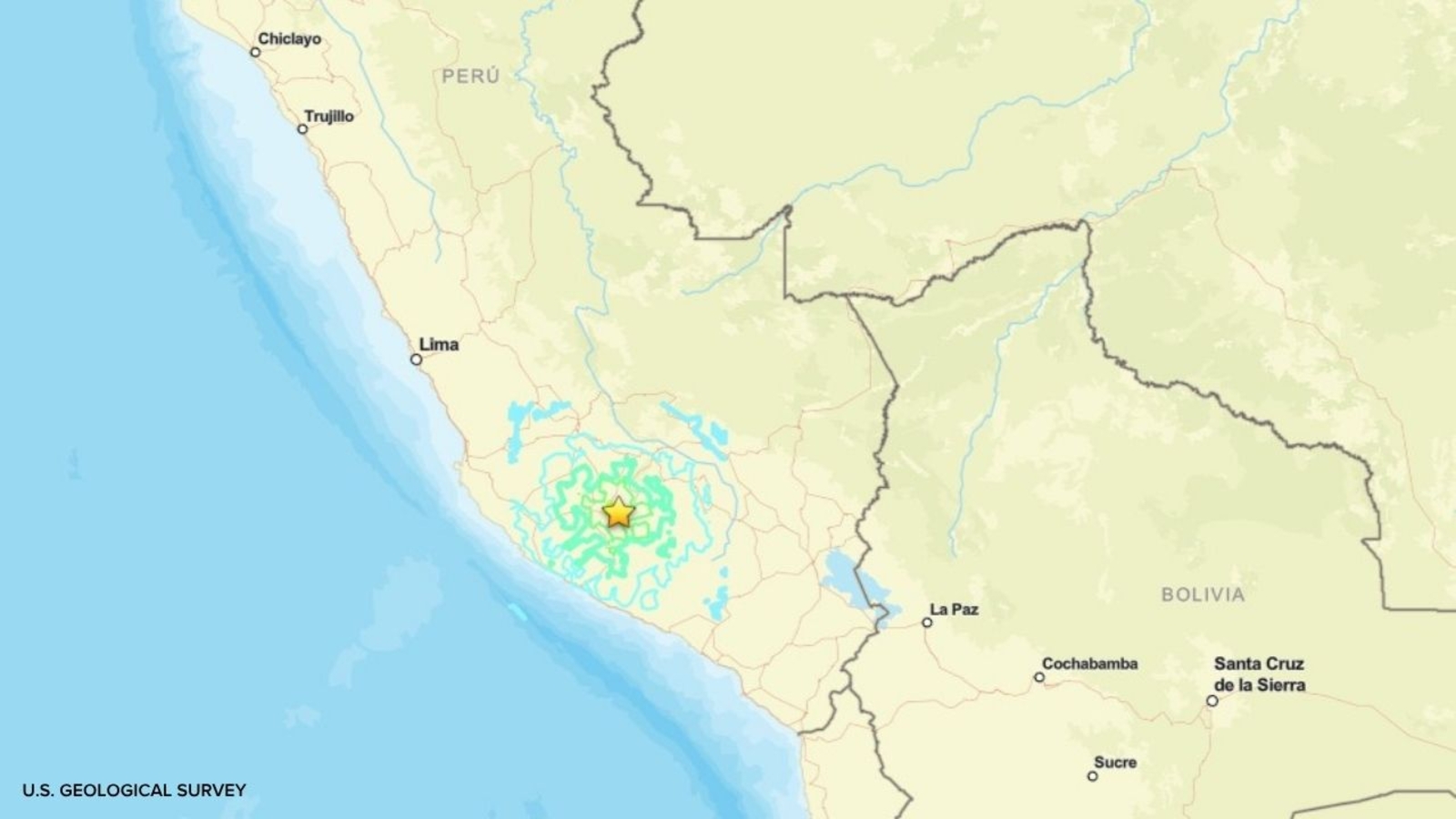
A powerful Peru earthquake measuring magnitude 6.7 struck the country’s southern Andes Mountains on Thursday afternoon, sending tremors through several regions but fortunately causing no immediate reports of damage or casualties. The seismic event, recorded at 1 p.m. local time (18:00 GMT), served as a stark reminder of Peru’s vulnerability to significant seismic activity and highlighted the importance of earthquake preparedness in one of South America’s most geologically active nations.
The U.S. Geological Survey (USGS) pinpointed the epicenter approximately 38 kilometers (24 miles) northwest of the city of Upahuacho, situated within the Parinacochas province of the Ayacucho region. According to the official measurements, the quake originated at a depth of 66 kilometers (41 miles) beneath the Earth’s surface. While deep enough to be felt across a wide geographical area, the depth likely contributed to reducing surface-level devastation compared to shallower earthquakes of similar magnitude.
Where the Tremors Were Felt
The Andes Mountains earthquake was not confined to a single locality. Residents in multiple regions of southern Peru reported feeling the ground shake, with the most notable shaking experienced in the Ica and Arequipa regions. Both regions are home to millions of Peruvians and include major urban centers that have historically been affected by significant seismic events.
The Parinacochas province, located in the immediate vicinity of the epicenter, experienced the strongest shaking. Yony Reyes, the mayor of Parinacochas province, confirmed that there were no reports of damage in the provincial capital, providing reassurance to the broader Peruvian population and international observers monitoring the situation.
Official Statements and Tsunami Assessment
In the immediate aftermath of the earthquake, Peruvian authorities moved quickly to assess the situation and inform the public. Luis Vásquez, the head of Civil Defense, addressed the nation through local radio station RPP, stating unambiguously that “no damage of any kind has been reported so far.” His statement reflected the preliminary findings of emergency response teams who had begun canvassing affected areas to evaluate infrastructure integrity and ensure the safety of residents.
One of the most pressing concerns following any major undersea or near-coastal earthquake is the potential for a tsunami. The Peruvian Navy, which maintains responsibility for maritime hazard warnings, officially announced that there was no tsunami threat associated with this seismic event. This assessment likely provided significant relief to coastal communities in southern Peru, who may have otherwise faced evacuation orders and disruption to their daily lives and economic activities.
Why Peru Experiences Frequent Earthquakes
Peru’s position along the Pacific “Ring of Fire” makes it one of the most seismically active countries in the world. The Ring of Fire is a horseshoe-shaped zone of intense geological activity that encircles the Pacific Ocean, characterized by frequent earthquakes, volcanic eruptions, and tectonic plate movements. This region accounts for approximately 90% of the world’s earthquakes and a substantial percentage of its volcanic activity.
The country sits at the convergence of the Nazca Plate and the South American Plate, where the oceanic Nazca Plate subducts beneath the continental South American Plate. This ongoing geological process creates tremendous stress along the boundary, which is periodically released in the form of earthquakes. The subduction zone runs parallel to Peru’s coastline and extends beneath the Andes Mountains, making earthquakes a regular occurrence throughout much of the country.
Historical Context: The Devastating 2007 Earthquake
While Thursday’s tremor caused no reported damage, Peru’s earthquake history includes several catastrophic events that have shaped the nation’s infrastructure policies and emergency response protocols. Perhaps the most sobering precedent is the magnitude 7.9 earthquake that struck in 2007, located in a province of the Ica region. This devastating event claimed the lives of nearly 600 people and caused widespread destruction throughout the affected area.
The 2007 earthquake served as a watershed moment for earthquake preparedness in Peru, prompting significant investment in seismic-resistant building codes, emergency response systems, and public education campaigns about earthquake safety. The relative absence of damage from this recent 6.7 magnitude event may reflect, in part, the lessons learned from past tragedies and the ongoing improvements to building standards and emergency preparedness throughout the country.
Understanding Earthquake Magnitude and Depth
The magnitude 6.7 reading on the moment magnitude scale places this earthquake firmly in the “strong” category, capable of causing considerable damage in populated areas. However, several factors influenced the actual impact experienced on the ground:
- Depth of the epicenter: At 66 kilometers below the surface, this was a relatively deep earthquake, which generally causes less surface damage than shallow earthquakes of similar magnitude.
- Population density: The mountainous region near the epicenter has relatively sparse population compared to coastal urban centers, reducing the potential for casualties and structural damage.
- Distance from major cities: The most heavily affected urban areas were located at significant distances from the epicenter, diluting the intensity of shaking.
- Building standards: Modern seismic-resistant construction in many Peruvian communities likely helped structures withstand the shaking.
Earthquake Preparedness: Lessons for Residents
Even when earthquakes cause minimal damage, they serve as valuable reminders of the importance of preparedness. Residents in seismically active regions should maintain emergency supplies and know how to respond during seismic events. Essential items for an earthquake kit typically include:
- Three-day supply of non-perishable food and bottled water
- Battery-powered or hand-crank radio with extra batteries
- Flashlights and emergency lighting
- First aid kit and essential medications
- Important documents stored in a waterproof container
- Cash in small denominations
- Sturdy shoes and protective clothing
- Whistle for signaling help
Beyond emergency supplies, knowing what to do during an earthquake can save lives. The standard guidance,”Drop, Cover, and Hold On”,remains the most widely recommended response in modern earthquake safety protocols. This involves dropping to your hands and knees, taking cover under sturdy furniture, and holding on until the shaking stops.
Regional Impact and Continued Monitoring
Following this Andes Mountains earthquake, Peruvian authorities continued their assessment efforts throughout the affected regions. Seismologists monitored the area for potential aftershocks, which are common following significant seismic events and can pose additional risks to already-weakened structures. While no immediate damage was reported, ongoing evaluations were likely to continue in the days following the initial tremor.
The earthquake also drew attention from international observers and organizations involved in disaster response and humanitarian assistance in South America. The Pacific Tsunami Warning Center and other monitoring agencies coordinated with Peruvian officials to ensure comprehensive coverage of any potential secondary effects.
Conclusion: A Reminder of Nature’s Power
This recent Peru earthquake serves as a powerful reminder that millions of people across the globe live with the ever-present reality of seismic activity. Fortunately, the combination of the earthquake’s depth, location, and Peru’s improved emergency preparedness systems appear to have prevented significant damage in this particular instance. However, the event underscores the critical importance of continued investment in earthquake-resistant infrastructure, public education about seismic safety, and maintained readiness for future geological events.
For residents of Peru and other seismically active regions, the lessons remain clear: earthquakes will continue to occur as a natural part of our planet’s geological processes. Preparation, education, and resilient infrastructure represent the best defenses against potential devastation. As Peru continues to develop and strengthen its seismic safety measures, events like this 6.7 magnitude tremor,while unsettling,provide opportunities to test emergency response systems and reinforce public awareness of earthquake risks in one of the world’s most geologically dynamic countries.