
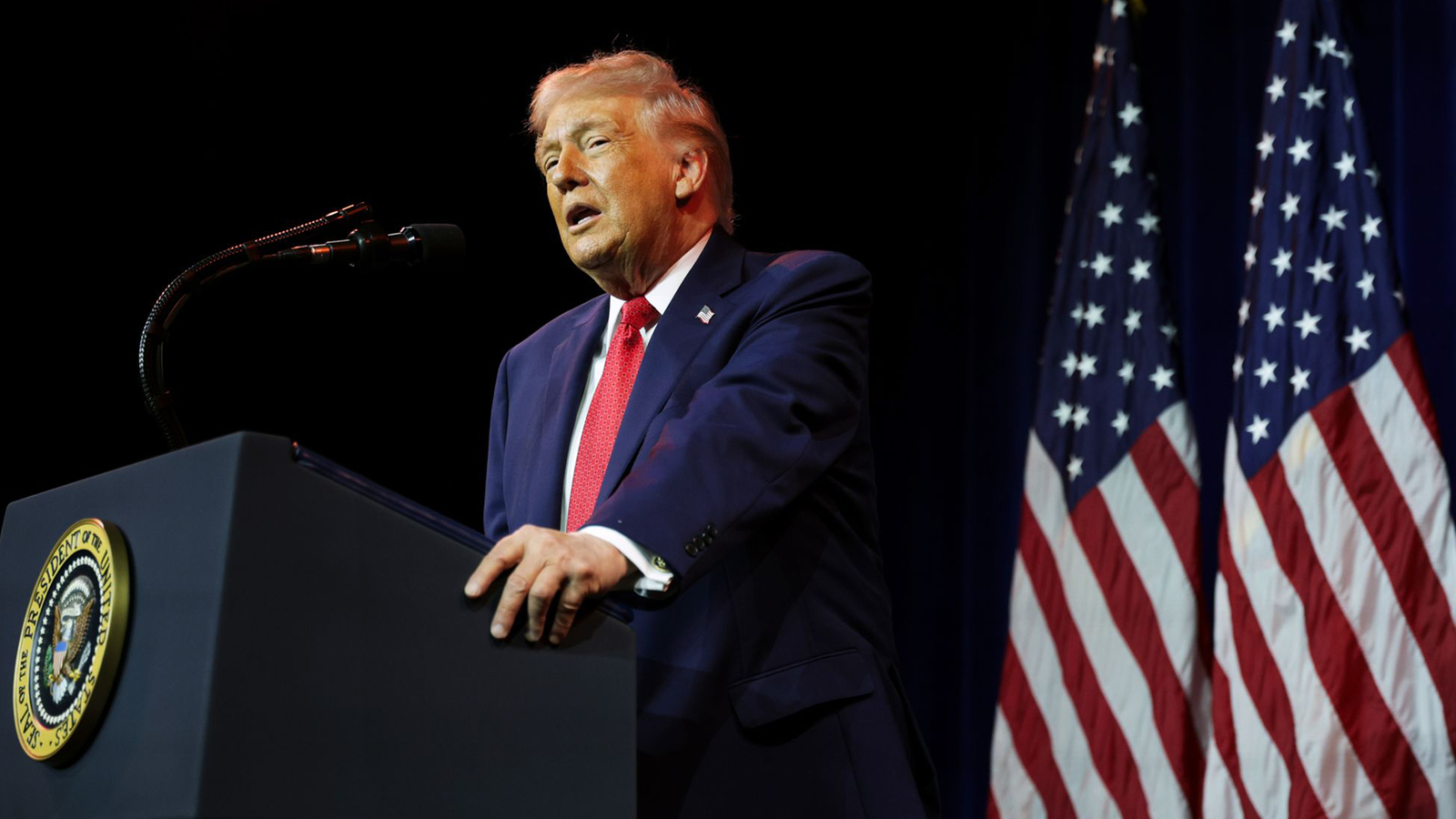
In a move that could reshape the American housing landscape, President Donald Trump has announced plans to ban institutional investor home purchases of single-family properties. Taking to social media on Wednesday, the president declared his intention to immediately restrict large corporate buyers from acquiring additional houses and to push Congress to formalize the policy through legislation.
“People live in homes, not corporations,” Trump wrote, framing the issue as a fundamental question about who should own residential property in the United States. The announcement sent shockwaves through Wall Street, with shares of Blackstone,the world’s largest alternative asset manager,plunging as much as 9% in a single trading session.
The Announcement and Its Immediate Market Impact
The president’s message was direct and unambiguous. He outlined two parallel tracks: an immediate administrative push to ban institutional investor home purchases, combined with a request to Congress to “codify” the restriction into law. This dual approach signals that the administration views the issue as urgent enough to bypass the typical legislative timeline while still seeking permanent statutory backing.
Financial markets responded swiftly. Beyond Blackstone’s sharp decline, other major players in the institutional rental space,including investment arms of major banks like JPMorgan Chase,faced investor scrutiny. These firms had built substantial portfolios of single-family rentals, particularly across high-growth regions in the Sun Belt.
Why Trump Is Targeting Institutional Buyers Now
The proposal arrives against a backdrop of an increasingly frozen U.S. housing market. Home prices have climbed nearly 55% nationwide between the start of 2020 and the third quarter of 2025, according to the National Association of Home Builders. Mortgage rates above 6% have compounded the affordability crisis, sidelining would-be buyers who might otherwise be searching for their first homes.
Trump has signaled that additional housing and affordability measures will be forthcoming, with the president scheduled to deliver an address at the World Economic Forum in Davos, Switzerland, later this month. He plans to expand on the topic during that speech.
The Rise of Institutional Ownership in Single-Family Housing
The trend of Wall Street firms acquiring suburban homes is relatively recent but has accelerated rapidly. According to the Government Accountability Office (GAO), no investor owned 1,000 or more single-family rental homes as of 2011. By 2015, however, institutional investors collectively controlled as many as 300,000 properties.
This dramatic shift began in earnest after the foreclosure wave during the Great Recession of 2008, when distressed sales created buying opportunities for well-capitalized firms. With housing prices steadily recovering and rental demand rising, institutional investors expanded aggressively into single-family rentals, particularly in markets like:
- Atlanta, Georgia – where large investors controlled more than 15% of the single-family home market as of 2022
- Jacksonville, Florida – another Sun Belt hub with concentrated institutional ownership
- Charlotte, North Carolina – a banking and finance center that became a magnet for corporate landlords
These markets share common features: rapid population growth, relatively affordable entry prices, and strong rental demand from a mobile workforce. Together, they represent the frontier of the institutional rental phenomenon.
What Institutional Investors Do With These Homes
Unlike traditional flippers or small-scale landlords, large institutional buyers typically buy and hold properties as long-term rental investments. They package thousands of homes into securitized portfolios, generating steady rental income while betting on continued price appreciation. This model transforms single-family neighborhoods into de facto asset classes, governed by quarterly earnings reports rather than local community considerations.
The Housing Affordability Crisis Driving Policy
To understand the political momentum behind the push to ban institutional investor home purchases, one must appreciate the depth of America’s housing crisis. After the Federal Reserve slashed interest rates to near zero during the pandemic, millions of homeowners locked in mortgages at historically low rates,often below 3%. Those same homeowners are now reluctant to sell and accept a new mortgage at 6% or higher, creating a severe inventory bottleneck.
The result is a market where:
- Limited supply drives prices ever higher
- Would-be first-time buyers cannot compete with cash-rich institutional buyers
- Rental demand surges as homeownership becomes increasingly unattainable
- Young families and middle-class Americans are priced out of the communities where they work
Trump’s policy intervention is framed as a direct response to this untenable situation. By removing one source of demand,corporate buyers,the administration hopes to free up inventory for individual families.
Bipartisan Support for Restricting Corporate Buyers
One of the most striking aspects of this debate is the bipartisan nature of the backlash against institutional ownership. Lawmakers on both sides of the aisle have introduced measures aimed at curbing corporate purchases of single-family homes.
Critics argue that when firms buy houses in bulk, they distort local markets in ways that harm individual buyers and renters alike. By purchasing dozens or even hundreds of properties in a single ZIP code, institutional investors can:
- Drive up median sale prices beyond what local incomes support
- Reduce the available inventory of homes for sale
- Concentrate rental ownership in the hands of remote corporate decision-makers
- Alter the character of established neighborhoods
This cross-ideological coalition reflects a rare point of agreement: both progressive housing advocates and populist conservatives see corporate ownership of single-family homes as a threat to the traditional path to middle-class wealth.
The Expert Counterargument
Not everyone is convinced that banning institutional buyers will solve the affordability problem. Several prominent housing economists and analysts have raised concerns that restricting these investors could backfire.
Jaret Seiberg, an analyst at TD Cowen, was quick to weigh in following Trump’s announcement. “This will not fix housing affordability,” Seiberg wrote in a research note. “It may boost single-family purchases, but it will come at the cost of reducing single-family rentals.”
The core of the economic critique runs as follows:
- Institutional buyers represent only a small fraction of overall housing demand
- Removing them would not meaningfully expand the inventory available to ordinary buyers
- Restraining institutional capital could depress investment in housing construction
- Families who would have rented from corporate landlords may face limited alternatives
Essentially, critics contend that the proposed ban treats a symptom rather than the underlying disease: a decades-long undersupply of new housing construction.
What Happens Next
The path forward for Trump’s proposal involves both executive action and congressional negotiation. While the president has announced his intent to move immediately through administrative channels, lasting change will require legislative support,a potentially challenging prospect in a divided Congress.
Key questions remain unanswered:
- What size of investor will be subject to the ban?
- Will existing portfolios be grandfathered in or phased out?
- How will the policy distinguish between institutional investors and other bulk buyers?
- What enforcement mechanisms will be put in place?
With additional housing and affordability proposals expected in the coming weeks, and a high-profile platform at Davos on the horizon, the administration appears ready to make housing policy a central piece of its economic agenda.
Conclusion
The move to ban institutional investor home purchases represents one of the most aggressive federal interventions in the U.S. housing market in decades. Whether one views it as a long-overdue correction to corporate overreach or a politically motivated gesture with limited practical impact, there is no question that the proposal has struck a nerve. The 9% drop in Blackstone’s share price demonstrates that Wall Street is taking the threat seriously, while bipartisan congressional interest suggests the conversation is far from over.
For millions of Americans struggling to afford a home, the policy debate is not abstract. It touches directly on their ability to build wealth, raise families, and plant roots in their communities. As the administration rolls out additional details and Congress weighs its response, the nation is watching closely to see whether this bold proposal can deliver real relief,or whether the housing crisis will require solutions that go well beyond restricting who can write a check at the closing table.