
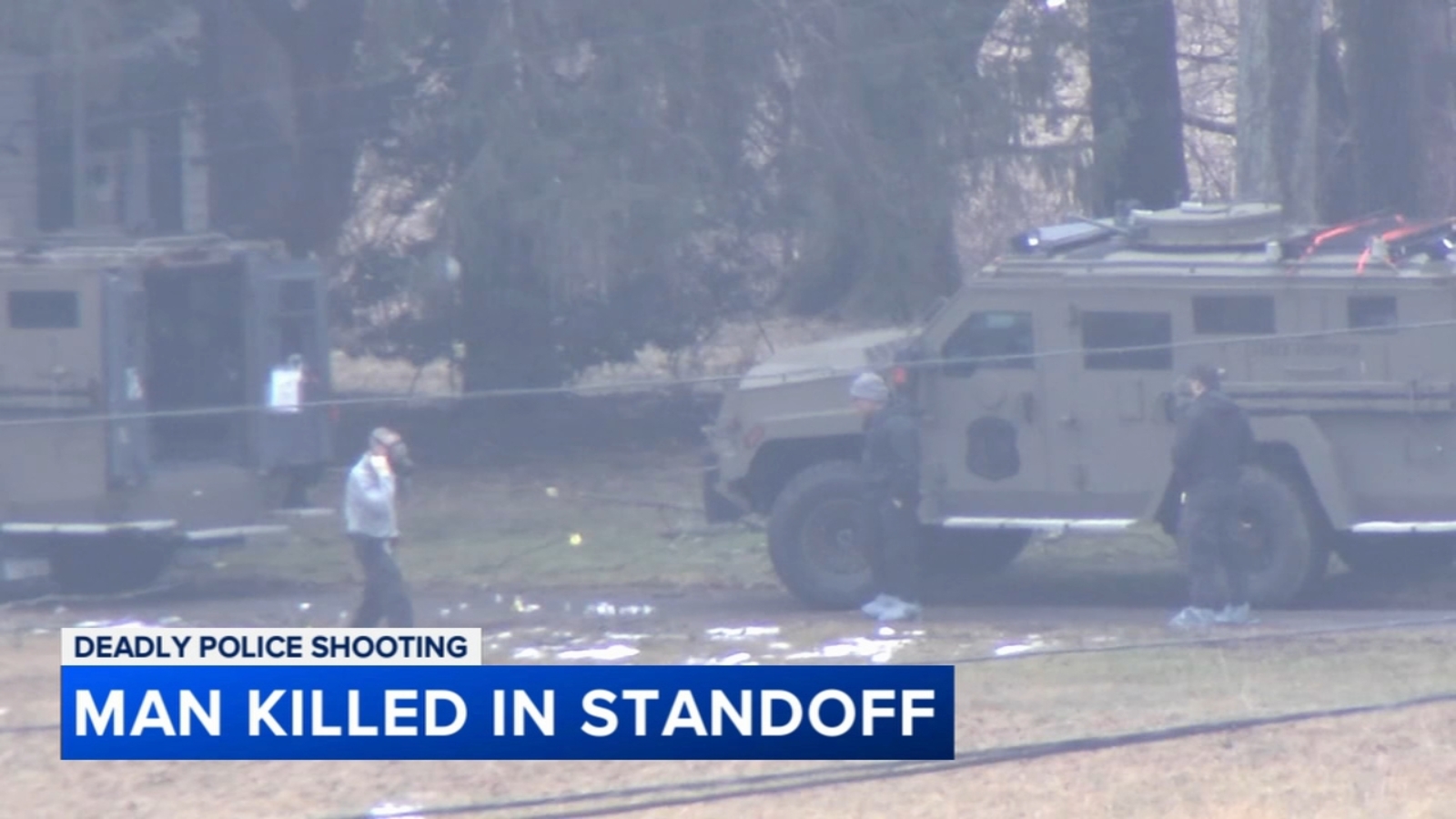
A standoff shooting in Talleyville, Delaware, has left one man dead and a community shaken after New Castle County Police spent more than four hours attempting to resolve a volatile situation at a residential home. The incident, which began on a Tuesday afternoon, has drawn attention to the complexities of police response when an armed individual refuses to surrender peacefully.
The man killed in the encounter was identified by authorities two days later as 35-year-old Daniel Shacklett. The sequence of events , beginning with reports of gunfire and ending with officers discharging their weapons , has prompted an investigation by the Delaware Attorney General’s Office, which is standard protocol in officer-involved deaths.
How the Standoff Began
The chain of events started shortly before 4 p.m. on a Tuesday when New Castle County Police received a 911 call from a man reporting that his roommate was armed and actively firing a weapon inside their shared home on Ramsey Road, just off Route 202 in Talleyville.
According to investigators, the roommate told dispatchers he had seen Shacklett with a gun and heard the sound of gunfire inside the residence. When patrol officers arrived at the scene, they confirmed that the situation was ongoing , the suspect was still inside the home continuing to discharge his firearm.
Master Corporal Richard Chambers of the New Castle County Police Department provided details to reporters, noting that the severity of the situation required the deployment of specialized resources. The agency’s crisis management team was summoned to the location to handle what would become a prolonged and dangerous police standoff.
The Role of Crisis Negotiators
Once officers established a perimeter around the home, trained crisis negotiators took the lead in attempting to make contact with Shacklett. For roughly four hours, negotiators worked to coax the armed man outside and into custody without further violence.
Crisis negotiation is widely regarded as a critical tool in de-escalating tense situations involving barricaded suspects. Trained negotiators use communication techniques designed to build rapport, manage stress, and ultimately persuade a subject to surrender peacefully. In this case, despite hours of effort, the strategy would not produce the outcome authorities had hoped for.
The Final Moments
The situation changed dramatically around 7:45 p.m., nearly four hours after the initial response. According to police, Shacklett eventually exited the home , but not empty-handed.
Officers observed that he was carrying a shovel. As soon as he emerged, he reportedly began swinging the tool toward law enforcement personnel in the vicinity. In response, officers deployed what police describe as less-than-lethal equipment in an attempt to subdue him. Among the tools used was a Taser.
Despite the shock from the conducted electrical weapon, Shacklett retreated back into the residence. Moments later, he re-emerged , this time armed with knives , and advanced toward the officers in what police characterized as a direct charge.
“He advanced towards the officer, and at that point the officers discharged their department-issued weapons,” Chambers said in a statement to the media.
Shacklett was pronounced dead at the scene. No officers sustained injuries during the encounter, and the roommate who placed the initial 911 call was reported to be unharmed and safe.
Witness Accounts Bring the Scene to Life
Neighbors in the quiet Talleyville community witnessed much of the dramatic conclusion from their homes and yards. Phillip Lionti and his son Fillipo Lionti captured video of the shooting on Tuesday night, just before the 8 p.m. hour.
Phillip Lionti told reporters that the sounds accompanying the incident were striking and frightening. “I was also hearing the two big loud bangs that sounded like a bomb going off, one outside, one inside,” he recalled.
His son Fillipo described a moment of instinctive retreat when the gunfire finally erupted. “I was just standing out there listening and then I heard the shots go off and I went back inside. It was scary,” he said. The elder Lionti later expressed how unsettling it felt to know a person had lost their life just steps away from his own home. “Stressful knowing that someone passed away right there,” he said.
Evidence markers dotted the property in the days following the officer-involved shooting, as investigators meticulously documented the scene.
Use of Force and Less-Lethal Options
This case has renewed conversations about use of force protocols and the deployment of less-lethal weapons in high-risk scenarios. Officers in the Talleyville incident attempted to use a Taser before resorting to their firearms. Tasers are designed to incapacitate a subject temporarily through electrical impulse, offering a non-lethal alternative during confrontations.
However, conducted electrical weapons are not always effective, particularly when an individual is highly agitated, under the influence of substances, or experiencing a mental health crisis. When less-lethal options fail and a suspect continues to pose an immediate threat, officers are generally trained to escalate their response proportionally to the danger presented.
The fact that Shacklett reportedly charged at officers while armed with knives provided what police described as justification for the use of deadly force. In officer-involved shooting investigations, prosecutors typically review whether the officer had a reasonable belief that deadly force was necessary to prevent imminent harm to themselves or others.
Aftermath and Investigation
In the immediate wake of the standoff shooting, standard protocols were followed. The officers who discharged their firearms were placed on administrative leave, which is customary practice during investigations into officer-involved deaths. This leave is not disciplinary in nature but is intended to provide officers time to recover from the psychological impact of such events while investigators gather evidence.
Detectives from the New Castle County Police Criminal Investigations Unit, led by Detective Lieutenant Seth Polk, are tasked with piecing together the timeline of events. Evidence collection at the scene included witness interviews, physical evidence markers, body-worn camera footage, and video captured by residents like the Lionti family.
Community Reaction
The shooting has left a lasting impression on the Talleyville neighborhood. Residents who spoke with reporters described feelings of shock, anxiety, and sadness. The sudden eruption of violence in a typically quiet residential area served as a stark reminder that dangerous incidents can unfold anywhere.
For neighbors like the Liontis, the experience of hearing gunshots and explosions close to home , and knowing someone died just outside their doors , is the kind of event that lingers. Communities often grapple with how to process and heal from such traumatic incidents, and local officials typically offer resources to help residents cope with the aftermath.
Broader Context: Standoffs and Public Safety
Standoff situations like the one in Talleyville are among the most dangerous scenarios law enforcement officers face. Barricaded suspects who are armed and emotionally distressed can pose significant risks to themselves, officers, and bystanders. Crisis negotiators and tactical teams train extensively to manage these volatile situations, but outcomes are not always predictable.
Across the United States, police standoffs occur with some regularity, often involving individuals experiencing mental health crises. Many law enforcement agencies have invested in crisis intervention training and co-responder models that pair officers with mental health professionals to improve outcomes in such cases.
Seeking Information
Authorities have asked anyone with information related to the incident to come forward. Tips can be directed to Detective Lieutenant Seth Polk of the Criminal Investigations Unit at (302) 395-8112 or via email at Seth.Polk@newcastlede.gov. Information can also be submitted by calling the New Castle County Division of Police non-emergency line at (302) 573-2800.
Conclusion
The fatal standoff shooting in Talleyville represents a deeply tragic outcome that has affected multiple lives , from the family of Daniel Shacklett to the officers who discharged their weapons to the neighbors who witnessed the violence unfold. As the investigation continues, the community will likely seek answers about what led to the hours-long confrontation and whether alternative approaches might have produced a different result. The incident underscores the challenges law enforcement faces when responding to armed, barricaded individuals, and it highlights the importance of transparent investigations in maintaining public trust. Ultimately, this case will be examined by investigators and reviewed by prosecutors to determine whether the actions taken by officers were consistent with department policy and the law.