
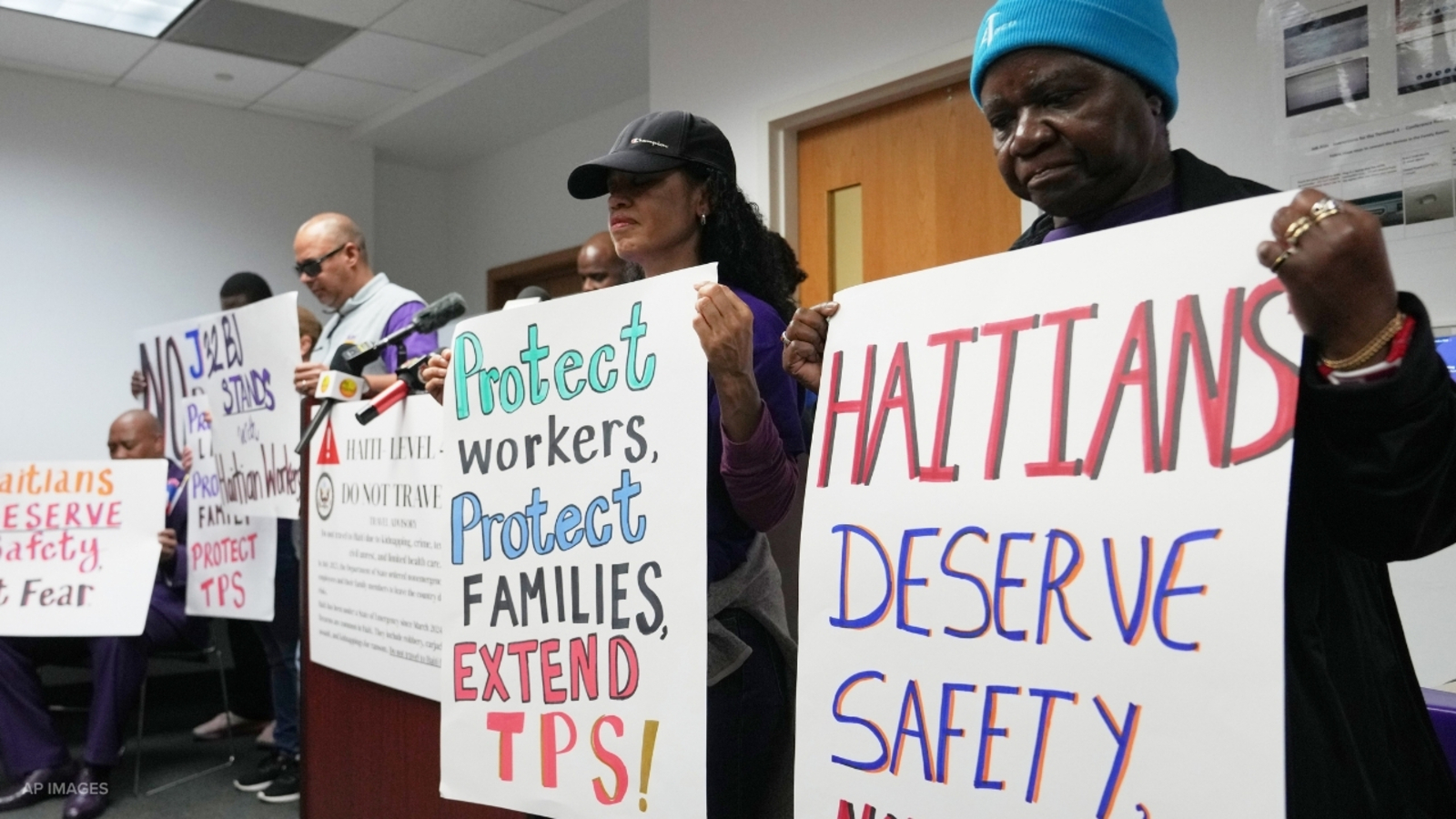
In a sweeping 6-3 decision, the U.S. Supreme Court has ruled that the Trump administration may proceed with terminating temporary protected status for hundreds of thousands of Haitian and Syrian migrants living in the United States. The ruling overturns lower court injunctions that had blocked the Department of Homeland Security (DHS) from ending the humanitarian program, exposing approximately 350,000 Haitians and 6,000 Syrians to potential deportation.
Justice Samuel Alito, writing for the conservative majority, declared that “the Secretary’s TPS designation decisions are not subject to judicial review.” This interpretation of the 1990 law that created the program has fundamentally reshaped the legal landscape for immigrants who have built lives in America while fleeing catastrophe abroad.
Understanding the Temporary Protected Status Program
Temporary protected status, commonly referred to as TPS, was established by Congress in 1990 to shield foreign nationals already in the United States from deportation when their home countries face extraordinary conditions such as armed conflict, environmental disasters, or other crises that make safe return impossible. Beneficiaries receive protection from removal and gain eligibility for employment authorization, typically granted in 18-month increments.
Currently, the program extends protection to roughly 1.3 million people from 17 countries, making the Supreme Court TPS ruling one of the most consequential immigration decisions in recent memory. Importantly, TPS does not offer a pathway to permanent residency or citizenship, leaving recipients in a prolonged state of legal limbo that can last for more than a decade.
Haitians first received TPS in 2010 following a catastrophic earthquake that devastated the island nation. That protection was renewed repeatedly as gang violence spiraled out of control, displacing more than a million people internally. Syrians were granted protected status in 2012 amid a brutal civil war that persisted until the collapse of President Bashar Assad’s regime in late 2024.
The Court’s Majority Reasoning
The conservative justices sided squarely with the administration’s argument that federal judges lack authority to second-guess immigration officials’ determinations about which countries merit protected status. The administration’s position rested on a textual reading of the Immigration and Nationality Act, which the majority found unambiguous in stripping courts of jurisdiction over TPS decisions.
Justice Alito acknowledged that the underlying circumstances in Haiti remain dire but emphasized that the judiciary’s role is to interpret the law as written, not to weigh humanitarian considerations. His opinion also addressed allegations that the terminations were motivated by racial prejudice rather than legitimate policy concerns. While noting that Haitian people “should not face character attacks,” Alito concluded that statements made by Trump and administration officials were “insufficient to show that the termination of Haiti’s TPS designation was based on the race of the Haitian people.”
This aspect of the ruling draws heavily on a precedent from Trump’s first term in which the Court upheld a travel ban affecting several Muslim-majority countries, accepting the administration’s stated justifications despite controversial social media posts from the president.
The Liberal Dissent: Race, Process, and Accountability
Justice Elena Kagan authored a sharp dissent, joined by the Court’s other two liberal justices. She argued that the statutory framework does permit judicial review when officials skirt the proper procedures for ending protections. More forcefully, she contended that racial considerations unmistakably influenced the administration’s push to remove Haitian migrants from the United States.
“The statements fairly shout, in their racial undertones and overtones alike, that race entered into the President’s resolve to remove Haitians from this country,” Kagan wrote. “Respectfully, I dissent from the Court’s decision that they may instead be put on the next plane.”
The dissent highlighted inflammatory rhetoric from Trump’s 2024 campaign, including his amplification of false claims that Haitian immigrants were abducting and consuming pets in Springfield, Ohio. These statements, the liberal justices argued, cannot be divorced from the policy decisions that followed.
Human Consequences and Real-World Impact
Beyond the legal arguments lies a deeply human story. Attorneys representing Haitian TPS recipients have documented harrowing accounts of what awaits those forced to return. Court filings describe four Haitian women who were deported from the United States in February and subsequently found beheaded, their remains dumped in a river months later.
Geoff Pipoly and Andy Tauber, lawyers for the Haitian immigrants, did not mince words in their reaction: “Simply put, the Supreme Court’s ruling will directly result in thousands of innocent people dying violent, needless deaths.”
For Syrian TPS holders, the situation carries its own weight of uncertainty. Although the Assad government has fallen, Syria continues to grapple with fractured governance, factional violence, and the collapse of essential services, conditions that many argue remain incompatible with safe repatriation.
Derrick Johnson, president and CEO of the NAACP, condemned the ruling in unequivocal terms, calling it “a devastating betrayal of Haitian families who have lived, worked, and contributed to this country for years, only to be cast out based on anti-Black immigration sentiment.”
A Pattern of TPS Terminations Under the Current Administration
The Haitian and Syrian decisions are not isolated actions. Since Trump returned to the White House in January 2025, the Department of Homeland Security has rolled back temporary protected status for nationals from 13 countries. Some of these protections had been in place for more than a decade, with recipients building careers, raising families, and contributing to local economies throughout that time.
The Supreme Court previously sided with the administration in allowing the termination of TPS for Venezuelan nationals. That earlier ruling established the legal foundation upon which the Haitian and Syrian decisions now rest.
Legislative Prospects and Remaining Avenues
With the courts effectively closed to TPS challenges, recipients and their advocates have shifted their focus to Congress. A bipartisan measure passed the House in April to extend deportation protections specifically for Haitians, offering a rare moment of cross-aisle cooperation on immigration policy. However, the bill has languished in the Senate, where its prospects remain uncertain.
Legal experts note that any legislative solution faces significant headwinds in a closely divided Congress where immigration has become an increasingly polarizing issue. For many TPS holders, the months ahead will be defined by uncertainty, anxiety, and difficult conversations with family members about an uncertain future.
Broader Implications for U.S. Immigration Policy
The Supreme Court TPS ruling carries implications that extend far beyond Haiti and Syria. By foreclosing judicial review of the Secretary of Homeland Security’s discretionary decisions, the Court has effectively concentrated enormous power within the executive branch. Future administrations, regardless of political affiliation, will now face fewer checks when determining which foreign populations merit humanitarian protection.
Critics argue that this concentration of authority undermines the balance of powers envisioned by the Constitution and removes a critical safeguard against arbitrary or discriminatory enforcement of immigration law. Supporters counter that the executive branch possesses superior expertise in evaluating conditions abroad and that judicial interference only complicates an already complex system.
What Comes Next for Affected Communities
For the immediate future, DHS is positioned to move swiftly in revoking work authorizations and initiating removal proceedings for affected populations. Community organizations, legal aid groups, and faith-based networks have begun mobilizing to provide resources, legal counsel, and humanitarian assistance to those facing the prospect of forced return.
Many TPS recipients are now weighing whether to pursue other forms of immigration relief, such as asylum, withholding of removal, or family-based petitions, though each pathway carries its own evidentiary burdens and uncertainties. Others are bracing for the possibility that their American lives, built over many years, may be upended by a policy decision reached thousands of miles away from their neighborhoods, workplaces, and schools.
Conclusion: A Watershed Moment in American Immigration
The Supreme Court’s decision to permit the termination of temporary protected status for Haitians and Syrians marks a pivotal moment in U.S. immigration jurisprudence and humanitarian policy. By insulating the executive branch’s TPS determinations from judicial scrutiny, the Court has fundamentally altered the protective framework that has shielded vulnerable migrants for more than three decades. As legal battles give way to legislative maneuvering and grassroots advocacy, the human stakes could not be higher. Hundreds of thousands of people who came to the United States seeking refuge from unthinkable conditions now face the prospect of being returned to those very circumstances, with their fate hanging in the balance of political negotiations and the conscience of a nation grappling with its identity as a refuge for those fleeing disaster.