
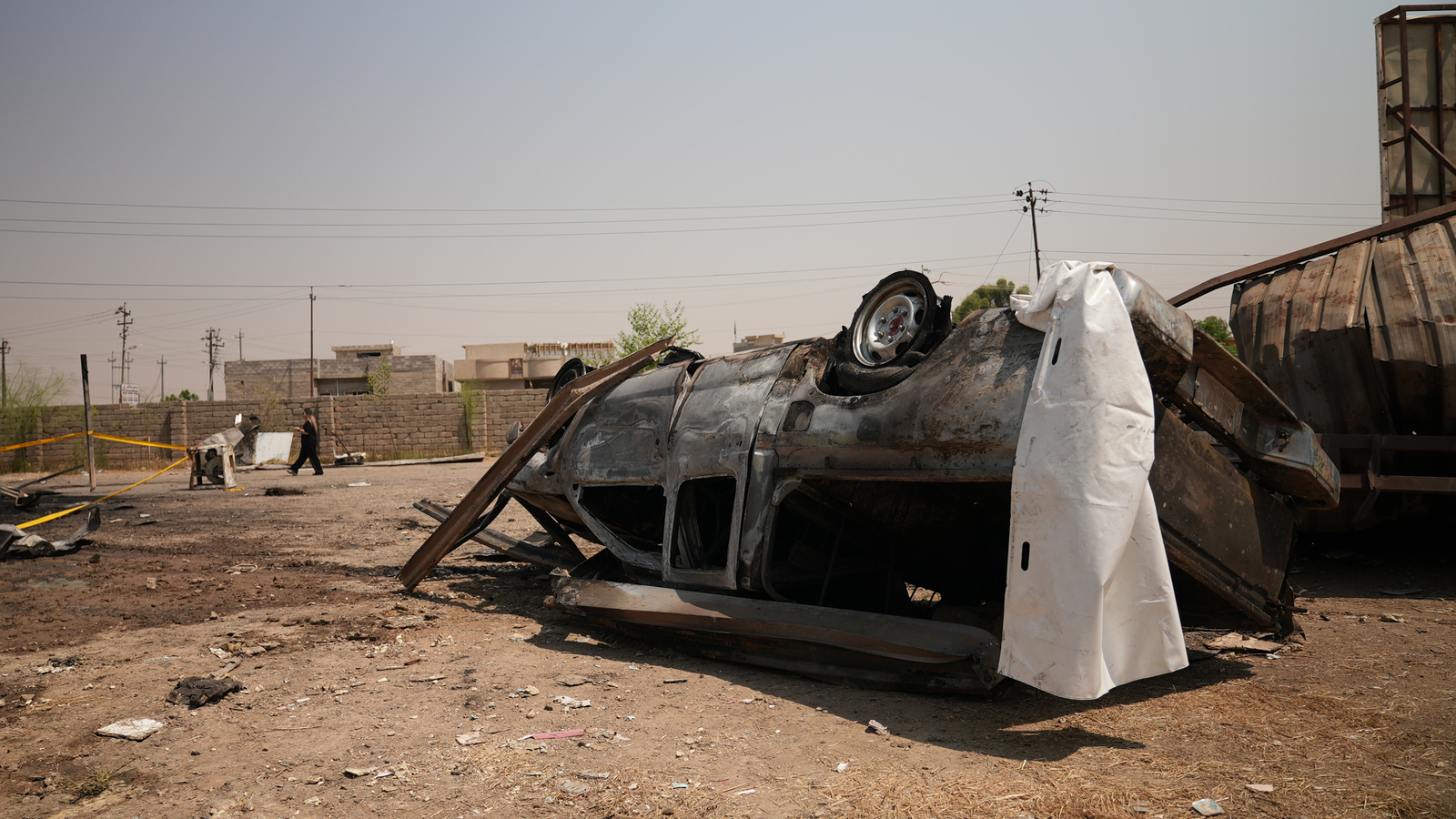
The recent surge in iran missile strikes and retaliatory U.S. military operations has reignited fears of a broader regional war across the Middle East. After a brief period of calm that raised hopes for diplomatic progress, the United States and Iran have once again exchanged missile barrages, dragging neighboring countries deeper into a conflict now entering its fifth month. The renewed violence is reshaping alliances, threatening critical energy infrastructure, and putting immense pressure on global markets that have already suffered months of instability.
The Escalating Exchange of Strikes
Just days after a temporary pause in hostilities, the cycle of retaliation between Washington and Tehran resumed with alarming intensity. The U.S. military announced it had carried out “a heavy wave of strikes against Iran” in direct response to a recent Iranian missile attack on an American military base located in Jordan. According to U.S. Central Command, dozens of targets linked to Iran’s Islamic Revolutionary Guard Corps were hit, including military command centers, missile and drone production facilities, and coastal surveillance infrastructure.
Tehran was quick to retaliate. Iranian forces launched a fresh barrage of missiles that traveled across the region, with one strike reportedly hitting a building owned by a Chinese firm in Kuwait. The attack caused severe structural damage and resulted in the death of at least one worker, according to Kuwait’s military. Simultaneously, Jordan’s air defenses intercepted five missiles fired from Iran for the second day in a row, though no casualties were reported from those interceptions.
Iran’s state-run IRNA news agency confirmed that three people had been killed and two others wounded when a strike hit the island of Qeshm, situated just off the Iranian mainland in the strategically vital Strait of Hormuz. This narrow waterway has become the focal point of the broader US Iran conflict, given its importance to global energy shipments.
Regional Spillover Affecting US Allies
What began as a bilateral confrontation has now spread to multiple countries, raising the prospect of an even wider war. Jordan and Kuwait, both key U.S. allies hosting American troops, have found themselves directly in the line of fire. Their involvement underscores how vulnerable the entire Middle East has become to the spiraling violence.
Attacks on Saudi Oil Infrastructure
Saudi Arabia has accused Iran-backed Iraqi militias of launching drone strikes against its oil facilities in recent days. Although an umbrella group of Iraqi militias initially denied responsibility, the Houthi rebels in Yemen claimed credit for separate attacks on Saudi energy assets, framing them as part of a distinct but related conflict. The Houthis have gone even further, declaring a blockade of Saudi shipping and threatening to choke off the Bab el-Mandeb Strait, the crucial waterway linking the Red Sea to the Gulf of Aden.
Drone Strikes at Egyptian Port
In a particularly concerning development, fires broke out on two natural gas vessels docked at the Egyptian port of Damietta on Wednesday. According to British maritime security firm Ambrey, drone strikes ignited the blazes at a U.S.-owned floating storage facility and a Greek-owned tanker. Egypt’s prime minister’s office confirmed that initial investigations pointed to drone involvement. Egypt, one of the few Middle Eastern nations to have avoided direct military action during the war, would face a dramatic shift in the conflict’s trajectory if Iranian involvement is confirmed. The Houthi rebels have denied any role in the incident.
Economic Consequences of the Conflict
The war has taken a devastating toll on the global economy, particularly through its impact on energy markets. Since Iran began targeting vessels in the Strait of Hormuz early in the conflict, oil and natural gas shipments through the waterway have collapsed. The strait historically handles roughly 20% of the world’s oil and natural gas trade, making any disruption a significant threat to global supply chains.
Data from Lloyd’s List Intelligence illustrates the severity of the disruption. Ship traffic through the strait dropped from 82 vessels during the week of July 13-19 to just 39 vessels the following week, reflecting the chilling effect that active combat zones have on commercial shipping. Fuel prices have spiked sharply, contributing to inflationary pressures that have rippled across continents.
The Workaround Through the Red Sea
With the Strait of Hormuz effectively closed to many commercial vessels, Saudi Arabia has been forced to reroute much of its oil exports through an expensive and time-consuming workaround. Tankers now travel from Saudi Arabia to the Egyptian Red Sea city of Ain Sokhna, where crude is pumped overland through a pipeline to the Mediterranean port of Sidi Kerir before being loaded onto new vessels. The Suez Canal’s depth limitations prevent the largest, most economical tankers from making the journey when fully loaded, further complicating logistics and driving up costs.
Diplomatic Efforts and Hopes for Resolution
Despite the renewed violence, diplomatic channels have not been entirely abandoned. Pakistan, which has emerged as a key mediator in the crisis, continues to push for de-escalation. Pakistani Foreign Ministry spokesperson Tahir Andrabi acknowledged the fragile security environment while reaffirming that “talks are ongoing to normalize the situation, particularly the situation in the Strait of Hormuz.”
The importance of reopening the strait cannot be overstated, as it remains the centerpiece of nearly all diplomatic efforts to end the conflict. However, the pattern of escalation has made meaningful progress difficult to achieve.
Saudi Arabia’s Diplomatic Position
Saudi Defense Minister Khalid bin Salman met with President Donald Trump and Vice President JD Vance this week, according to sources familiar with the private discussions. The Saudi decision to partner with the United States in strikes against Iran-backed Iraqi militias was reportedly intended to send a clear message: the kingdom will not tolerate attacks on its oil industry or critical infrastructure. At the same time, the defense minister conveyed Saudi Arabia’s desire for de-escalation and a return to negotiations between Washington and Tehran.
Domestic Political Implications
The war has also created political challenges on the home front. According to a new AP-NORC poll, President Trump’s approval rating on Iran has dipped slightly compared to last month, reflecting growing public concern over the conflict’s trajectory and duration. Earlier in the war, Trump had predicted the fighting would last only four to five weeks, though he acknowledged the possibility of a longer campaign. Now in its fifth month with no clear end in sight, the war has exposed anxieties about the consumption of American weapons stockpiles needed to defend U.S. bases and allies throughout the region.
What Lies Ahead
The current trajectory of the conflict suggests that further escalation remains a real possibility. With Iranian forces targeting U.S. allies, the United States striking Iranian assets in retaliation, and proxy groups like the Houthis threatening vital shipping lanes, the situation has all the ingredients of a wider regional war. The economic damage already inflicted, from soaring fuel prices to disrupted supply chains, will take years to repair even after hostilities eventually cease.
For now, the international community watches nervously as diplomatic efforts continue in the background while missiles fly overhead. The path to de-escalation remains narrow, but the stakes for failing to find it have rarely been higher. Whether through renewed negotiations, economic pressure, or military restraint, both Washington and Tehran will eventually need to choose between continued escalation and the difficult but necessary work of peace.