
The Trump administration has launched a sweeping California Coastal Commission review, escalating a high-stakes confrontation between federal authorities and one of the most powerful state agencies protecting America’s most iconic shoreline. Announced by Commerce Secretary Howard Lutnick in May, the federal evaluation threatens to strip California of its long-held authority to weigh in on projects involving federal agencies along its coast , a move environmental advocates warn could reshape coastal management not just in California, but across the nation.
The review represents the latest front in a broader campaign by the administration to expand domestic fossil fuel production and roll back state-level environmental protections. Officials say the move is necessary to ensure energy security and streamline infrastructure development, but critics argue it is an unprecedented power grab dressed up as regulatory housekeeping.
Why the Federal Review Matters
The California Coastal Commission has governed development along 1,100 miles of coastline for more than five decades. Under a 1972 federal coastal management law, the panel , along with more than 30 similar programs in other coastal states , must periodically undergo federal evaluation. What makes this review different, experts say, is that the outcome could effectively silence California’s voice on projects involving federal permits, leases, or oversight.
If the National Oceanic and Atmospheric Administration (NOAA), which is conducting the review, concludes that California is out of compliance with federal coastal management objectives, the state could lose its so-called “consistency authority.” That would mean federal agencies would no longer be required to consider the commission’s input when approving offshore drilling, pipelines, desalination plants, or military and commercial launch operations along the California coast.
“This isn’t about performance. This is about power,” said one Santa Barbara resident at an hours-long public hearing in Santa Monica in August, capturing the frustration of thousands of Californians who turned out to defend the commission. Until now, no state with a federally approved coastal program has ever been stripped of that authority. Many Californians are determined not to be the first.
The SpaceX Launch Dispute as a Catalyst
The trigger for the federal review was the commission’s opposition to an expanded launch schedule for SpaceX’s Falcon 9 rockets from Vandenberg Space Force Base. Commissioners cited concerns that increased launch activity could harm sensitive marine species and restrict public beach access. Secretary Lutnick framed that decision as obstructionist.
“Obstructionist policies that delay critical national infrastructure in the name of environmental extremism are unacceptable,” Lutnick declared when announcing the review. He added that the evaluation would examine how California has handled federal priorities in four areas: spaceport infrastructure, offshore oil production, pipeline maintenance, and desalination projects.
The framing drew sharp criticism from environmental law scholars. “It’s just part of that overall belief that they have, that they’re going to get rid of renewables and go back to good old-fashioned fossil fuels, and what better place to start than California?” said Deborah A. Sivas, a Stanford Law School professor specializing in environmental law. “We’re the feds , we’re going to tell the state what to do.”
A Broader Push for Fossil Fuels
The California Coastal Commission review is part of a much wider energy policy offensive. The Trump administration has announced plans to open new offshore oil leases in California and Florida , the latter a state that has not allowed drilling in federal waters since 1995 due to Gulf of Mexico spill concerns.
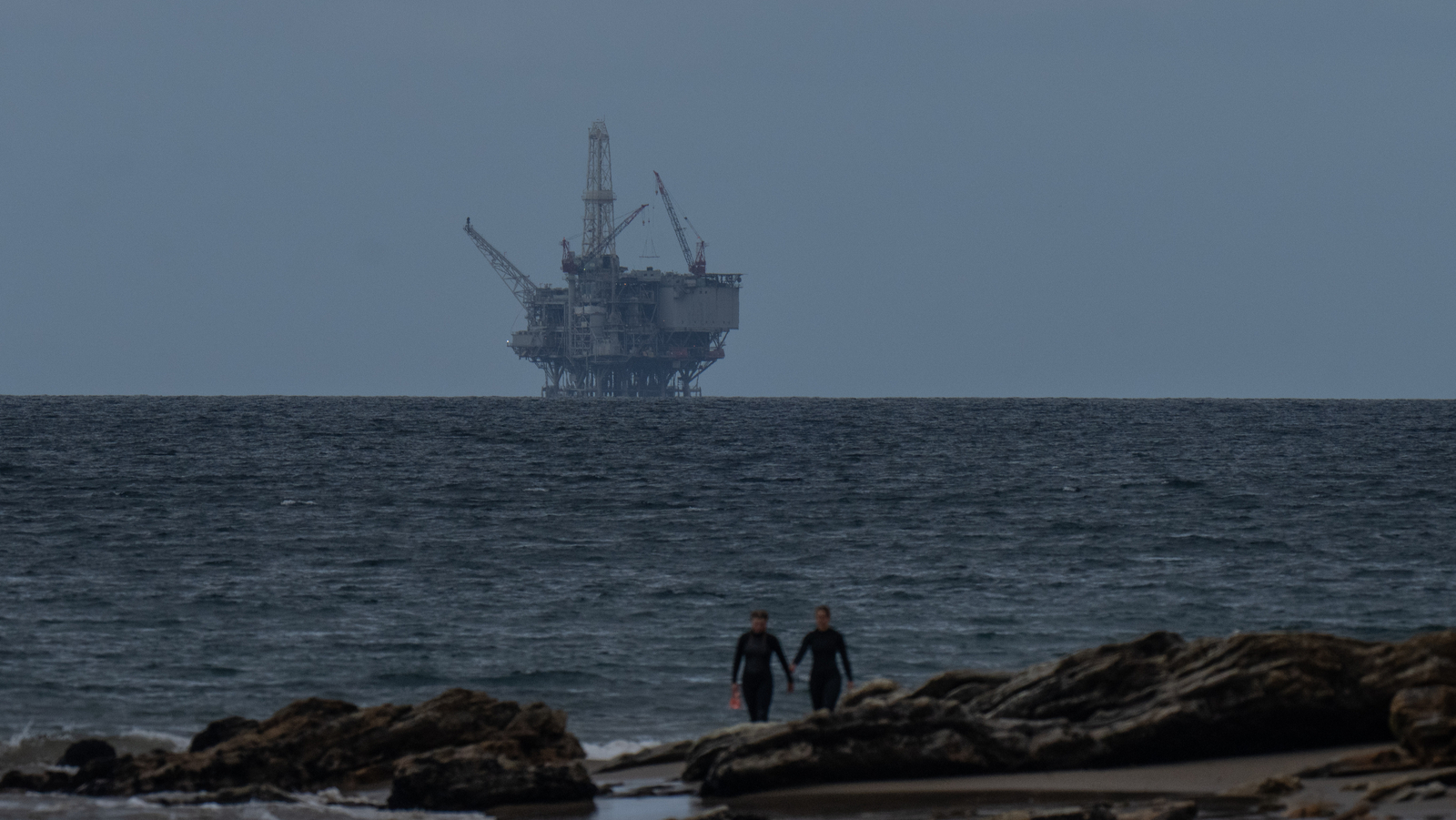
In another controversial move, federal officials helped a Texas-based firm, Sable Offshore Corp., restart a long-idled pipeline that had been shut down since a 2015 rupture caused one of California’s worst oil spills, blackening 150 miles of beach from Santa Barbara to Los Angeles and polluting habitat for endangered whales and sea turtles. Federal regulators also recently took a step toward authorizing fracking on a 45-year-old platform nine miles off the Ventura County coast , a project the coastal commission unanimously voted to oppose after a lengthy public hearing.
The company behind the platform, DCOR LLC, claims the operation would more than triple daily oil output from 1,100 barrels to 4,000 barrels across 16 wells. But Coastal Commissioner Ray Jackson was blunt in his opposition: “This is just simply one of those cases where the juice isn’t worth the squeeze. It creates far too many opportunities for something to go wrong. When something does go wrong, it is our ocean, beaches, wildlife, and coastal economy that pay the price.”
California’s Renewable Energy Push , And Federal Pushback
The confrontation comes against a backdrop of dramatic shifts in California’s energy mix. According to the California Energy Commission, nearly half of the state’s electricity in 2024 came from solar, wind, and other renewable resources. The state has also moved aggressively to phase out gas-powered cars and expand offshore wind.
That progress has put California on a collision course with Washington. Just last week, state officials sued the federal government over its buyback of an offshore wind lease , a transaction the state argued was designed to discourage wind energy expansion in favor of fossil fuels.
California has not approved new offshore oil leasing since the catastrophic 1969 Santa Barbara Channel spill, which released up to 4.2 million gallons of crude into the ocean, killed thousands of seabirds, and helped spark the modern environmental movement. There has been no new leasing in federal waters off California since the mid-1980s.
A Commission Steeped in Controversy , But Defended
The California Coastal Commission was created in 1972 and has long been a lightning rod for political fights, drawing criticism from both parties over the decades. Democratic Gov. Gavin Newsom rushed to defend the agency this year, even though in 2025 he suspended its permitting requirements for home rebuilding following the devastating Los Angeles-area wildfires.
The commission’s history includes headline-grabbing disputes:
- Celebrity projects: The panel initially rejected, then approved, plans by The Edge, guitarist of the rock band U2, to build mansions on seaside bluffs in Malibu , a project later struck down by a court.
- Water infrastructure: The commission rejected a proposed desalination plant in Huntington Beach that would have produced drinking water for the region.
- Trump property disputes: The commission tangled with Donald Trump before his first presidency over a 70-foot flagpole at his Rancho Palos Verdes golf club, ultimately allowing it after a lengthy legal battle.
Despite this contentious track record, the current federal review has united Californians of many political stripes in opposition. The fear is that weakening California’s authority will set a precedent enabling the federal government to override state coastal protections elsewhere, from the Pacific Northwest to the Gulf Coast.
What’s Next for the Review?
NOAA has not announced a timeline for completing the review, leaving California officials, environmental groups, and industry stakeholders in limbo. DCOR LLC has indicated it is evaluating whether to appeal directly to the commerce secretary over the fracking denial , a route that, if successful, would bypass the state commission entirely.
Meanwhile, California’s legal team is preparing for a protracted fight that could end up before federal courts. The state argues that the commission’s authority flows from a cooperative federalism framework enshrined in the 1972 Coastal Zone Management Act, and that the review itself is being weaponized for political ends.
National Stakes for Coastal States
Experts warn that the outcome of this California Coastal Commission review will reverberate far beyond the state’s borders. If NOAA strips California of its consistency authority, other coastal states , including Oregon, Washington, Massachusetts, and Florida , could find themselves facing similar pressure to align their programs with federal energy priorities or risk losing their own review powers.
For now, California remains the test case. The commission’s fate will help determine whether states retain meaningful input over what happens on their own shorelines , or whether federal agencies alone will decide the future of America’s coasts.
Conclusion
The Trump administration’s aggressive push into California energy and infrastructure policy has found its sharpest battleground on the state’s coastline. From offshore oil leases and pipeline restarts to fracking approvals and SpaceX launch schedules, federal officials are signaling that state-level environmental oversight is no longer welcome in Washington. The ongoing California Coastal Commission review is not simply a bureaucratic exercise , it is a referendum on the balance of power between states and the federal government over the future of America’s coastal resources. As the months-long evaluation drags on, Californians and observers nationwide are watching closely, aware that whatever happens in California could reshape coastal governance from sea to shining sea.