
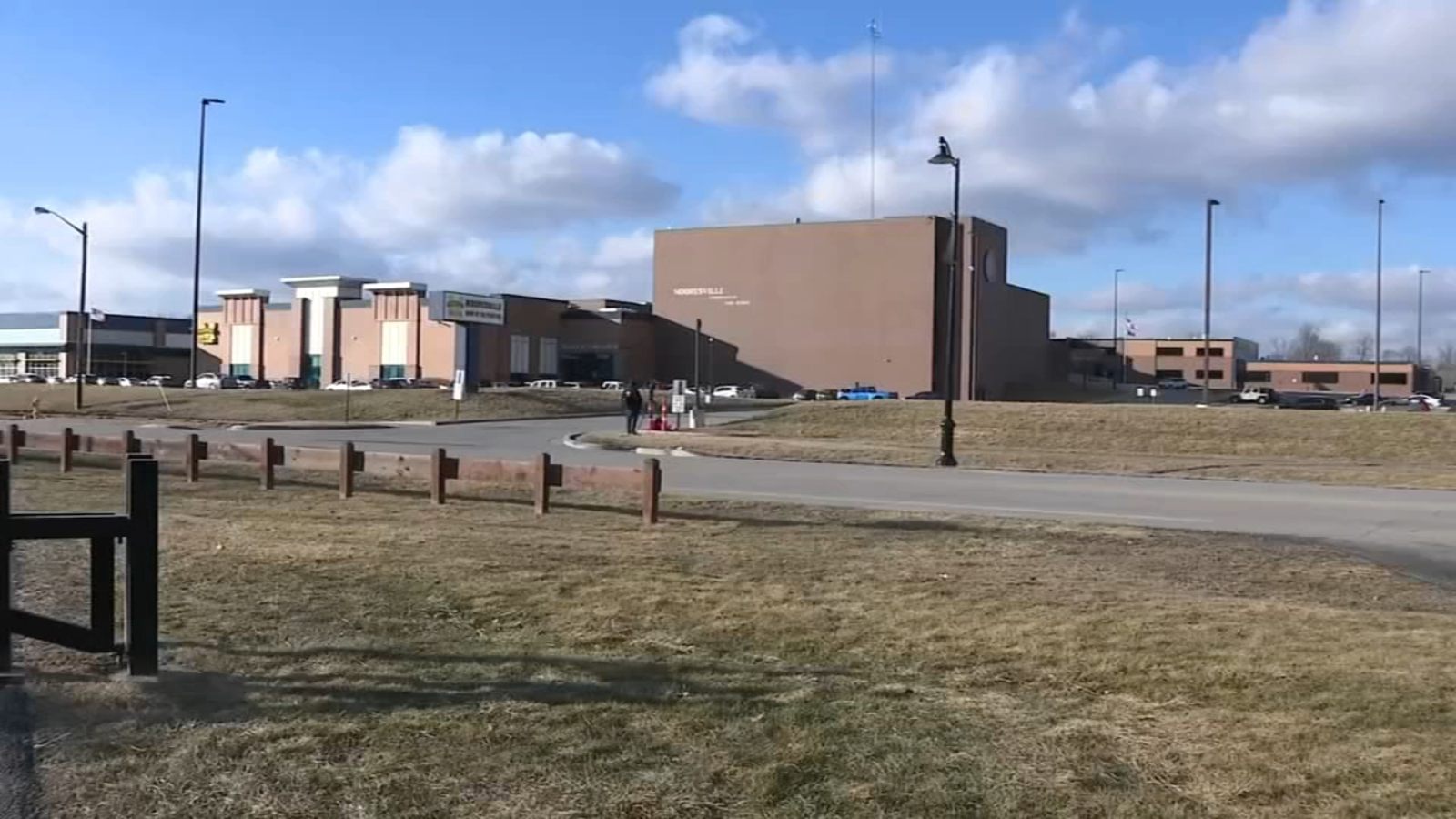
Authorities in Indiana have arrested an 18-year-old high school student accused of planning a school shooting plot targeting her own campus on Valentine’s Day. The case, which unfolded through a coordinated effort between the FBI and local law enforcement, has highlighted growing concerns about youth-targeted violence, mental health access, and the role of community vigilance in preventing tragedies before they occur.
Background of the Investigation
The investigation began on Tuesday evening when Mooresville Metropolitan Police detectives were contacted by the FBI regarding a credible threat against Mooresville High School, located in a community just southwest of Indianapolis. The FBI had received a tip through the Sandy Hook Tip Line, a confidential reporting system established after the 2012 Newtown, Connecticut tragedy to encourage early intervention in potential mass violence scenarios.
Within hours of receiving that information, federal agents identified Trinity J. Shockley, an 18-year-old student at the school, as the primary suspect in the alleged plot. Investigators moved quickly, executing search warrants at the suspect’s residence with assistance from the Morgan County Sheriff’s Office and Mooresville School Police officers. The teenager was taken into custody without incident and was later transferred to the Morgan County Jail, where she is being held without bond.
The Alleged Threat and Timeline
According to court filings, investigators uncovered chilling details suggesting the school shooting plot was intended to take place on Friday, February 14, 2025. In online conversations on Discord, a messaging platform popular with younger users, the suspect allegedly wrote that the planned attack would be “Parkland part two,” a direct reference to one of the deadliest school shootings in modern American history.
When confronted by detectives, the suspect initially claimed she had been “joking.” However, she later elaborated on her alleged intentions, reportedly telling investigators that she wanted to take her friend, who was also her crush, and “wanted them to die together.” This disturbing statement reportedly informed the charges filed by the Morgan County Prosecutor’s Office: conspiracy to commit murder and intimidation through threat to commit terrorism.
Connections to Past Tragedies
The suspect’s alleged fixation on prior mass casualty events has drawn significant attention from investigators. Court documents indicate that she had an “obsession” with two convicted killers: Nicolas Cruz, the perpetrator of the 2018 Marjory Stoneman Douglas High School shooting in Parkland, Florida, and Dylann Roof, who fatally shot nine people during a racist attack at a South Carolina church.
Investigators stated that the suspect’s motivation for the planned attack was Cruz specifically, and that she “wanted to prove that she is his number one fan.” Court records describe an emotional attachment between the teenager and the convicted Parkland shooter, a connection that shaped the scope and nature of the alleged plot.
A History of Valentine’s Day Violence
The selection of February 14 as the target date carries particular weight given the history of tragic events that have unfolded on or near that date in American schools and universities.
- Northern Illinois University, 2008: On Valentine’s Day, a gunman killed five people and wounded more than a dozen others on the campus in DeKalb, Illinois, in one of the earliest high-profile campus shootings of the 21st century.
- Marjory Stoneman Douglas High School, 2018: Exactly ten years after the Northern Illinois attack, 17 people were killed and numerous others injured when Cruz opened fire at the Parkland, Florida school. The anniversary has since been marked annually by survivors, advocates, and policymakers.
- Michigan State University, 2023: Just one day before Valentine’s Day, three students were killed and five others wounded in a mass shooting on the East Lansing campus, prompting renewed national conversations about campus safety.
These prior tragedies were not lost on investigators, who recognized that the timing of the alleged school shooting plot was almost certainly intentional.
The Suspect’s Background and Mental Health
Perhaps the most troubling revelations in the court filings concern the suspect’s documented mental health struggles and the barriers she allegedly faced in accessing treatment. According to court documents, the teenager had been seeking mental health resources since she was a freshman in high school. However, each time she attempted to obtain professional help, her father, Timothy Shockley, denied her access to those services.
Court records state that Mr. Shockley “did not believe in mental health treatment and did not take his daughter’s conditions seriously.” This alleged pattern of denial persisted for years, until November 12, 2024,just two weeks after the suspect’s 18th birthday,when she legally signed herself up for mental health assistance on her own.
The case has sparked renewed discussion among mental health advocates and policymakers about the limitations placed on parental authority when a minor expresses suicidal or violent ideation. In many jurisdictions, parents retain broad discretion over their children’s medical care, including psychological treatment, even when serious warning signs are present. The Indiana case is likely to fuel ongoing debates about whether legal frameworks should be expanded to allow intervention when parental refusal of mental health care contributes to potential violence.
Weapons and Access
Investigators also examined how the suspect might have obtained the means to carry out her alleged plan. According to police, the suspect’s father was in possession of multiple firearms, AR-15 magazines, and a body armor vest. While these items were reportedly stored outside the family home rather than inside it, their proximity and the suspect’s familiarity with their location raised significant concerns about access and oversight.
Court documents do not yet specify how the suspect planned to acquire weapons for the alleged school shooting plot, nor have authorities disclosed whether any firearms were recovered from her possession at the time of her arrest. The investigation remains active, and additional charges or findings could emerge as forensic analysis continues.
The Role of Community Vigilance
The successful disruption of the alleged plot underscores the importance of anonymous reporting systems and interagency cooperation. The Sandy Hook Tip Line, operated by the FBI, has become a critical tool for receiving tips about potential threats, and the speed with which the FBI Indianapolis field office acted on this particular tip was praised in a public statement. The bureau noted that “agents swiftly coordinated with the Mooresville Metropolitan Police Department to assess the credibility of the threat” and that “investigators successfully identified the individual, ensuring a rapid and coordinated response to mitigate any potential risk to the community.”
Officials have not disclosed whether the initial tip came from a fellow student, a family member, or another concerned party. What remains clear is that the early intervention likely prevented what could have been a catastrophic event.
Conclusion
The arrest of Trinity J. Shockley represents both a successful law enforcement outcome and a sobering reminder of the persistent threat of school violence in the United States. As the case moves through the Morgan County court system, it is likely to prompt broader conversations about youth mental health access, parental responsibility, firearm storage practices, and the effectiveness of anonymous tip lines. While the immediate danger to Mooresville High School students and staff has been averted, the circumstances surrounding this school shooting plot reveal systemic gaps that extend far beyond any single community. Addressing those gaps will require a coordinated effort from families, schools, mental health professionals, and lawmakers to ensure that warning signs are recognized and treated before tragedy strikes.