
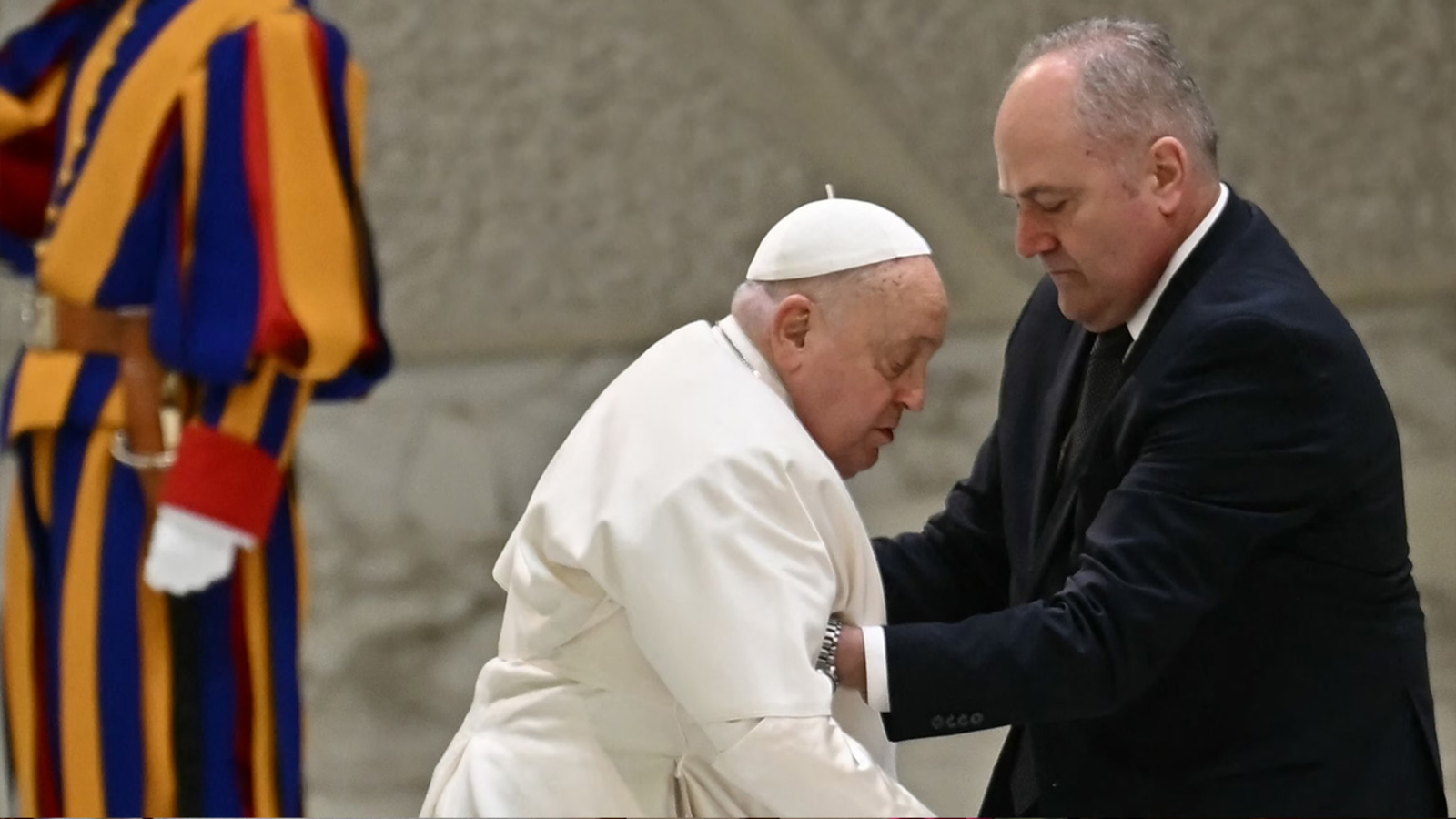
The news surrounding Pope Francis hospitalization has captured global attention as the 88-year-old pontiff continues to receive medical care at Rome’s Gemelli Hospital for a respiratory tract infection. The Vatican has provided reassuring updates, noting that the Pope is showing “some” improvement in his laboratory tests and is resting comfortably without fever. As Catholics and observers around the world keep a close watch on his condition, here is everything we know so far about his admission, treatment, and the road to recovery.
Background of the Hospital Admission
Pope Francis was admitted to the Gemelli Hospital in Rome on Friday after his ongoing bronchitis treatment at home failed to produce the expected results. According to Italian news agency ANSA, the pontiff arrived at the hospital visibly fatigued and struggling with breathing difficulties caused by an excessive buildup of phlegm. The Pope had been managing his bronchial condition for several days, but when symptoms persisted and intensified, Vatican officials determined that a hospital admission was necessary.
The decision to hospitalize the head of the Catholic Church was described by Vatican insiders as both precautionary and practical. Medical tests were needed to determine the precise nature of his illness, and physicians wanted to adjust his treatment plan in a controlled clinical environment. By Friday evening, diagnostic results confirmed that the Pope was suffering from a respiratory tract infection, which prompted medical staff to begin a revised treatment protocol immediately.
Signs of Improvement in Pope Francis’s Condition
On Saturday, the Vatican released an update that brought relief to the estimated 1.4 billion Catholics worldwide. The Holy See Press Office stated that the Pope’s laboratory tests showed “some” improvement, a cautiously optimistic phrase that nonetheless signaled a positive trajectory in his recovery.
Key indicators of progress included:
- No fever reported , The pontiff’s temperature remained stable throughout the night.
- Restful sleep , Vatican sources confirmed the Pope “rested all night,” which is considered a positive sign given his age and the nature of his infection.
- Reduced fever since admission , ANSA reported that his temperature had noticeably decreased since he entered the hospital.
- Normal daily activities , Holy See spokesperson Matteo Bruni told reporters that the Pope “ate breakfast and read some newspapers,” demonstrating that he was alert and functioning.
While the updates have been measured in tone, the overall picture emerging from the Vatican is one of cautious reassurance. Medical professionals treating the Pope have expressed optimism about the new course of treatment initiated shortly after his admission.
The Medical Treatment and Diagnostic Findings
Following his arrival at Gemelli Hospital, the Pope underwent a series of tests designed to identify the exact pathogen responsible for his respiratory infection. According to Vatican communications, microbiological findings allowed the medical team to slightly modify his existing treatment regimen, tailoring it more precisely to the infection at hand.
This kind of adjustment is standard medical practice. When a patient does not respond to initial therapy , as appeared to be the case with the Pope’s at-home bronchitis treatment , physicians often recalibrate medications based on laboratory cultures and sensitivity results. The Vatican has not disclosed the specific medications being administered, but the fact that lab results are improving suggests the revised approach is having the desired effect.
Italian media outlets reported that medical tests are expected to continue throughout the weekend. This ongoing monitoring reflects the careful, methodical approach being taken by the healthcare team at one of Rome’s most respected medical institutions. Gemelli Hospital has a long history of treating popes , it has served as the preferred medical facility for pontiffs dating back decades.
Cancellation of the Sunday Angelus Prayer
Why the Pope Will Not Lead the Prayer
In a notable change to the regular Vatican schedule, the Holy Father will not personally lead the Angelus prayer on Sunday, February 16. The Vatican attributed this decision directly to medical advice, stating that “to facilitate his recovery, the medical staff prescribed absolute rest.”
The Angelus is a traditional Catholic devotion recited at midday, typically led by the Pope from a window overlooking St. Peter’s Square. It draws thousands of pilgrims and tourists every week and is broadcast globally. The decision to forgo this Sunday’s appearance underscores the seriousness with which the medical team is approaching the Pope’s recovery, even as his condition shows signs of improvement.
A Written Message Instead
Despite being unable to appear in person, Pope Francis intends to send the text of his Angelus reflection for publication. This gesture ensures that the faithful will still receive his spiritual message, even if they cannot see him deliver it. It also reflects the Pope’s determination to maintain his pastoral duties while respecting the boundaries set by his physicians.
An Outpouring of Messages and Prayers
One of the most heartwarming aspects of this Pope Francis health update is the wave of support that has flooded in from across the globe. The Vatican confirmed that the pontiff has been informed of the many messages of closeness and affection he has received in recent days.
In a statement, the Holy See Press Office relayed that the Pope “expresses his gratitude, as well as asking for continued prayers.” This request for ongoing prayer highlights the deeply spiritual nature of the Pope’s leadership and his connection to the faithful, even during moments of personal vulnerability.
From world leaders to ordinary parishioners, expressions of solidarity have come from every corner of the Catholic world and beyond. Bishops’ conferences, religious orders, and ecumenical partners have all issued statements wishing the pontiff a speedy recovery. The global response demonstrates the unique position Pope Francis holds as both a spiritual leader and a figure of moral authority on the international stage.
What the Vatican Has Shared with the Public
Throughout this period, the Vatican has committed to transparency while balancing patient privacy. Spokesperson Matteo Bruni has been the primary voice delivering official updates, briefing reporters in the Holy See Press Room on Saturday about the Pope’s condition.
The communication strategy has been deliberately measured. Rather than offering sweeping reassurances, Vatican officials have provided specific, factual details , that the Pope rested well, that he has no fever, that lab tests show improvement, and that treatment has been adjusted. This approach allows the public to track his recovery without either minimizing concerns or creating unnecessary alarm.
Multiple Vatican news sources have corroborated the official statements, with ANSA reporting that “several sources” confirmed the Pope had arrived at the hospital in a fatigued state but that his condition has stabilized since treatment began.
Looking Ahead: What to Expect
As the Pope continues his recovery at Gemelli Hospital, several questions remain about the days ahead. Medical tests are ongoing, and physicians will likely continue to monitor his respiratory function and inflammatory markers closely. The duration of his hospital stay has not been publicly confirmed, but the prescription of “absolute rest” suggests that doctors are prioritizing a thorough recovery over a swift discharge.
Beyond the immediate medical concerns, attention will also turn to the Pope’s upcoming schedule. The cancellation of Sunday’s Angelus is already confirmed, but questions remain about engagements and appointments in the week ahead. Vatican officials are expected to provide further updates as the situation evolves.
For now, the mood within the Vatican is one of cautious optimism. The improvement in laboratory results, combined with the Pope’s stable vital signs and ability to engage in light daily activities, paints a picture of a patient on the mend , even if full recovery will take time.
Conclusion
The Pope Francis hospitalization at Rome’s Gemelli Hospital has reminded the world of the humanity behind one of the most influential spiritual leaders of our time. While the pontiff’s respiratory tract infection and ongoing bronchitis treatment are cause for genuine concern , particularly given his advanced age , the latest updates from the Vatican offer reason for measured hope. With lab tests showing improvement, no fever present, and a revised treatment plan in place, Pope Francis appears to be on a path toward recovery. As he asked for continued prayers from the faithful, millions around the world continue to hold him in their thoughts, awaiting further news of his return to full health and his pastoral duties at the Vatican.