
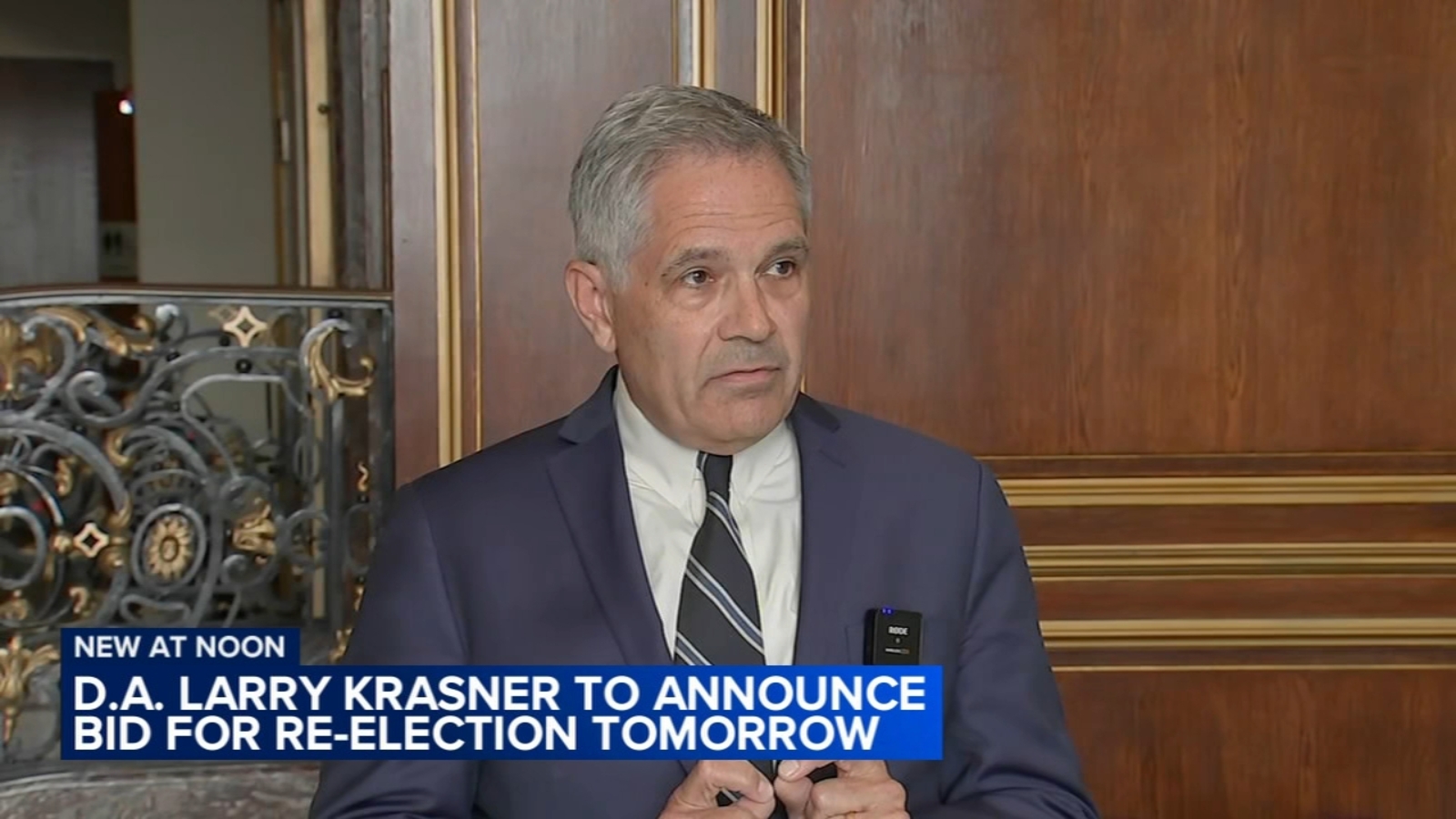
Philadelphia District Attorney Larry Krasner is officially launching his reelection campaign for an unprecedented third term, doubling down on the progressive criminal justice platform that has defined his tenure and made him one of the most polarizing figures in American law enforcement politics. After eight years of transforming the city’s prosecutorial approach, Krasner is asking Philadelphia voters to extend his reform-minded agenda for another four years, setting the stage for what promises to be one of the most watched and fiercely contested district attorney races in the country.
Krasner Formally Announces Third-Term Bid
According to campaign statements, Krasner will formally declare his candidacy on Tuesday, signaling the start of what his team has described as a continuation of the sweeping changes he has championed since first taking office in 2018. The announcement marks a pivotal moment in Philadelphia’s political landscape, as the former civil rights attorney seeks to extend his hold on one of the most powerful prosecutorial offices in the United States.
Krasner’s campaign has made clear that his Larry Krasner reelection platform will not pivot toward the political center. Instead, he intends to double down on the progressive reforms that have made him both a hero to criminal justice advocates and a target of intense criticism from police unions, some community leaders, and political opponents who argue his policies have contributed to elevated violent crime rates.
“We are not backing down,” a sentiment echoed throughout Krasner’s tenure, has become the unofficial motto of his approach to prosecution. His campaign has emphasized continued investment in diversion programs, alternative sentencing, and what he describes as treating the underlying causes of criminal behavior rather than relying on incarceration as a default response.
The Progressive Prosecutor Movement and Krasner’s Place in It
Krasner’s reelection campaign comes at a time when the broader progressive prosecutor movement, once ascendant in cities across America, is facing significant headwinds. Reform-minded district attorneys in San Francisco, Los Angeles, and other major cities have faced recall efforts, primary challenges, and increasing scrutiny over crime trends.
From Civil Rights Attorney to District Attorney
Before entering the DA’s office, Krasner spent decades as a defense attorney, often suing police officers and representing activists. His election in 2017 was widely viewed as a watershed moment, representing the first time a self-described abolitionist had won a major city prosecutor’s race. His victories, both in his initial campaign and his first reelection, were bankrolled substantially by George Soros, whose contributions to progressive prosecutor candidates across the country helped fuel the movement.
Krasner’s transformation of the DA’s office included declining to prosecute certain low-level offenses, expanding the use of diversion programs, ending the practice of cash bail for many defendants, and directing stricter accountability for police officers accused of misconduct. These policies sparked fierce debate, with supporters praising them as long-overdue reforms and critics blaming them for surging crime during and after the pandemic.
Krasner’s Policy Platform: Root Causes Over Incarceration
Central to Krasner’s reelection pitch is his philosophy that addressing crime requires confronting its underlying conditions. His campaign has emphasized that he will continue pushing for policies that connect at-risk individuals with mental health services, job training programs, and educational opportunities, rather than cycling them through the criminal justice system.
Mental Health and Diversion Programs
One of the cornerstones of Krasner’s approach has been the expansion of mental health courts and co-responder programs, where behavioral health professionals accompany police on certain emergency calls. His office has invested in programs that divert individuals struggling with addiction, mental illness, or homelessness away from prosecution and toward treatment.
Juvenile Justice Reform
Krasner has also signaled that juvenile justice reform will remain a major priority in his potential third term. He has previously unveiled plans focusing specifically on rehabilitating juveniles rather than prosecuting them as adults, an approach he argues is more effective at reducing recidivism and breaking cycles of violence in Philadelphia’s most affected neighborhoods.
“Treating the root cause of crime” has become a recurring phrase in Krasner’s public statements, and his reelection campaign is expected to lean heavily on the argument that incarceration alone cannot solve complex social problems like poverty, trauma, and lack of opportunity.
The Crime Statistics Debate
Perhaps no issue has been more contentious during Krasner’s tenure than the question of crime trends in Philadelphia. His supporters and detractors have cited competing statistics to argue for or against his record, and this debate is certain to dominate the upcoming election.
Murder Rate Decline
According to data journalism analysis, Philadelphia’s murder rate over the past 12 months has dropped 49% compared to the annual average over the previous three years. Krasner’s campaign will almost certainly highlight this dramatic decline as evidence that his strategies are working and that the city is turning a corner on violent crime.
Persistent Concerns About Other Crimes
Critics, however, point to increases in other categories, including retail theft, carjackings, and certain quality-of-life offenses, as evidence that Krasner’s policies have created an environment of permissiveness. The political battle over which statistics matter most and which tell the truest story about public safety in Philadelphia will be central to the campaign messaging from all sides.
Opponents have also argued that homicide clearance rates in Philadelphia have lagged behind those of comparable cities, leaving many victims’ families without justice. Krasner has countered that solving these cases requires more resources for his office and cooperation from other agencies, not a return to harsher prosecution policies.
The Political Landscape Heading Into November
With Election Day set for November 4, Krasner faces a political environment that has shifted considerably since his last campaign. Philadelphia, while still a solidly Democratic city, has shown signs of frustration with progressive criminal justice policies, particularly in neighborhoods most affected by gun violence.
Potential Challengers
Although no major challenger has yet emerged with the same name recognition or fundraising apparatus, Krasner can expect competition in the Democratic primary. Several former prosecutors and defense attorneys have been mentioned as possible candidates, and any primary challenger will likely face an uphill battle against Krasner’s substantial war chest and established political organization.
Support From National Reform Networks
Krasner is expected to receive continued support from national criminal justice reform organizations, progressive donors, and advocacy groups who view his office as a proving ground for policies they hope to replicate elsewhere. This coalition helped him survive earlier political attacks and is expected to mobilize again in 2025.
Opposition From Law Enforcement and Victim Advocates
On the other side, police unions, particularly the Fraternal Order of Police, have been among Krasner’s most vocal critics throughout his tenure. They have accused him of undermining officer morale and creating conditions that make policing more dangerous. Some victims’ advocacy groups have also expressed frustration with what they perceive as lenient treatment of offenders.
What Krasner’s Third Term Could Mean for Philadelphia
A successful Larry Krasner reelection campaign would solidify his legacy as one of the most consequential district attorneys in Philadelphia history and potentially serve as a model, or a cautionary tale, for progressive prosecutors across the nation.
Policies Likely to Continue
Expect Krasner to continue his emphasis on declining prosecution for certain non-violent offenses, expanding diversion programs, and pursuing what he describes as “smart on crime” rather than “tough on crime” approaches. His office is also likely to maintain its aggressive posture toward police accountability cases and continue investigations into officer-involved shootings.
Policies That May Expand
In a third term, Krasner has hinted at expanding technology-driven solutions for case management, increasing resources for witness protection and cooperation, and further integrating behavioral health professionals into the criminal justice system. He has also expressed interest in pursuing greater federal partnerships to tackle gun trafficking, which he identifies as the primary driver of Philadelphia’s homicide problem.
Conclusion
As Philadelphia’s Larry Krasner reelection campaign gets underway, the city once again finds itself at the center of a national debate over the future of criminal justice in America. Krasner’s bid for a third term represents more than just a local election; it is a referendum on whether progressive prosecution can deliver sustainable reductions in crime while addressing the systemic inequalities that have long plagued the American justice system.
Voters in Philadelphia will have the final say on November 4, weighing competing narratives about public safety, reform, and accountability. Regardless of the outcome, this race will shape the conversation about prosecution, policing, and public safety in major American cities for years to come. Whether voters reward Krasner’s continued commitment to his progressive vision or opt for a new direction will signal not only Philadelphia’s priorities but also the trajectory of criminal justice reform nationwide.