
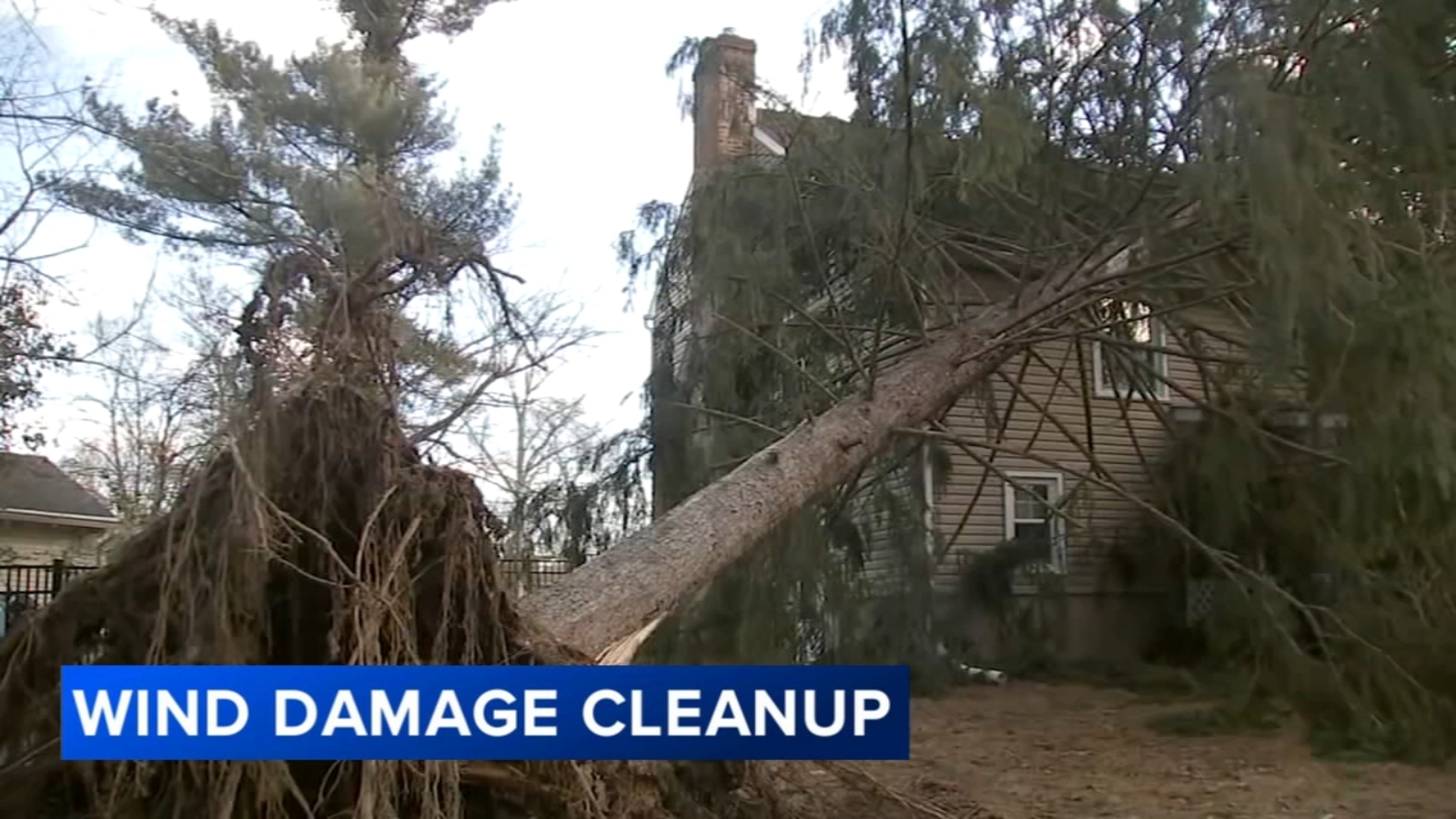
Severe high winds damage swept through the Delaware Valley on Sunday, leaving thousands of residents without power, toppling trees onto homes and vehicles, and forcing emergency crews into a grueling round-the-clock cleanup effort. From Cherry Hill to Northeast Philadelphia, communities awoke to scenes of destruction as gusts exceeding safe thresholds wreaked havoc across the Philadelphia region, with meteorologists warning that more dangerous conditions could persist into Monday.
The powerful weather event disrupted daily life, damaged infrastructure, and tragically resulted in at least one fatality. Utility companies, tree removal services, and emergency responders all found themselves stretched thin as calls for help flooded in from nearly every neighborhood across the area.
Residents Wake to Storm’s Aftermath
For many in New Jersey and Pennsylvania, the devastation became apparent in the early morning hours. Joanna Mann of Cherry Hill was awake at approximately 4 a.m. Monday when she heard an enormous crash outside her home. Looking up, she discovered tree branches had punched through her ceiling, embedding themselves inside the residence. Miraculously, no one in the household sustained injuries.
Just down the street, Doreen Graham faced a different kind of loss when a falling tree crushed her SUV. The impact bent the back end of the vehicle and shattered both the rear and side windows, leaving her with significant property damage and no transportation.
Neighbor Smit Patel had been without electricity for approximately 18 hours by Monday afternoon. The prolonged outage, combined with the deafening roar of wind, left him unable to sleep through the night.
Infrastructure Failures Across the Region
The sheer force of the windstorm tested every piece of critical infrastructure in the Philadelphia region. In Winslow Township, more than a dozen utility poles snapped along the White Horse Pike, bringing power lines crashing down with them and leaving sections of the roadway hazardous and impassable.
The damage wasn’t limited to natural obstacles. In Hamilton Township, Mercer County, a home security camera captured a startling moment when a trampoline launched across the street, sailing through the air before colliding with a residence. Two vehicles parked in the driveway suffered damage from the airborne debris.
Commercial Properties and Public Spaces Impacted
Businesses also bore the brunt of the severe weather. In Sharon Hill, Pennsylvania, the high winds toppled the protective awning at a Sunoco gas station located on the 600 block of Chester Pike late Sunday evening. The structural failure highlighted how even reinforced commercial installations can succumb to extreme gusts.
Meanwhile, in a heavily wooded section of Haverford on the 3300 block of Darby Road, crews found yet another massive tree felled by the storm. Jake Chmielowski, owner of Jake’s Tree Service, described being overwhelmed with emergency calls since approximately 6 p.m. Sunday evening.
“We’ve received about 20 calls so far since about 6 p.m. for multiple tree emergencies. Trees on structures, trees blocking driveways, you know, on top of buildings, through houses,” Chmielowski explained.
His company was bracing for an even busier Monday, with expectations of more than 100 additional service requests pouring into the office. Extra staff were being called in to handle the unprecedented volume.
Urban Areas See Significant Vehicle Damage
Philadelphia’s densely populated neighborhoods were not spared from the windstorm’s reach. In the Overbrook section of the city, falling trees struck at least five vehicles parked along the 5600 block of Wyndale Avenue. While no injuries were reported in that incident, the property losses added to a growing list of insurance claims across the region.
Tragically, the storm also turned deadly in Northeast Philadelphia, where a downed tree crashed onto a vehicle and killed a woman inside. The fatal incident underscored the genuine danger posed by falling trees during severe weather events, even in urban environments where residents might not expect such risks.
Massive Power Outages Affect Tens of Thousands
Perhaps the most widespread impact came in the form of power outages affecting an enormous portion of the population. PECO, the region’s primary electric utility, reported that at one point during the storm, more than 126,000 customers were left sitting in the dark. The scale of the outages required an all-hands-on-deck response from utility crews.
Ben Armstrong, a spokesperson for PECO, acknowledged the urgency of the situation and outlined the utility’s response strategy.
“We have crews working to assess damage as quickly as we can,” Armstrong stated.
Customers serviced by PSE&G, AC Electric, and Delmarva Power also experienced significant disruptions, demonstrating that the impact stretched across multiple utility territories and state lines.
With wind warnings posted through Monday evening, utility companies and tree removal services recognized that their work was far from finished. Restoration efforts faced the additional challenge of continued dangerous conditions, making it difficult to safely deploy crews for high-elevation repairs.
Transportation Disruptions and Travel Warnings
The high winds damage extended to transportation networks throughout the Delaware Valley. The Delaware River Port Authority implemented speed restrictions on all area bridges spanning the river, including the Ben Franklin Bridge, Walt Whitman Bridge, Betsy Ross Bridge, and Commodore Barry Bridge. Under these restrictions, tractor-trailers were permitted to cross only if pulling empty trailers, due to the elevated risk of vehicles being blown off course.
The pedestrian walkway on the Ben Franklin Bridge was closed entirely on Sunday but reopened at 6 a.m. Monday as conditions gradually improved. Commuters and travelers throughout the region were advised to allow extra time for their journeys and remain alert for changing conditions.
Airport Operations Affected
Philadelphia International Airport also experienced weather-related disruptions, with some flights delayed or canceled due to the dangerous wind conditions. The airport urged travelers to check directly with their airlines for the most current flight status information before heading to the terminal. Crosswinds and gusting conditions made takeoffs and landings particularly hazardous, forcing air traffic controllers to implement spacing protocols that inevitably created cascading delays throughout the schedule.
Safety Precautions and Lessons Learned
The storm served as a stark reminder of how quickly severe weather can transform ordinary neighborhoods into disaster zones. Several important safety lessons emerged from the Delaware Valley’s experience with this destructive wind event:
- Stay indoors during high wind warnings , even brief exposure to extreme gusts can result in flying debris injuries
- Never shelter in vehicles during falling tree conditions , the Northeast Philadelphia fatality tragically illustrated this danger
- Secure outdoor furniture and trampolines , the Hamilton Township incident showed how easily these items become dangerous projectiles
- Prepare for extended power outages , having flashlights, batteries, and backup charging methods on hand proves invaluable
- Avoid travel near large trees during windstorms , falling trees pose serious risks to both pedestrians and motorists
Looking Ahead: Recovery and Continued Vigilance
As cleanup efforts continued into Monday, communities across the Delaware Valley began the slow process of recovery. Insurance adjusters started fielding calls, tree removal services worked through extensive waiting lists, and utility crews continued their methodical work to restore power to every affected neighborhood.
The storm highlighted the critical importance of coordinated emergency response, robust infrastructure, and community resilience in the face of increasingly unpredictable weather patterns. With meteorologists continuing to monitor conditions and additional wind advisories possible in the coming days, residents were urged to remain vigilant and prepared.
For those still without power, community warming centers and charging stations opened across the region. Neighbors checked on elderly residents and those with medical equipment requiring electricity. In true Delaware Valley fashion, the crisis brought out the best in communities already familiar with weathering storms together.
Conclusion
The high winds damage that swept through the Delaware Valley over the weekend stands as a sobering example of nature’s raw power and unpredictability. From the tree that pierced a Cherry Hill ceiling to the tragic fatality in Northeast Philadelphia, from the 126,000 PECO customers who lost electricity to the bridges that required speed restrictions, no corner of the region escaped untouched. As recovery efforts continue and crews work tirelessly to restore normalcy, residents are reminded that preparation, caution, and community support remain the most effective tools for weathering such events. The storm may have passed, but its impact will be felt for weeks to come as the Delaware Valley cleans up, rebuilds, and prepares for whatever weather comes next.