
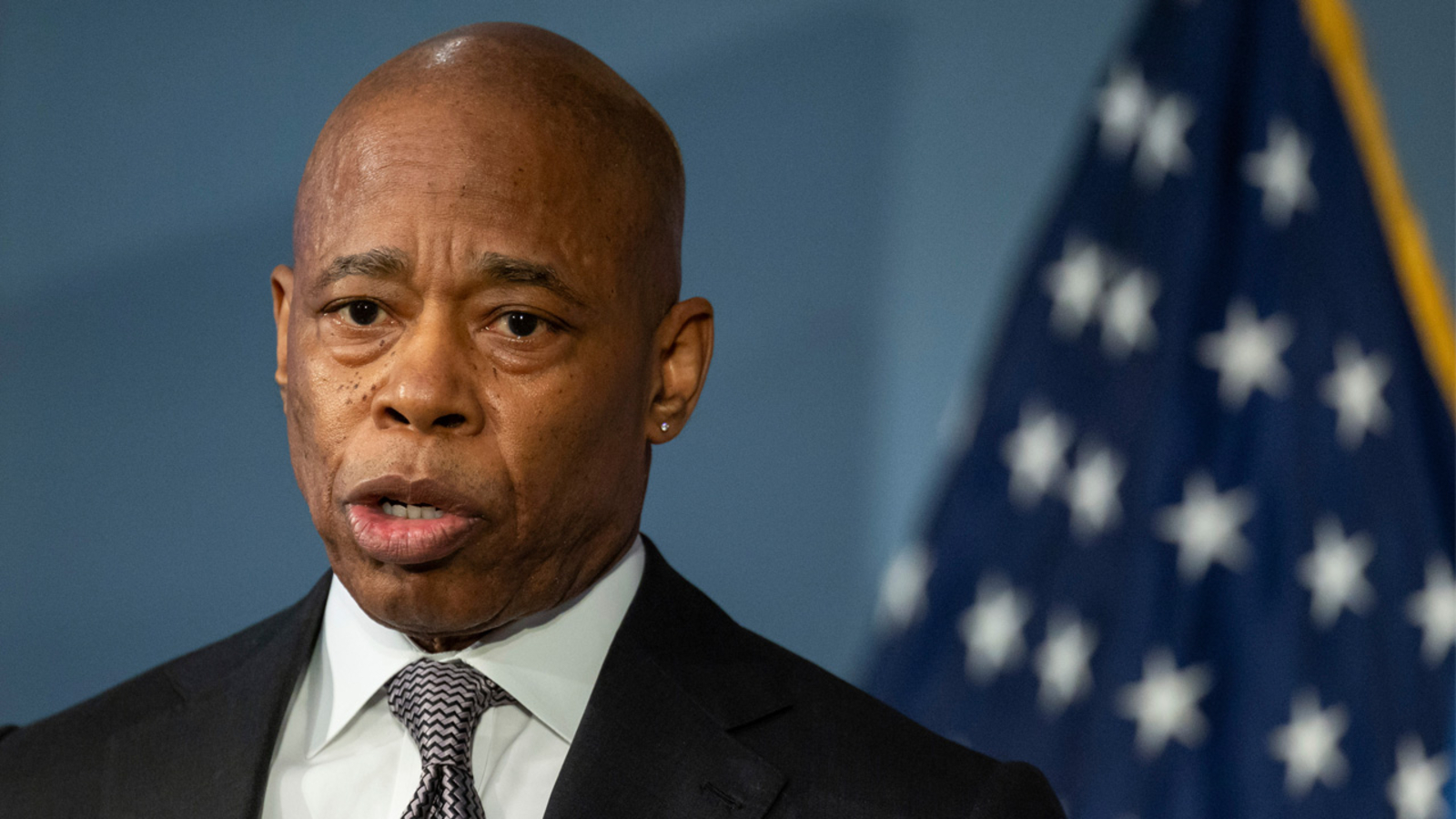
In a stunning political upheaval, four top deputies of New York City Mayor Eric Adams resigned on Monday, marking one of the most dramatic leadership crises in recent city history. The Eric Adams resignations came in the immediate aftermath of the U.S. Department of Justice’s controversial decision to seek dismissal of the federal bribery case against the mayor, a move that has triggered protests, calls for his removal, and an unprecedented constitutional question for Governor Kathy Hochul.
The departure of First Deputy Mayor Maria Torres-Springer, Deputy Mayor for Operations Meera Joshi, Deputy Mayor for Health and Human Services Anne Williams-Isom, and Deputy Mayor for Public Safety Chauncey Parker signals a profound loss of institutional confidence in the Adams administration. Together, these four leaders represented the operational backbone of City Hall, and their simultaneous exit has left the nation’s largest municipal government grappling with questions about stability, legitimacy, and the rule of law.
The Breaking Point: DOJ’s Quid Pro Quo Allegations
The deputy mayor resignations were triggered by the resignation letter from former U.S. Attorney Danielle Sassoon, who publicly accused the mayor and the Justice Department of negotiating a corrupt bargain. According to Sassoon, the DOJ agreed to drop federal bribery charges against Adams in exchange for his cooperation with President Donald Trump’s immigration enforcement agenda, including assistance with ICE operations in what has historically been a sanctuary city.
Sassoon and six other federal prosecutors stepped down in protest last week rather than participate in what they characterized as an ethically indefensible arrangement. Their departures exposed what many now describe as political blackmail at the highest levels of government, intensifying pressure on the mayor from every direction.
What the Alleged Deal Entails
The core of the controversy centers on a federal court filing in which the Justice Department asked a judge to dismiss the Adams bribery charges with the option of refiling them after the November election. Acting U.S. Attorney Emil Bove indicated that the new, permanent U.S. attorney would review the matter post-election. Critics, including civil rights leader Rev. Al Sharpton, have argued that this structure functions as leverage to ensure the mayor’s compliance with the Republican administration’s immigration priorities.
“It certainly sounds like President Trump is holding the mayor hostage,” Sharpton said. “I have supported the mayor, but he has been put in an unfair position,even for him,of essentially political blackmail.”
The Four Deputies: Who Resigned and Why
The NYC deputy mayor resignations remove some of the most experienced public administrators from City Hall. Each of the four had been brought on specifically to professionalize operations following earlier scandals involving members of Adams’ inner circle who themselves faced state and federal investigations.
- Maria Torres-Springer (First Deputy Mayor): Served as the mayor’s principal deputy and one of the most respected urban policy leaders in the country.
- Meera Joshi (Deputy Mayor for Operations): Oversaw the day-to-day functioning of city government.
- Anne Williams-Isom (Deputy Mayor for Health and Human Services): Led the city’s social services and public health portfolio.
- Chauncey Parker (Deputy Mayor for Public Safety): Managed coordination with law enforcement agencies across the five boroughs.
According to reporting, the mayor personally spoke with all four deputies on Sunday in an effort to discourage them from leaving or to delay their departures. Those pleas failed.
Joint Statement From Three Deputies
In a coordinated statement, Torres-Springer, Williams-Isom, and Joshi explained that they were stepping down “due to the extraordinary events of the last few weeks and to stay faithful to the oaths we swore to New Yorkers and our families.”
“While our time in this administration will come to a close, our support for the incredible public servants across the administration with whom we have stood shoulder to shoulder and our championing of this great city and all it stands for will never cease,” the statement continued.
Chauncey Parker issued a separate message, calling his service in the administration “the honor of a lifetime” and expressing confidence that the administration’s mission would continue.
The four officials have committed to remaining in their positions for an unspecified transition period to ensure continuity of operations across the city’s sprawling agencies.
Political Fallout: Demands for Adams to Step Down
The resignations have catalyzed a growing chorus of elected officials demanding that the mayor resign or be removed from office. The mounting pressure represents one of the broadest bipartisan revolts against a sitting New York City mayor in modern history.
City Council and Local Leaders Speak Out
City Council Speaker Adrienne Adams, who is not related to the mayor, became the latest Democrat to call for the mayor’s resignation. She argued that the deputy mayor resignations demonstrate that Adams “has now lost the confidence and trust of his own staff, his colleagues in government, and New Yorkers.”
Comptroller Brad Lander, who is himself running for mayor, demanded that the administration produce a contingency plan and warned that if Adams failed to do so, he would “seek to convene a meeting of the Inability Committee”,a rarely invoked statutory mechanism for addressing mayoral incapacity.
Senate Majority Leader Andrea Stewart-Cousins told reporters over the weekend that “it’s probably time that he move aside.” In Albany, Speaker Adams was reportedly encouraged to consider entering the race herself.
Congressional Pressure
At the federal level, Democratic Reps. Alexandria Ocasio-Cortez and Nydia Velázquez have both publicly called for Adams to step down. House Minority Leader Rep. Hakeem Jeffries stopped short of demanding resignation but said the mayor “has to answer to the community.” Lt. Gov. Antonio Delgado has also joined the chorus urging Adams to leave office.
Governor Hochul’s Constitutional Authority
Governor Kathy Hochul faces the most consequential decision. While acknowledging that “the allegations are extremely concerning and serious,” she has signaled a more deliberative approach, refusing to act on impulse.
“I cannot as the governor of this state have a knee-jerk, politically motivated reaction like a lot of other people are saying right now,” Hochul said last week. “I’ve got to do it smart, what’s right and I’m consulting with other leaders in government right now.”
Hochul announced that she would convene a meeting Tuesday with “key leaders” to discuss “the path forward, with the goal of ensuring stability for the City of New York.” She also warned that “overturning the will of the voters is a serious step that should not be taken lightly,” emphasizing the gravity of any decision to remove a sitting mayor.
The Protests: Dueling Demonstrations Across the City
On Monday, New York City became the backdrop for competing demonstrations that laid bare the deep divisions over the mayor’s future. In Brooklyn, supporters of Adams rallied around him, offering prayers and encouragement as the mayor appeared publicly smiling and defiant.
In stark contrast, protesters gathered in front of City Hall blasted the mayor, arguing that he was being spared prosecution and potential prison time by an administration eager to weaponize ICE inside a sanctuary city. The protesters demanded either his resignation or Governor Hochul’s intervention to remove him from office.
The Mein Kampf Controversy
Adding to the political turbulence, Mayor Adams drew widespread condemnation after invoking Adolf Hitler’s Mein Kampf while criticizing Public Advocate Jumaane Williams, one of his most prominent antagonists.
“If you tell a lie long enough, loud enough, people will believe it’s true. And that is what you are seeing right now,a modern-day mein kampf,” Adams said. He then attacked Williams’ work ethic and suggested that Williams would become mayor if Adams stepped down, asking rhetorically whether New Yorkers wanted “the city over to him.”
Mayoral candidate Scott Stringer called the remarks “nonsensical, unacceptable, and offensive,” writing on X: “The mayor of the city with the largest Jewish population should not be comparing the situation that his own unethical conduct put him into anything to do with Hitler or the Holocaust.” The comparison drew swift backlash from Jewish community leaders and anti-defamation advocates.
Looking Ahead: What Happens Next in the NYC Political Crisis
Adams, a former police captain who pleaded not guilty in September to charges that he accepted more than $100,000 in illegal campaign contributions and lavish travel perks from foreign nationals seeking to buy his influence while he was Brooklyn borough president, has vowed to remain in office and continue his campaign for re-election in the June Democratic primary.
The Justice Department’s motion to dismiss the case is currently pending before a federal judge, whose decision will determine whether the prosecution can proceed, be terminated entirely, or be paused until after voters cast their ballots. Meanwhile, the Eric Adams resignations at the deputy mayor level have triggered what Comptroller Lander and others describe as an unprecedented governance crisis,one that may force the state legislature, the governor, or the courts to weigh in on whether the city can continue to function effectively under its current leadership.
As Tuesday’s meeting at the governor’s office approaches, New York City stands at a constitutional crossroads. Whether the path forward involves Adams completing his term, resigning under pressure, or being removed through some combination of legal and political mechanisms, the events of the past week have already redrawn the boundaries of what is politically possible in the nation’s largest city.