
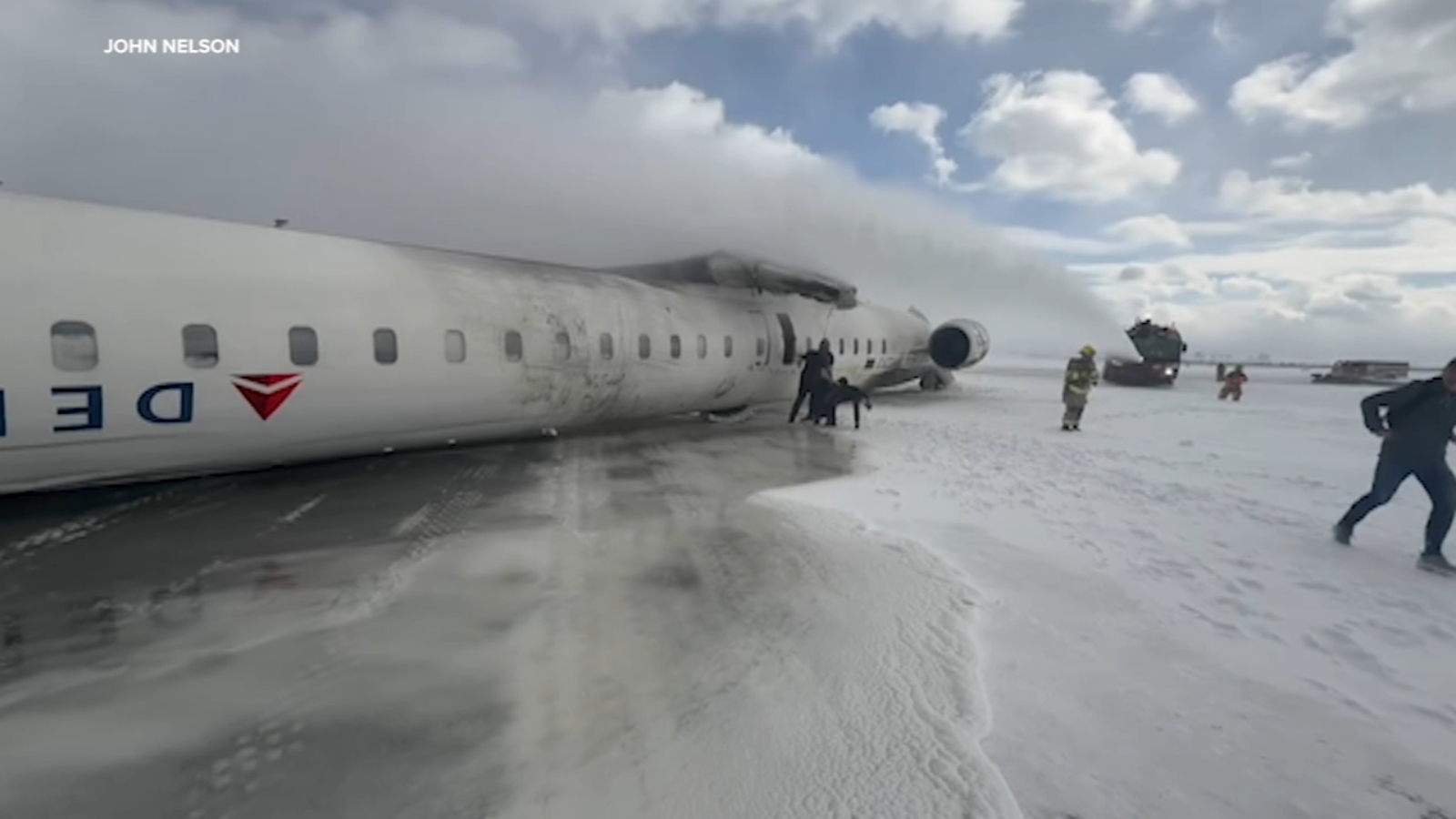
A Delta plane crash in Toronto on Monday afternoon left 19 people injured after a regional jet arriving from Minnesota flipped upside down and caught fire upon landing at Toronto Pearson International Airport. The dramatic incident, which involved Delta Air Lines Flight 4819 operated by Endeavor Air, unfolded around 2:15 p.m. local time and triggered a massive emergency response from local fire and police crews. Remarkably, all 80 people on board , 76 passengers and four crew members , were successfully evacuated, and authorities have confirmed that no fatalities have been reported.
The aircraft, a Bombardier CRJ-900, departed from Minneapolis-Saint Paul International Airport earlier that day. According to preliminary statements from the Federal Aviation Administration (FAA), the plane crashed while landing at the busy Canadian airport under wintry conditions. Within hours, investigators from the Transportation Safety Board of Canada (TSB) were on site, with U.S. investigators from the National Transportation Safety Board (NTSB) joining the inquiry as well.
THE SEQUENCE OF EVENTS AT TORONTO PEARSON AIRPORT
Eyewitness video from the scene showed the Delta aircraft resting upside down on the runway, smoke billowing into the gray winter sky. Aviation officials have stated that the plane appears to have rolled during landing, an action that snapped the wings clean off the fuselage. According to a former pilot cited in early reports, this structural break likely prevented a catastrophic explosion because most of the jet’s fuel is stored in the wings.
Emergency Response and Evacuation
Toronto Pearson officials confirmed that emergency teams responded immediately to the scene. By approximately 3:40 p.m. ET , roughly 85 minutes after the crash , all 80 occupants had evacuated from the overturned aircraft. Passenger John Nelson later described the terrifying experience of hanging buckled into his seat upside-down in the cabin, suspended from the ceiling of the flipped fuselage until rescuers arrived.
Toronto Pearson President and CEO Deborah Flint commended the rapid and professional emergency response during a Monday evening press briefing.
There was no loss of life, and this is in due part to our heroic and trained professionals, our first responders at the airport,” Flint said.
Injury Report from Peel Regional Paramedic Services
Of the 19 individuals transported to area hospitals, Peel Regional Paramedic Services reported the following breakdown:
- Two patients were airlifted to specialized Toronto trauma centers
- One pediatric patient was transported to a children’s hospital
- Three critical injuries , the pediatric patient, a man in his 60s, and a woman in her 40s
- Others suffered injuries ranging from moderate to mild
Importantly, paramedics noted that none of the injuries are currently considered life-threatening. Among the 76 passengers, 22 were Canadian, while the remaining travelers were multinational , a reminder of the international nature of modern air travel.
INVESTIGATION UNDERWAY INTO DELTA FLIGHT 4819
The cause of the crash remains under active investigation, and officials have not yet released a definitive explanation for what caused the CRJ-900 to flip upon landing. The Toronto airport fire chief confirmed during the press conference that the runway was dry at the time of the incident and that there were no crosswind conditions present. However, a winter weather travel advisory was in effect for the Toronto area, with lake-effect snow squalls off Lake Huron expected to bring an additional 5 to 10 cm of snow and winds gusting up to 60 km/h.
Agencies Leading the Probe
The Transportation Safety Board of Canada has taken the lead on the official investigation, with the FAA stating that TSB will provide any future updates. Meanwhile, the National Transportation Safety Board in the United States is dispatching a team of American investigators to assist Canadian authorities. U.S. Transportation Secretary Sean Duffy confirmed via social media that he had been in contact with his Canadian counterpart to offer assistance.
Delta Air Lines officially labeled the event “a single-aircraft accident” in its initial statement, signaling that no other aircraft were involved. The CRJ-900 involved is the same model of Canadian Regional Jet that collided with a U.S. Army Black Hawk helicopter near Ronald Reagan Washington National Airport on January 29 , a separate tragedy that killed 67 people. This makes the Delta Toronto incident at least the fifth major aviation event in the last three weeks, raising broader questions about aviation safety across North America.
DELTA’S RESPONSE AND TRAVEL IMPACT
Delta CEO Ed Bastian released a statement expressing the airline’s concern for everyone affected by the crash:
The hearts of the entire global Delta family are with those affected by today’s incident at Toronto-Pearson International Airport. I want to express my thanks to the many Delta and Endeavor team members and the first responders on site.
As a precaution, Delta canceled all flights to and from Toronto Pearson (airport code YYZ) for the remainder of Monday evening and issued a travel waiver to accommodate affected customers. Passengers with impacted itineraries were encouraged to monitor updates via the Fly Delta app or the airline’s news portal. Some flights resumed leaving and diverting from YYZ by approximately 5:30 p.m. ET, indicating that operations were gradually stabilizing.
Support Resources for Families
Delta activated its Passenger Inquiry Center to help families and loved ones connect with those involved in the incident:
- Canada: 1-866-629-4775
- United States: 1-800-997-5454
Endeavor Air, the wholly owned Delta subsidiary headquartered in Minneapolis that operated the flight, is cooperating fully with investigators.
REACTIONS FROM LEADERS AND OFFICIALS
The Delta Toronto plane crash prompted responses from a wide range of government officials and community leaders:
- Minnesota Governor Tim Walz: “I’m in touch with Delta after a flight taking off from MSP crash landed in Toronto this afternoon. Grateful to the first responders and professionals on the scene.”
- Toronto Mayor Olivia Chow: Expressed relief that all passengers and crew were accounted for and praised the quick actions of first responders, crew, and airport staff.
- U.S. Transportation Secretary Sean Duffy: Confirmed communication with Canadian officials to offer investigative support.
- Toronto Pearson CEO Deborah Flint: Highlighted the heroism and training of the airport’s emergency professionals.
WHAT COMES NEXT AFTER THE TORONTO PLANE CRASH
While the immediate crisis has been contained, several important questions remain unanswered. Investigators will need to determine why the aircraft rolled during landing, examine pilot and crew actions, review aircraft maintenance records, and analyze weather data more thoroughly despite the fire chief’s initial confirmation of a dry runway and no crosswind conditions. The fact that the wings snapped off during the rollover may provide crucial forensic evidence, but aviation experts caution against drawing premature conclusions.
This Delta plane crash Toronto incident has also drawn attention to the broader pattern of recent aviation safety events across North America. With several high-profile incidents occurring within just weeks of each other, industry observers, regulators, and travelers alike will be watching closely to see whether systemic issues emerge from the investigations.
For now, the families of the injured remain the focus of attention, with Delta, Endeavor Air, and Canadian authorities working to ensure proper care and support. The absence of fatalities in such a dramatic crash , involving a fully inverted aircraft and visible fire , stands as a testament to the aircraft’s structural design and the swift, coordinated response of airport emergency personnel.
This is a developing story. Updates will be provided as the Transportation Safety Board of Canada, the NTSB, and Delta Air Lines release additional information.