
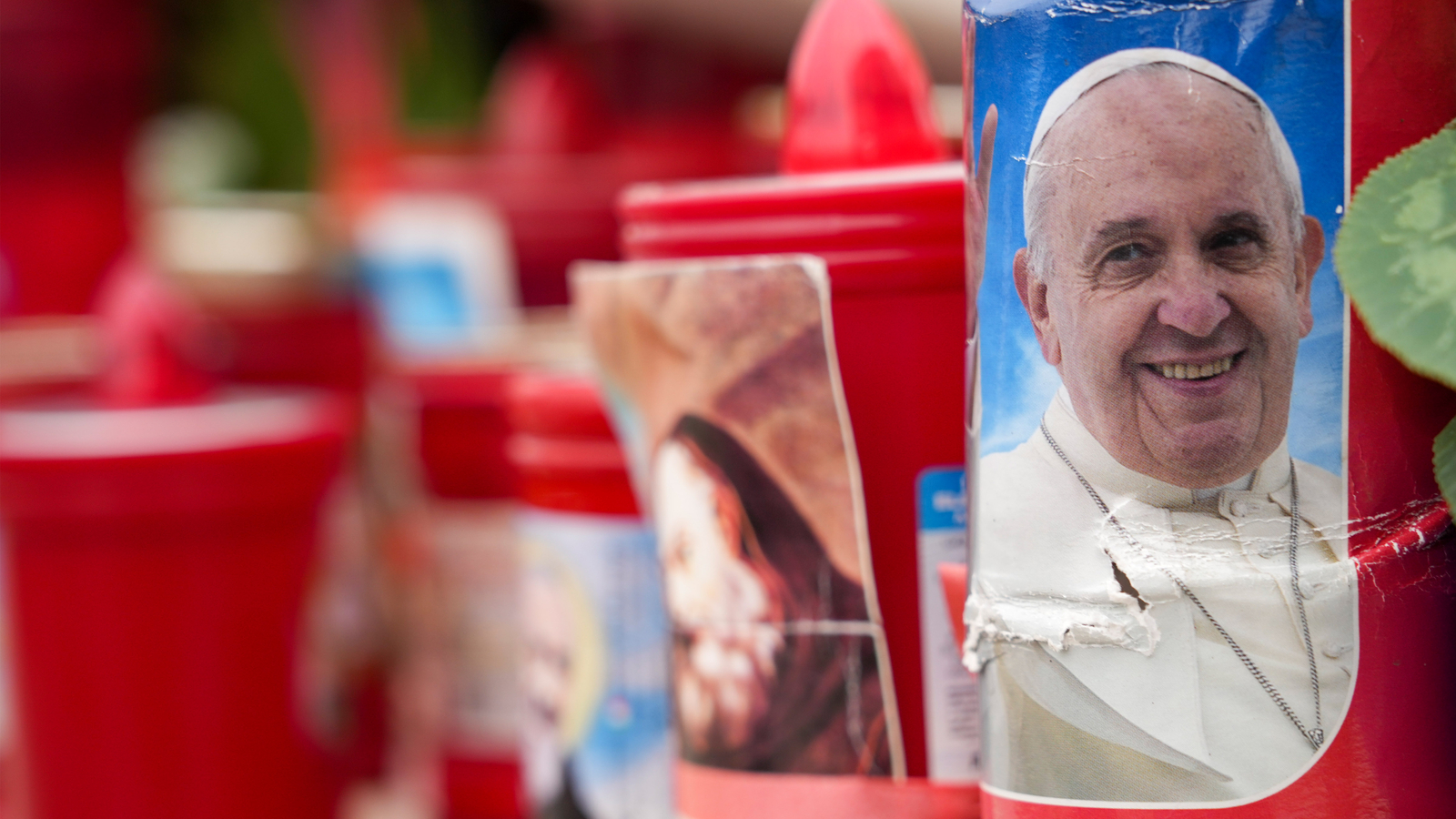
Pope Francis has been hospitalized in Rome with a serious respiratory condition that has now developed into bilateral pneumonia, prompting the Vatican to cancel several upcoming public events. The 88-year-old pontiff remains at Gemelli Hospital, where medical staff are closely monitoring his condition as he undergoes treatment for a complex polymicrobial infection.
The Latest on Pope Francis’s Health Condition
The Vatican confirmed on Tuesday that follow-up imaging revealed the onset of bilateral pneumonia, a significant development in the Pope’s ongoing respiratory battle. According to the Holy See’s press office, laboratory tests, chest X-rays, and clinical evaluations continue to show what officials described as a “complex picture.”
The Pope’s current diagnosis involves a polymicrobial infection layered on top of pre-existing conditions, including bronchiectasis and asthmatic bronchitis. To manage these overlapping health issues, his medical team has employed cortisone antibiotic therapy, though this approach has introduced additional complexity into his treatment plan.
Understanding the Diagnosis
Bilateral pneumonia affects both lungs simultaneously, making it considerably more serious than pneumonia confined to one lung. For elderly patients,especially those with pre-existing respiratory conditions,the infection requires aggressive and carefully calibrated medical intervention. The fact that Pope Francis has been hospitalized for this condition underscores the gravity of his situation.
The combination of factors in the Pope’s case,age, existing bronchial conditions, and the polymicrobial nature of the infection,presents a challenging scenario for his healthcare providers at Gemelli Hospital, one of Rome’s most respected medical institutions.
Cancelled Events and Delegated Duties
In response to the Pope’s hospitalization, the Vatican announced the cancellation of the Jubilee Audience scheduled for Saturday, February 22. This weekly audience traditionally draws thousands of pilgrims and visitors to the Vatican, making its cancellation a notable disruption to the Church’s calendar.
Additionally, the Holy Mass celebrating the Jubilee of Deacons, originally planned for Sunday, February 23, at 9 a.m. in St. Peter’s Basilica, will proceed but without the Pope presiding. Instead, Monsignor Rino Fisichella, Pro-Prefect of the Dicastery for Evangelization, has been delegated to lead the celebration.
Reassuring Messages from the Vatican
Despite the seriousness of his condition, the Vatican has shared uplifting details about the Pope’s demeanor. According to official statements, Pope Francis remains in good spirits despite his hospitalization. He received the Eucharist on Tuesday morning and spent the day alternating between rest, prayer, and reading.
The Holy Father has also expressed deep gratitude for the wave of messages of support and affection he has received from around the world. In a heartfelt message, he asked the faithful to continue their prayers for his recovery.
A Timeline of the Hospitalization
The Pope Francis hospitalized story began on Friday when he was admitted to Gemelli Hospital for what the Vatican initially described as “necessary tests” and to continue treatment for ongoing bronchitis. The Italian news agency ANSA reported that the pontiff arrived at the hospital visibly fatigued, struggling with breathing difficulties caused by excessive phlegm.
Notably, the at-home treatment he had been receiving had not produced the expected results, necessitating the more intensive hospital-based care. Matteo Bruni, director of the Vatican press room, provided updates over the weekend, confirming that the Pope had two consecutive restful nights following his admission.
Vatican Communications Throughout the Ordeal
The Vatican has maintained transparent communication throughout this health crisis, providing regular updates to journalists and the global Catholic community. On Sunday, Bruni reported that Pope Francis slept well, enjoyed breakfast, and even reviewed some paperwork,signs of relative stability amid a concerning diagnosis.
This pattern of openness reflects a broader trend in Vatican communications, where the pontiff’s health has been reported with increasing candor compared to previous papacies. Such transparency allows millions of Catholics worldwide to stay informed and offer their collective prayers and support.
Global Reaction and Prayers for Recovery
The news of Pope Francis’s hospitalization has triggered an outpouring of concern from Catholics and non-Catholics alike. Religious leaders, politicians, and ordinary citizens have taken to social media and traditional channels to express their well-wishes and prayers for the ailing pontiff.
Catholic communities worldwide have organized special prayer services, and churches from Buenos Aires to Manila have held vigils. The Pope’s role as spiritual leader to approximately 1.4 billion Catholics means that his health news carries global significance far beyond the borders of Vatican City.
The Significance of Gemelli Hospital
Gemelli Hospital, officially known as the Policlinico Universitario Agostino Gemelli, has long been the go-to medical facility for popes. Located on a hilltop in Rome’s Monte Mario neighborhood, the hospital’s 10th floor has been reserved for papal use on multiple occasions. Pope John Paul II was famously treated there several times, and the floor is sometimes referred to informally as “the Pope’s floor.”
The hospital’s association with papal care dates back decades, and its medical staff are experienced in handling the unique demands of treating a head of state and spiritual leader. This institutional knowledge likely provides some comfort to those concerned about the Pope’s health update.
What Comes Next for the Papacy
As Pope Francis continues his recovery, questions naturally arise about how his extended hospitalization might affect the Vatican’s operations. The cancellation of public audiences does not affect the Church’s daily administrative functions, but it does create a void in the Pope’s direct engagement with pilgrims and visitors.
The delegating of duties, such as entrusting the Jubilee of Deacons Mass to Monsignor Fisichella, demonstrates the Vatican’s preparedness to maintain liturgical continuity even when the Pope is unable to preside. This approach reflects the institutional resilience of the Catholic Church and its ability to function through periods when its leader faces health challenges.
Historical Context: Popes and Hospitalizations
Pope Francis is no stranger to health challenges. In recent years, he has dealt with knee problems that have forced him to use a wheelchair, colon surgery in 2021, and previous respiratory issues. His openness about his health,often acknowledging his limitations with characteristic humor,has endeared him further to many of the faithful.
Throughout Church history, popes have faced various health crises, and the institution has developed mechanisms to ensure continuity of leadership during such periods. The current situation, while concerning, fits within a broader pattern of papal healthcare that has evolved considerably over the centuries.
Looking Ahead
The road to recovery from bilateral pneumonia, particularly for an elderly patient with complicating respiratory conditions, typically requires patience and careful medical management. Medical experts generally emphasize that recovery timelines vary significantly based on individual factors, and the Vatican has been appropriately measured in its public communications about expected durations.
For now, Catholics and well-wishers worldwide are united in their hopes for the Pope’s swift and complete recovery. The Vatican has asked for continued prayers, and the global response suggests that this request has been heard and answered with enthusiasm.
A Message of Gratitude
In his characteristic style, Pope Francis has turned even his hospitalization into an opportunity to express gratitude and connect with the faithful. His acknowledgment of the “closeness he feels at this time” and his request for prayers reflect a pastoral sensitivity that has defined his papacy.
As Pope Francis remains hospitalized, the world watches with concern and hope. The combination of expert medical care at Gemelli Hospital, the prayers of millions, and the Pope’s reportedly resilient spirit offers reassurance during this challenging time. The Vatican’s transparent communication ensures that the global Catholic community remains informed and can continue to offer their collective support for the beloved pontiff’s recovery.
The coming days will likely bring further updates on his condition, and the faithful worldwide will continue to hold Pope Francis in their thoughts and prayers as he battles this serious respiratory illness.