
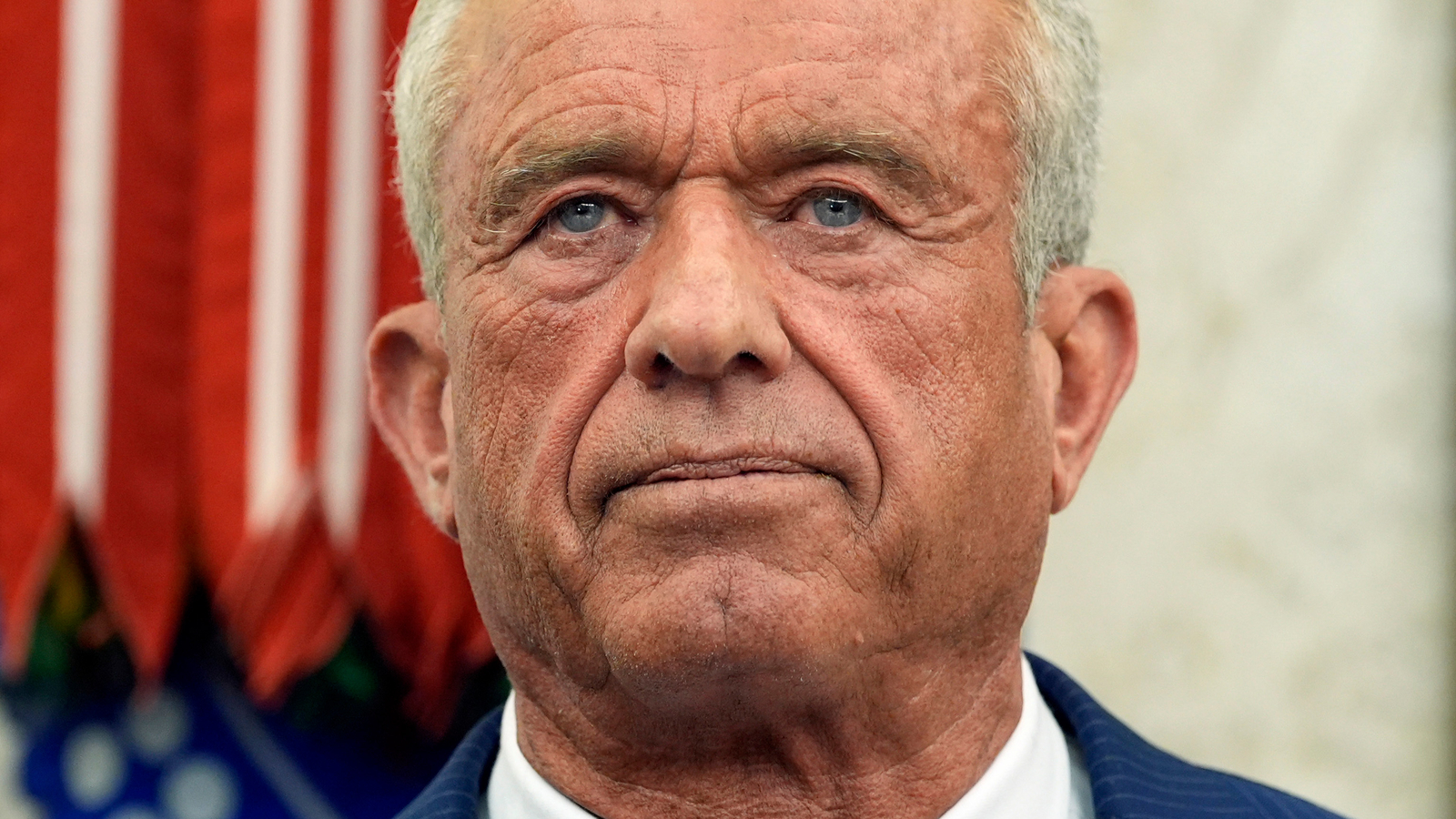
Just hours after being confirmed by the U.S. Senate as the nation’s top health official, Robert F. Kennedy Jr. stood before a packed room of federal health workers and declared his intention to investigate the childhood vaccine schedule, among other “possible factors” contributing to the country’s chronic disease crisis. The Health Secretary’s campaign-style address at the Department of Health and Human Services headquarters signaled a dramatic shift in federal health priorities, with Kennedy pledging that “nothing is going to be off limits” in his upcoming probes.
This announcement has sent ripples through the medical and scientific communities, raising urgent questions about public trust, vaccine policy, and the future of evidence-based health recommendations in America. Below, we break down what Kennedy said, what it means, and why it matters.
A New Era at HHS: Kennedy’s First Address to Staff
Robert F. Kennedy Jr.’s maiden speech as Health Secretary was notable not only for its content but also for its setting. Held at HHS headquarters, the event was intended for staff only, though a livestream link was circulated among federal health workers. The atmosphere was unusually relaxed for a federal agency gathering , Kennedy even invited employees to take selfies with him, a detail that stood in stark contrast to the turmoil engulfing the department.
Behind the friendly gestures, however, the agency was undergoing significant upheaval. Reports indicated that approximately 700 employees at the Centers for Disease Control and Prevention were fired late the previous week, part of a broader wave of layoffs and resignations sweeping through the federal government. Agency officials have remained tight-lipped about the precise scope and impact of these workforce reductions.
Despite this turbulence, Kennedy struck an optimistic tone, urging his staff to maintain an “open mind” as he prepared to redirect the agency’s vast resources toward revisiting issues long considered settled within the scientific community.
The Childhood Vaccine Schedule Takes Center Stage
Among the most consequential elements of Kennedy’s speech was his pledge to investigate the timing and composition of the childhood vaccine schedule. This refers to the recommended timeline of immunizations that children receive from infancy through adolescence, designed to protect them against diseases such as measles, polio, whooping cough, and other potentially life-threatening illnesses.
Pediatricians and infectious disease experts widely endorse this schedule as a cornerstone of preventive medicine, crediting it with dramatically reducing childhood morbidity and mortality over the past several decades. Vaccinating infants and young children, in particular, helps shield not only the individual child but also vulnerable classmates and community members through herd immunity.
Kennedy, however, framed the childhood vaccine schedule as one of several “possible factors” deserving fresh scrutiny. “We will convene representatives of all viewpoints to study the causes for the drastic rise in chronic disease,” he told the assembled crowd. “Some of the possible factors we will investigate were formally taboo or insufficiently scrutinized.”
A Direct Contradiction with Prior Testimony
Perhaps the most striking aspect of Kennedy’s announcement is how sharply it diverges from his Senate testimony just weeks earlier. During his January confirmation hearings, Kennedy assured skeptical lawmakers that he backed existing federal vaccine recommendations.
“I support vaccines. I support the vaccine schedule. I support good science,” Kennedy testified under oath.
Yet here he was, mere days after taking office, pledging to reopen investigations into that very schedule. Critics have characterized this as a betrayal of his confirmation promises, while supporters argue that further investigation is simply a sign of rigorous inquiry. Either way, the apparent contradiction raises serious concerns about the predictability and reliability of federal health policy under Kennedy’s leadership.
A Broad List of “Possible Factors” Under Investigation
The childhood vaccine schedule was far from the only target Kennedy identified. His list of potential contributors to chronic disease included a wide array of environmental, dietary, and pharmaceutical factors:
- SSRI and other psychiatric drugs , federally approved medications commonly prescribed for depression, anxiety, and related conditions
- Electromagnetic radiation , emanating from cell phones, Wi-Fi networks, and other modern technologies
- Herbicides and pesticides , chemical agents widely used in agricultural production
- Ultra-processed foods , industrially manufactured products high in additives, sugars, and unhealthy fats
- Artificial food ingredients , synthetic colors, flavors, and preservatives found in many packaged products
- Allergens , environmental and food-based triggers of immune reactions
- Microplastics , tiny plastic particles increasingly detected in water, food, and even human tissue
- Long-lasting chemicals , including PFAS and other persistent compounds used in non-stick cookware, water-resistant fabrics, and countless consumer products
It’s worth noting that researchers are already actively studying many of these environmental exposures, and some evidence suggests they may indeed contribute to chronic illness. However, vaccines and SSRIs fall into a different category, where decades of large-scale research have consistently found no causal link to chronic conditions such as autism or obesity.
The Scientific Consensus on Vaccines and Chronic Disease
The medical and scientific communities have reached a clear consensus on several of the items Kennedy listed , particularly vaccines. Numerous large-scale studies have found no credible evidence linking vaccines, including the childhood vaccine schedule, to autism or other chronic conditions. Organizations such as the CDC, the American Academy of Pediatrics, and the World Health Organization have repeatedly affirmed the safety and efficacy of routine childhood immunizations.
Similarly, SSRIs (selective serotonin reuptake inhibitors) have been extensively studied and are considered safe and effective for the treatment of depression and anxiety in appropriate patients. Discontinuing these medications without medical supervision can have serious consequences, including worsening mental health and withdrawal symptoms.
Kennedy, however, has a well-documented history of promoting the debunked claim that vaccines cause autism , a position he has maintained despite overwhelming scientific evidence to the contrary. This history has made many in the public health community deeply skeptical of any “investigation” he might lead.
Potential Implications for Public Trust and Health Policy
The stakes of Kennedy’s proposed investigations extend far beyond academic debate. Vaccines rely on widespread public acceptance to function effectively at the population level. When vaccination rates decline, diseases that had been largely eliminated , such as measles , can quickly resurge. Several outbreaks in recent years have been linked to communities with reduced vaccine uptake, illustrating just how fragile these public health gains can be.
Critics warn that Kennedy’s rhetoric, regardless of his ultimate actions, could erode public confidence in vaccines and other essential medications. Even the perception that federal health authorities are entertaining debunked theories can have a corrosive effect, encouraging hesitancy and delaying medical care.
On the other hand, some observers argue that an open and transparent review of all factors , even those with strong existing evidence , could, in theory, build public trust by demonstrating that no stone is left unturned. The reality, however, is that such investigations can also be weaponized to lend false credibility to fringe viewpoints.
What Happens Next?
As Kennedy settles into his role, the specifics of his announced investigations remain unclear. He has not yet outlined timelines, methodologies, or which specific scientists or advisory panels will be involved. The phrase “convene representatives of all viewpoints” is itself a topic of debate , critics question whether fringe voices should be given the same platform as credentialed experts.
For parents, healthcare providers, and public health officials, the coming months will be critical. The childhood vaccine schedule has saved countless lives, and any disruption to public confidence in it could have measurable, even tragic, consequences. Meanwhile, Kennedy’s broader agenda , tackling chronic disease, scrutinizing environmental toxins, and reforming federal health agencies , represents both an opportunity and a risk, depending on how evidence and expertise are weighed in the process.
Conclusion
Robert F. Kennedy Jr.’s pledge to investigate the childhood vaccine schedule marks one of the most significant shifts in U.S. federal health policy in recent memory. While his broader interest in chronic disease and environmental toxins may yield valuable insights, his willingness to reopen questions that science has long answered threatens to undermine public trust in vaccines and proven medications. As the Health Secretary moves forward with his plans, the nation will be watching closely , not just for what he investigates, but for how he does it, and whether rigorous science remains the foundation of his decision-making.