
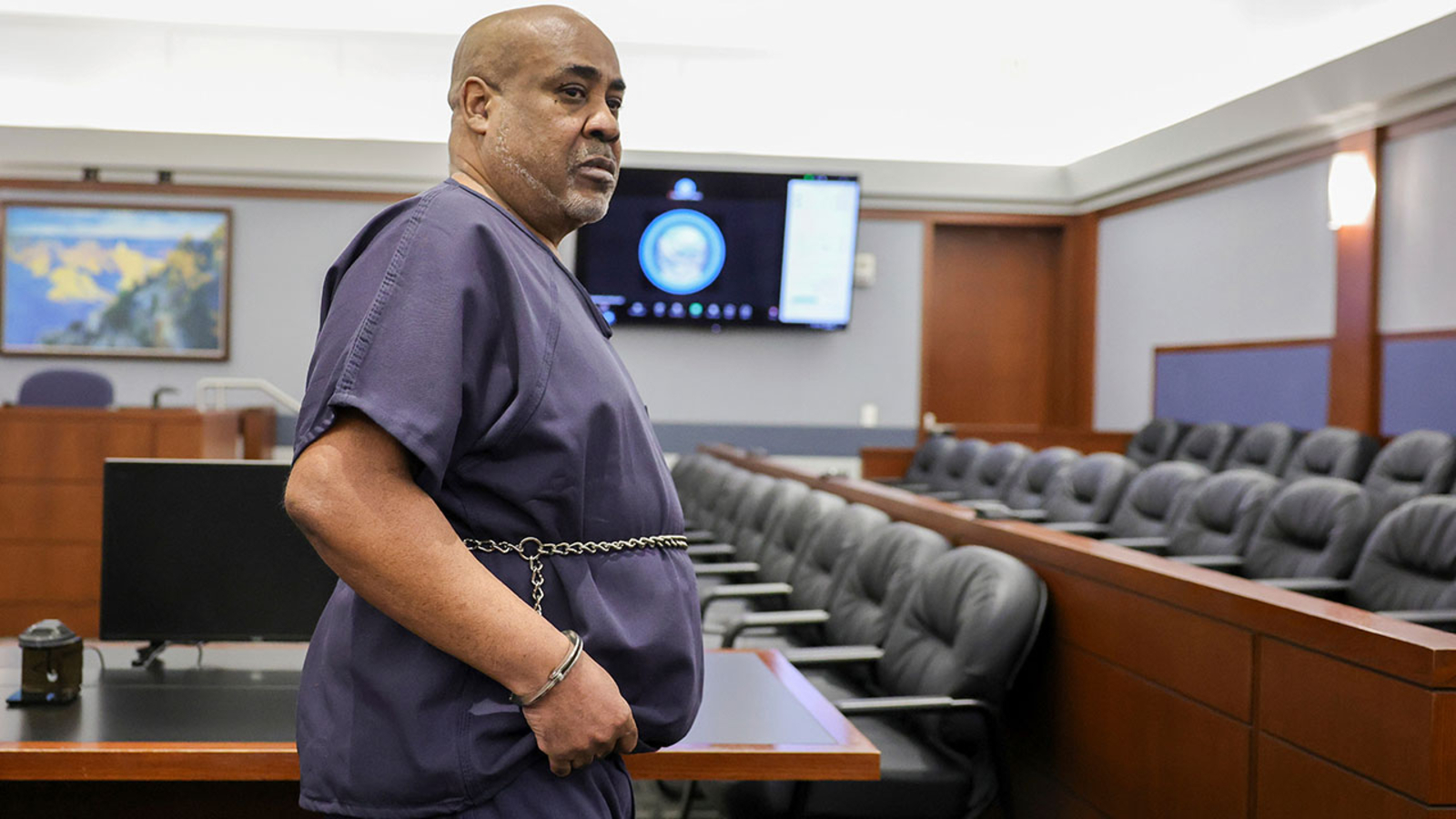
The tupac shakur murder trial has been pushed back by nearly a year, marking yet another dramatic twist in one of the most high-profile cold cases in hip-hop history. Duane “Keffe D” Davis, the only person ever charged in connection with the legendary rapper’s 1996 killing in Las Vegas, was originally scheduled to stand trial in mid-March 2025. However, a Clark County judge has rescheduled the proceedings to February 9, 2026, granting a defense motion to continue the case.
This latest development in the decades-long pursuit of justice for Tupac Amaru Shakur raises important questions about the pace of the investigation, the strength of the evidence, and what the defense is planning to present when the case finally goes before a jury.
Why the Tupac Shakur Murder Trial Was Postponed
During a brief hearing earlier this week, Judge Carli Kierny acknowledged that significant preparation work remained before Davis could receive what she termed “effective assistance of counsel.” The judge expressed frustration at being essentially compelled to grant the continuance.
“It looks like there are quite a few things that are left to be done to get this case prepared,” Kierny stated. “I really don’t have much of a choice but to grant it.”
The postponement came after Davis’s defense attorney, Carl Arnold, filed a motion on Friday requesting additional time. Notably, the prosecution did not oppose the request, signaling that the state may also need additional time to address the new allegations raised by the defense.
The Defense’s New Allegations
In a bold legal maneuver, Arnold’s filing doesn’t simply claim reasonable doubt about his client’s involvement. Instead, the defense has gone on the offensive, alleging that Reggie Wright Jr., a former law enforcement officer who served as head of security for Death Row Records, and his security team actually orchestrated the fatal 1996 shooting.
Arnold stated in the filing that his private investigator has uncovered “several witnesses” who cast doubt on the prosecution’s theory of the case. More controversially, Arnold suggested investigators are exploring “some other cause of death for Mr. Shakur” , a claim presented without supporting evidence in the public filing.
Wright, who testified before the grand jury that ultimately indicted Davis for murder, forcefully rejected the allegations in a phone call with ABC News.
“Good luck finding someone saying that, that’s credible,” Wright responded. “It’s heartbreaking they keep dragging in my name. I didn’t have anything to do with that. One of the worst days of my life when I heard that that happened.”
The Original Case Against Keffe D Davis
To understand the significance of this postponement, it’s essential to revisit how Davis became the sole suspect in a case that remained unsolved for nearly three decades.
On September 7, 1996, Tupac Shakur was riding in the passenger seat of a BMW driven by Death Row Records co-founder Marion “Suge” Knight. As the vehicle traveled along the Las Vegas Strip following a Mike Tyson boxing match at the MGM Grand, a Cadillac pulled alongside and fired multiple rounds into the BMW. Shakur was struck multiple times and died six days later at a local hospital. He was just 25 years old.
Prosecutors have long alleged that Davis served as the “shot caller” who orchestrated the drive-by shooting. As a known associate of the South Side Compton Crips, Davis has been linked to the so-called “Mob Mafia” or “MOB” , a collective that allegedly targeted Shakur and Death Row Records amid the violent East Coast-West Coast hip-hop rivalry of the 1990s.
Davis was arrested in September 2023, more than 27 years after the murder, following a grand jury indictment. He has pleaded not guilty to first-degree murder and has remained incarcerated at the Clark County Detention Center since his arrest.
Inside Davis’s Separate Battery Trial
Adding another layer of legal complexity, Davis faces a separate trial scheduled for early April 2025. This case stems from a jailhouse altercation at the Clark County Detention Center on December 23, 2024 , just days before Christmas.
Davis was indicted on charges of battery by a prisoner and challenges to fight in connection with the incident. He has pleaded not guilty to those charges as well. The other inmate involved in the altercation also pleaded not guilty and has filed a motion to sever his proceedings from Davis’s case.
While this separate trial may seem unrelated to the main murder case, it underscores the ongoing legal challenges surrounding Davis as he awaits his day in court for the Tupac Shakur killing.
What Happens Next in the Tupac Shakur Murder Trial
With arguments on the new defense allegations scheduled for a February 25 hearing, the calendar for the tupac shakur murder trial is becoming increasingly crowded. Prosecutors have yet to publicly respond to the substance of Arnold’s filing, but they will have the opportunity to challenge the new witness claims and the unprecedented suggestion of an alternative cause of death for the legendary rapper.
The defense has emphasized its commitment to a thorough investigation. In a statement to ABC News, Arnold said: “With every new piece of evidence, it becomes increasingly clear that critical facts have yet to be fully examined. We are actively conducting further investigations, speaking with key witnesses, and ensuring that Mr. Davis receives the fair trial to which he is constitutionally entitled.”
Arnold added that “given the magnitude of this case, it is imperative that we have adequate time to present a comprehensive defense.”
The Broader Cultural Significance
The murder of Tupac Shakur remains one of the most consequential events in modern American cultural history. His death , coming just seven months after the killing of Christopher “The Notorious B.I.G.” Wallace , effectively ended an era of hip-hop defined by the East Coast-West Coast rivalry and left an unfillable void in the music world.
For nearly three decades, the Shakur family, fans, and the broader public have waited for accountability. The arrest of Keffe D Davis in 2023 represented a watershed moment, suggesting that the long arm of the law might finally reach the case. The continued postponement of the tupac shakur murder trial, however, demonstrates just how complex prosecuting a cold case of this magnitude can be.
Key Players to Watch
Several figures will play crucial roles as the case moves forward:
- Duane “Keffe D” Davis: The defendant, whose own published memoir and prior statements have been used against him by prosecutors.
- Carl Arnold: Davis’s defense attorney, now leading an aggressive defense strategy that includes naming alternative suspects.
- Reggie Wright Jr.: The former Death Row Records security chief, now facing serious but unproven allegations from the defense.
- Judge Carli Kierny: The presiding judge who will oversee both the upcoming February hearing and the eventual trial in 2026.
- The Clark County District Attorney’s Office: Tasked with proving the case beyond a reasonable doubt despite the passage of nearly 30 years.
The Legal Challenges Ahead
Prosecutors in the tupac shakur murder trial face an uphill battle. The case relies heavily on Davis’s own past statements, including admissions made in his 2019 memoir “Compton Street Legend” and in a 2017 BET docuseries titled “Who Killed Tupac?” in which he appeared alongside his nephew Orlando Anderson and other associates while describing the shooting from the perspective of the “shot caller.”
The defense will likely attack the credibility and context of these statements, arguing that Davis was embellishing or speaking in hypotheticals for entertainment purposes. The new allegations naming Wright as the true orchestrator further shift the legal landscape, potentially forcing prosecutors to divert resources toward rebutting claims they never anticipated having to address.
Conclusion
The postponement of the tupac shakur murder trial to February 2026 represents more than just a procedural delay. It reflects the immense complexity of prosecuting a 28-year-old cold case that sits at the intersection of music history, gang politics, and American culture. With the defense now actively pursuing alternative suspects and questioning the official cause of death, this case is evolving into something far more intricate than a straightforward murder prosecution.
For the Shakur family, fans who have waited nearly three decades for answers, and the legal teams on both sides, the coming months will be critical. The February 25 hearing will provide the first real glimpse of how a Clark County courtroom plans to evaluate the new defense theories , and whether the long-awaited tupac shakur murder trial will finally deliver the answers that the world has been waiting for. Until then, the case remains one of the most-watched criminal proceedings in recent American memory, with every delay only heightening public interest and scrutiny.