
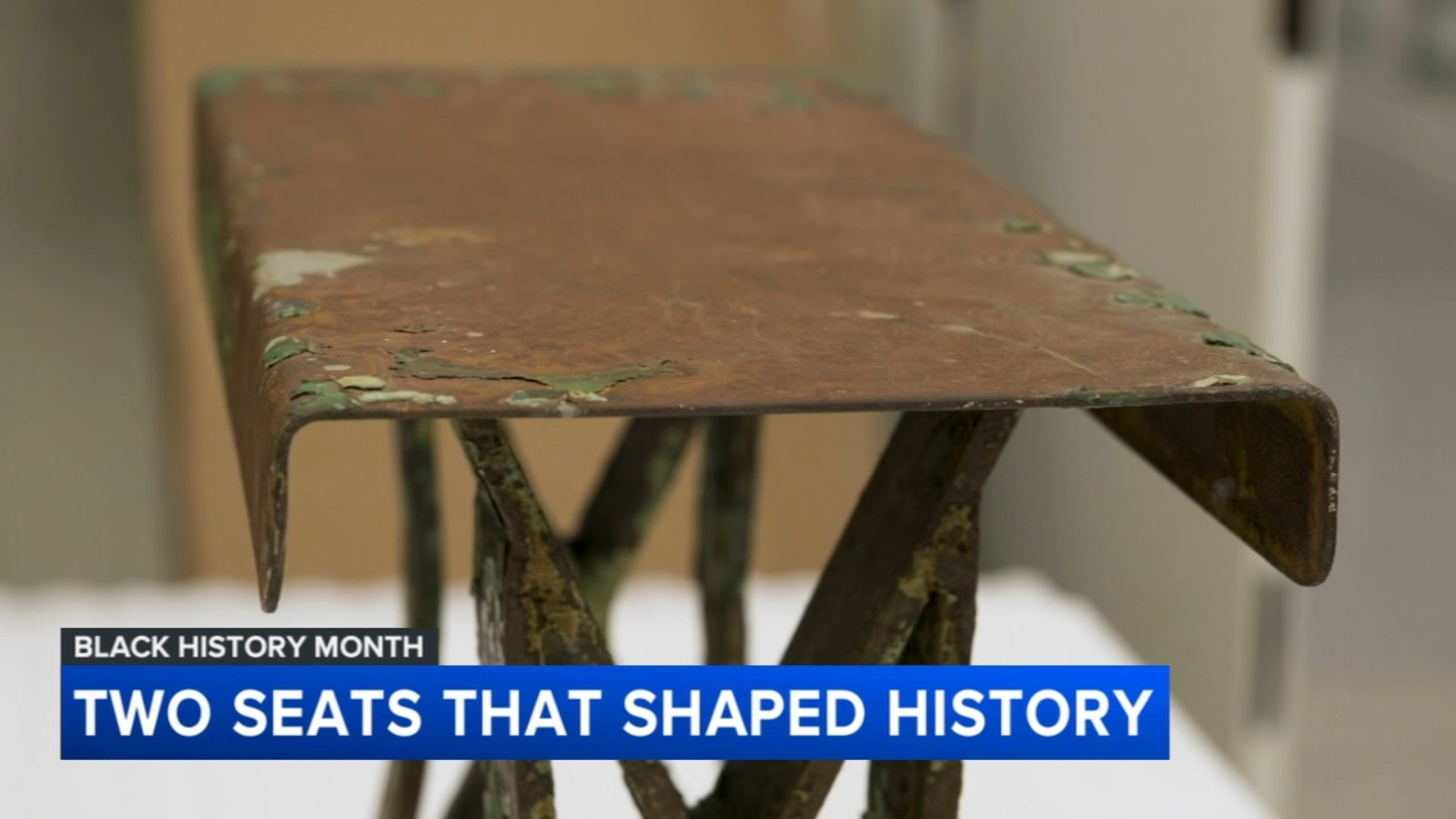
The MLK Birmingham Jail bench , the humble piece of jailhouse furniture where Dr. Martin Luther King Jr. composed one of the most consequential letters in American history , has arrived at the Museum of the American Revolution in Philadelphia. This remarkable artifact, simple in appearance yet monumental in significance, will be displayed alongside Thomas Jefferson’s writing desk as part of a sweeping exhibition marking the 250th anniversary of the Declaration of Independence. The pairing, curators say, is designed to provoke reflection on the long, unfinished arc of American freedom.
A Surprising Pairing: Jefferson’s Desk and the MLK Birmingham Jail Bench
At first glance, the connection between a jail cell bench from 1963 Alabama and the founding documents of 1776 might not seem obvious. The Museum of the American Revolution in Philadelphia, however, sees the pairing as both natural and necessary. Matthew Skic, a senior curator at the museum, described the display as a “juxtaposition” , a deliberate arrangement meant to be thought-provoking.
“This bench is an artifact of that moment in which Martin Luther King Jr. is wrestling with his critics,” Skic explained. The bench represents a pivotal confrontation not just with fellow clergymen who had publicly criticized the Birmingham protests, but with the broader conscience of a nation still grappling with the promises of its founding.
Jefferson’s portable writing desk, meanwhile, represents the moment those promises were first drafted , the Declaration of Independence, with its bold assertion that “all men are created equal.” The juxtaposition invites visitors to consider how the words of 1776 continued to echo, challenge, and transform American society nearly two centuries later.
The 250th Anniversary Exhibition
This dual display forms the centerpiece of the museum’s major exhibition commemorating the 250th anniversary of the Declaration of Independence, which arrives in 2026. The exhibit, titled to reflect the semiquincentennial milestone, will run from October 18 of this year through January 3, 2027, giving visitors an extended window to experience this extraordinary gathering of historical objects.
Why the Letter from Birmingham Jail Still Matters
Dr. Martin Luther King Jr. penned his famous Letter from Birmingham Jail in April 1963, while confined to a cell in the Birmingham, Alabama jail. The letter was written in response to a public statement issued by eight white religious leaders in the South who criticized the Birmingham Campaign and Dr. King’s methods of nonviolent direct action.
What emerged on scraps of paper , including the margins of a newspaper and notes passed to his attorneys , was nothing less than a moral treatise on justice, civil disobedience, and the responsibilities of a democratic society. The letter argued that individuals have a moral obligation to break unjust laws, and that the tension between justice and injustice creates the conditions for meaningful social change.
Dr. King famously wrote, “Injustice anywhere is a threat to justice everywhere. We are caught in an inescapable network of mutuality, tied in a single garment of destiny. Whatever affects one directly, affects all indirectly.”
The Physical Artifact
The MLK Birmingham Jail bench itself is a simple metal bench, the kind found in countless institutional settings. Its ordinariness is precisely what makes it so powerful. This was the seat upon which a man who would become one of America’s most transformative figures sat and reshaped the national conversation on race, justice, and equality.
For decades, the bench was tucked away in storage, its historical significance underappreciated. Its journey to Philadelphia represents a broader effort by historians and museum professionals to surface artifacts that tell the fuller, more complex story of American democracy , one that includes struggle, disappointment, and persistent hope.
Connecting the Civil Rights Era to the American Revolution
The Museum of the American Revolution’s decision to display the MLK Birmingham Jail bench alongside founding-era artifacts reflects a growing scholarly recognition that American history cannot be neatly divided into separate eras. The revolutionary ideals of 1776 were not fully realized in 1776. They remain, as Dr. King himself argued, an ongoing project.
Matthew Skic put it this way: “The action of Jefferson declaring the sovereignty of a new nation was making a rights statement in the equality of men, and MLK in 1963 is still struggling to change those same issues, expanding those rights for Americans, particularly Black Americans.”
A Continuous Conversation About Freedom
By placing these two iconic seats in dialogue , Jefferson’s desk and the jail cell bench , the museum creates a visual timeline of American freedom. The first represents the declaration of ideals. The second represents the patient, often painful work of making those ideals real for all Americans.
This approach challenges visitors to think about freedom and equality not as fixed conditions achieved at a single point in history, but as living principles that require constant vigilance, advocacy, and sacrifice. The revolutionary generation lit a torch; subsequent generations have carried it forward, sometimes with hands bloodied by the struggle.
The Significance of Displaying Civil Rights Artifacts in Revolutionary Spaces
Philadelphia holds a unique position in American historical memory. Independence Hall, where the Declaration of Independence was debated and signed, draws millions of visitors each year. The Museum of the American Revolution, which opened in 2017, has worked steadily to expand the narrative of what “the American Revolution” encompasses. Does it mean only the political separation from Britain? Or does it mean the larger, ongoing revolution in American society toward broader inclusion and equality?
By bringing the MLK Birmingham Jail bench into this Philadelphia museum, curators are making a clear statement: the revolution did not end in 1783. It continued through the abolitionist movement, the Civil War, Reconstruction, the women’s suffrage movement, the labor movement, and the Civil Rights Movement of the mid-twentieth century.
Engaging New Generations
For younger visitors who may have learned about Dr. King primarily through textbook summaries, seeing the actual bench upon which he sat provides a tangible connection to history. Museums have long understood that physical proximity to authentic artifacts creates emotional and intellectual engagement that cannot be replicated through photographs or descriptions alone.
The exhibition also provides an opportunity to introduce visitors to the deeper context of the Letter from Birmingham Jail , not just as a literary masterpiece, but as an urgent response to a specific political moment. The letter remains required reading in many college courses and has been recognized as one of the most important documents of twentieth-century American letters.
What Visitors Can Expect from the Exhibit
The exhibition opens on October 18 and runs through January 3, 2027. This extended timeframe is unusual for special exhibitions, reflecting the museum’s commitment to giving as many visitors as possible the opportunity to experience these historic artifacts.
Visitors can expect more than just the display of two iconic seats. The exhibit will likely contextualize both objects with interpretive materials, multimedia presentations, and complementary artifacts that help tell the broader story of American freedom’s long and complicated journey. The museum has indicated that additional programming, educational resources, and public events will accompany the exhibition.
Practical Information for Visitors
- Location: Museum of the American Revolution, Philadelphia
- Exhibition Dates: October 18 through January 3, 2027
- Featured Artifacts: Thomas Jefferson’s writing desk and the MLK Birmingham Jail bench
- Theme: The ongoing struggle for freedom and equality across American history
The Enduring Power of Simple Objects
There is something profoundly moving about the idea of a plain metal jail bench becoming a museum artifact. It is not beautiful in the conventional sense. It carries no ornate carvings or precious materials. Yet it absorbed the presence of one of the twentieth century’s greatest moral leaders and became, in a sense, a witness to history.
Objects like the MLK Birmingham Jail bench remind us that history is not made solely in grand halls and marble chambers. It is made in prisons, in church basements, in diners, and in countless ordinary places where extraordinary people made the difficult choice to stand up, speak out, and demand a better nation.
A Living Legacy
The decision to place this artifact in dialogue with Jefferson’s writing desk speaks to a broader truth: that the American story is still being written. The values articulated in 1776 , equality, liberty, the pursuit of happiness , remain contested, debated, and redefined by each generation. Dr. King’s letter, written 192 years after the Declaration, demonstrated that the founders’ words had not lost their power to inspire action, even if their promises had not yet been fulfilled.
Visitors who walk through this exhibition will be invited to consider their own place in this long conversation. What does freedom mean today? For whom is it still being fought? What unfinished work remains?
Conclusion
The arrival of the MLK Birmingham Jail bench at the Museum of the American Revolution represents more than a simple artifact loan. It is a statement about how we understand American history , as a continuous, often contested journey toward the full realization of democratic ideals. By pairing this humble jail bench with the very desk used to draft the Declaration of Independence, the museum creates a powerful visual argument: that the revolution began in 1776 but has never truly ended.
For anyone with an interest in American history, the Civil Rights Movement, or the enduring power of moral leadership, this exhibition offers a rare opportunity to see two of the nation’s most consequential historical objects in conversation with one another. Dr. King once wrote that “the arc of the moral universe is long, but it bends toward justice.” Standing before these two simple seats, visitors may find themselves contemplating just how long that arc truly is , and how much further it still has to bend.