
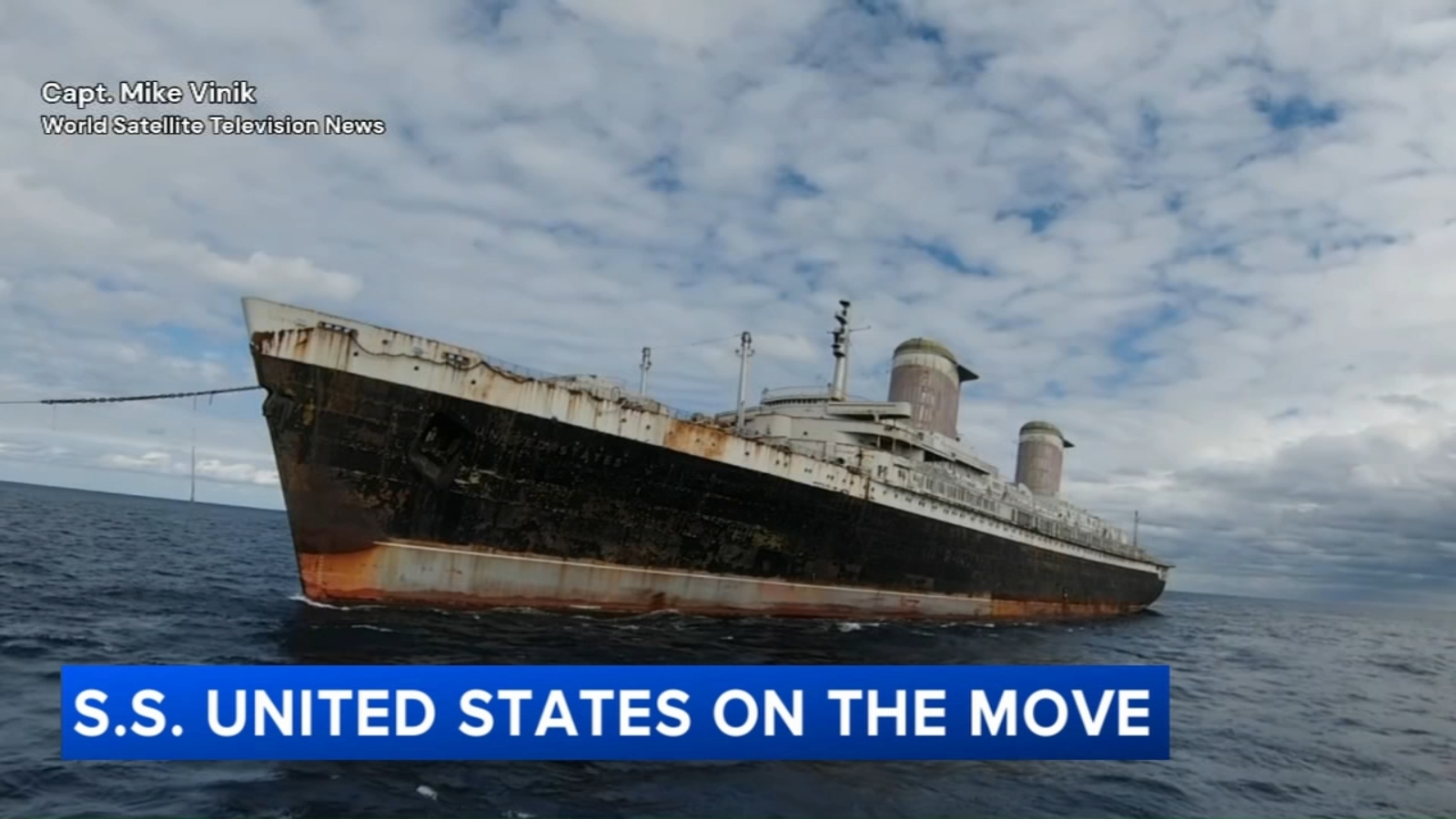
The ss united states voyage is capturing the imagination of maritime enthusiasts and history buffs across the nation as the legendary ocean liner embarks on what will be its final, bittersweet journey. After nearly three decades languishing in a Philadelphia dockyard, this iconic vessel is now being towed toward Mobile, Alabama, where it will undergo preparation for an extraordinary transformation into the world’s largest artificial reef off the coast of Florida.
While Mother Nature attempted to intervene with fierce 45 mph winds and towering 14-foot swells, the determined crew escorting the SS United States managed to navigate through the rough waters and continue their historic mission. The ship has since steadied its course and is making steady progress toward its Southern destination.
A Proud American Maritime Legacy Sets Sail Again
The SS United States holds a singular place in American history. Launched in 1952, this magnificent vessel once held the prestigious Blue Riband award for the fastest transatlantic crossing, a record it shattered on its maiden voyage. For decades, the ocean liner carried presidents, celebrities, and countless immigrants toward a new life in America, representing the pinnacle of mid-century maritime engineering and luxury.
After retirement in 1969, the ship found itself docked along the Delaware River in South Philadelphia, where it remained for nearly 30 years. During this time, the aging liner deteriorated significantly, with concerns mounting about its eventual fate. Conservationists, historians, and maritime enthusiasts fought tirelessly to preserve the vessel, eventually partnering with Okaloosa County in Florida to repurpose the historic ship as an artificial reef.
The departure from Philadelphia last week marked an emotional moment for everyone involved in preserving this piece of American heritage. Crowds gathered along the Delaware River to witness the historic ocean liner begin its final chapter, attached by a steel tow rope stretching a third of a mile long to the tugboat guiding it toward its new purpose.
The Tug Boat Mission
Moving a vessel of this magnitude across open ocean is no small feat. The tug boat captain and crew face an enormous responsibility, especially given the deteriorated condition of the historic ship they are escorting. The steel rope connecting the vessels spans approximately 1,760 feet, providing enough slack to accommodate the natural movement of both ships through changing sea states.
When Rough Seas Threatened the Mission
Just days into the SS United States voyage, the mission encountered its first significant challenge. Off the coast of Virginia Beach, powerful weather systems generated 45 mph winds and 14-foot waves that battered the aging ocean liner, causing it to turn sideways in the turbulent waters.
According to the tug boat captain, this sideways drift presented a dangerous situation for both vessels. A ship positioned broadside to powerful waves faces increased risk of structural stress, and given the SS United States’ advanced age and weathered condition, every precaution was necessary to ensure the vessel remained intact.
The experienced crew worked diligently to right the ship and re-establish proper towing orientation. Once they managed to orient the vessel correctly and continue the journey, conditions improved dramatically. The captain reported smooth sailing since that harrowing encounter, though the team remains vigilant about weather conditions that could pose future challenges.
Weather Challenges and Maritime Expertise
Maritime towing operations of this scale require extensive planning and considerable skill. The crew must continuously monitor weather patterns, ocean currents, and the structural integrity of both vessels. The rough seas encountered off Virginia served as a stark reminder that even the most carefully planned voyages can face unexpected obstacles.
This particular stretch of the Atlantic coast is notorious for volatile weather, especially during transitional seasons when cold and warm air masses collide. The captain’s decision-making during this critical moment likely prevented what could have been a catastrophic incident for this irreplaceable historic ocean liner.
The Journey Route and Timeline
The SS United States voyage follows a carefully calculated route down the Eastern Seaboard, hugging the coastline to maintain relatively protected waters and allow for emergency response if needed. According to the latest projections:
- Monday night: The ship is expected to reach the Florida coast
- Wednesday: Weather permitting, it should travel from Cape Canaveral to Key West
- Following the Keys: The vessel will continue around the Florida peninsula toward the Gulf Coast
- Destination: Mobile, Alabama, for preparation work
The total journey covers hundreds of nautical miles and is expected to take approximately two weeks to complete, depending on weather conditions and any unforeseen complications. The slow pace is deliberate, as towing a vessel of this size requires careful speed management to avoid excessive stress on both the ship and the tow line.
From Philadelphia to Mobile: A New Chapter Begins
Once the SS United States reaches Mobile, Alabama, an extensive preparation process will begin. Crews must thoroughly inspect the vessel, remove any hazardous materials, and prepare the hull for its eventual submersion. This phase of the project is critical, as proper preparation ensures both environmental safety and the structural integrity needed to create a successful artificial reef.
Mobile serves as an ideal preparation location due to its extensive maritime infrastructure and proximity to the final sinking site. The Port of Mobile has experience handling large vessels and complex marine projects, making it well-suited for this unprecedented operation.
The Artificial Reef Project
The ultimate destination for the SS United States is the waters near Destin-Fort Walton Beach in the Florida Panhandle. Once preparation work is complete in Mobile, the historic ocean liner will be transported to this location and deliberately sunk to create what will become the largest artificial reef of its kind in the Gulf of Mexico.
Artificial reefs serve multiple important purposes:
- Marine Habitat Creation: Sunken vessels provide hard substrate for coral, sponges, and other marine organisms to colonize
- Fish Population Support: These structures attract diverse fish species, supporting commercial and recreational fishing
- Dive Tourism Boost: Artificial reefs become popular destinations for scuba diving enthusiasts
- Coastal Economy Enhancement: Increased marine activity benefits local businesses and tourism
The Destin-Fort Walton Beach area is already renowned for its excellent fishing and diving opportunities, and the addition of the SS United States as an artificial reef is expected to dramatically enhance the region’s appeal to marine recreation enthusiasts.
Looking Ahead: Completion by 2026
The ambitious project timeline calls for full completion by 2026. This extended timeframe accounts for the extensive preparation work required in Mobile, environmental permitting, and the complex logistics of sinking a vessel of this magnitude in a controlled manner.
The project represents a unique intersection of historical preservation, marine conservation, and economic development. By transforming the deteriorating ocean liner into a thriving marine ecosystem, stakeholders are creating a lasting legacy that honors the ship’s storied past while contributing to ocean health and coastal tourism for decades to come.
Preserving History Beneath the Waves
While some preservationists expressed disappointment that the SS United States could not be maintained as a functional vessel or museum ship, the artificial reef project represents the most viable path forward for this historic ship. The alternative facing the vessel was likely scrapping, which would have meant the complete loss of this irreplaceable piece of American maritime heritage.
Beneath the waves off Florida’s Emerald Coast, the SS United States will continue to capture imaginations, this time as an underwater destination where divers can explore the corridors and decks that once hosted the elite of mid-century society. The ship that once raced across the Atlantic at record speeds will become a permanent fixture in the Gulf of Mexico, supporting marine life and human recreation for generations.
Conclusion
The SS United States voyage represents far more than the simple relocation of an aging ship. It embodies the successful effort to preserve an irreplaceable piece of American history while simultaneously creating new opportunities for marine conservation and economic development. Despite facing rough seas that briefly threatened the mission, the dedicated crew escorting this legendary vessel has proven equal to the challenge, keeping the project on track to reach Mobile, Alabama, and eventually its final resting place off the Florida Panhandle.
As the historic ocean liner makes its way down the coast, Americans across the country are following the journey with renewed appreciation for the vessel’s remarkable legacy. The transformation from ocean liner to artificial reef may mark the end of the SS United States’ above-water story, but it ensures that this American icon will continue making history for decades to come, this time as a thriving underwater ecosystem supporting the rich marine biodiversity of the Gulf of Mexico.